


Communication is not just about words. Sometimes silence speaks louder than speech. Think about the last time someone smiled at you, nodded approvingly, or folded their arms during a meeting. Those gestures said something, right? That is the magic of non-verbal communication.
In this article, we’ll explore different kinds of non-verbal communication, why they matter, and how to master them to become a better communicator — both in personal life and at work.
What Is Non-Verbal Communication?
Non-verbal communication is the process of sharing information without using words. It includes facial expressions, body language, gestures, tone of voice, posture, and even the distance you maintain from others.
It helps reinforce or contradict verbal messages. For example, when someone says “I’m fine” but avoids eye contact, their non-verbal cue tells a different story.
To learn how non-verbal and verbal communication work together, check out Verbal and Non-Verbal Communication: Types and Importance .
Importance of Non-Verbal Communication
Non-verbal communication plays a crucial role in expressing emotions and building trust. In fact, studies suggest that more than 70% of communication is non-verbal.
It helps us:
- Strengthen relationships through empathy and understanding,
- Enhance presentations and meetings,
- Detect honesty or deception, and
- Bridge language barriers.
If you want to explore this concept further, you can read about the Importance of Non-Verbal Communication , which explains how gestures and posture influence effective communication.
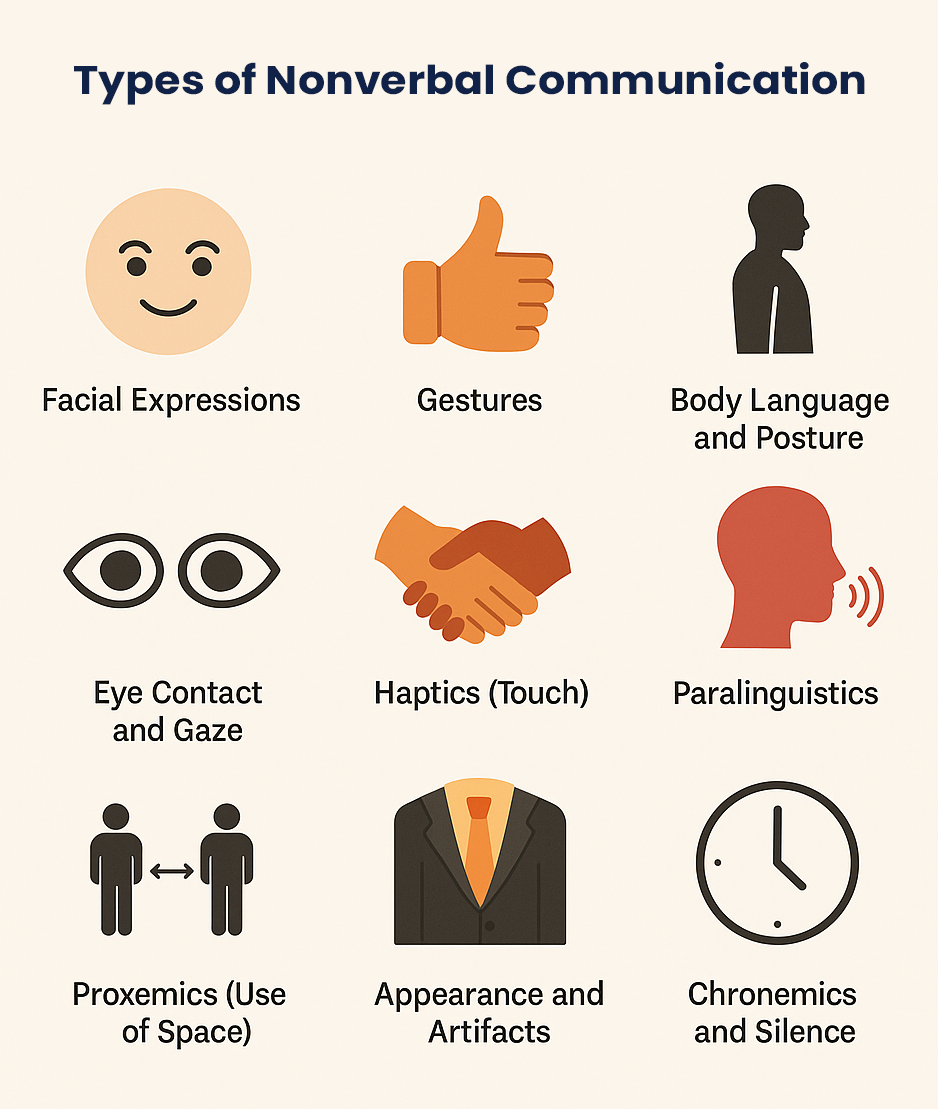
The Major Types of Non-Verbal Communication
Let’s dive into the different types of non-verbal communication that shape our daily interactions. You’ll see examples, explanations, and a few fun facts along the way!
1. Facial Expressions
Our face is a powerful communicator. It can express joy, anger, surprise, fear, sadness, or disgust without a single word. Even across cultures, certain facial expressions are universally recognized.
Try this: next time you meet someone, smile genuinely. You’ll see how quickly it builds warmth and connection.
Facial expressions often reveal more than what we intend to say. That’s why understanding this form of communication can help you interpret people’s emotions better, especially during interviews or meetings.
2. Gestures (Kinesics)
Gestures are movements of the hands, arms, or head that add meaning to words. When you wave, nod, or use your fingers to emphasize a point, you are using gestures.
However, gestures vary from culture to culture. For instance, a “thumbs up” may mean approval in one country but can be offensive in another.
If you’re curious about how communication varies across contexts, see Cross-Cultural Communication to understand cultural sensitivity in business interactions.
3. Body Language and Posture
The way you sit, stand, or move speaks volumes. An open posture signals confidence and interest, while crossed arms may show defensiveness.
Leaning slightly forward in conversation shows attentiveness. On the other hand, slouching or turning away can signal disinterest or discomfort.
Want to know more about the impact of communication posture and presence? You can also read The Nature of Communication , which explains the behavioral side of interpersonal exchange.
4. Eye Contact and Gaze
Eyes are often called the “windows to the soul.” Maintaining appropriate eye contact shows confidence and sincerity. However, too much staring can make people uncomfortable.
Cultural norms also affect eye behavior. In some cultures, direct eye contact shows respect, while in others, it might be seen as rude.
In a professional environment, balanced eye contact helps you appear more trustworthy and attentive.
5. Haptics (Touch)
Touch is one of the earliest forms of communication we learn. A handshake, pat on the back, or even a friendly tap can convey support or affection.
In business settings, handshakes are powerful symbols of respect and agreement. But remember, the right touch depends on context and culture.
If you’d like to explore professional interaction further, visit Interview Etiquette: Dos and Don’ts for Candidates for practical workplace behavior tips.
6. Paralinguistics or Vocalics
Paralinguistics refers to the non-verbal elements of voice — tone, pitch, volume, and speaking rate. It’s not what you say but how you say it.
A cheerful tone can make even a serious message sound friendly. Meanwhile, a harsh tone might make a simple sentence seem rude.
Pausing effectively or emphasizing certain words can enhance clarity and impact.
You can improve your spoken communication by reviewing Cause of Failure of Oral Communication for common speaking pitfalls.
7. Proxemics (Use of Space)
Proxemics deals with the physical distance between communicators. Personal space preferences differ across individuals and cultures.
Standing too close might feel intrusive, while standing too far may seem cold. Knowing when to adjust distance builds comfort and rapport.
If you want to see how communication space plays a role in organizations, check What Is Internal Communication: Characteristics .
8. Appearance and Artifacts
What you wear and how you present yourself communicate non-verbal messages too. Your clothing, hairstyle, or even office décor reflect professionalism and personality.
A neatly dressed person often appears more organized and confident. Similarly, visual tools like color, texture, or symbols also communicate silently.
For a closer look at the visual side of communication, read Forms of Visual Communication .
9. Chronemics and Silence
Time also talks. Arriving early to a meeting shows respect and discipline, while being late may imply carelessness.
Silence, too, is a form of non-verbal communication. Sometimes, saying nothing speaks volumes — expressing disagreement, thoughtfulness, or emotional control.
For business professionals, punctuality and timing matter deeply. You might also explore Effective Project Meeting to learn how timing influences group interactions.
Functions of Non-Verbal Communication
Non-verbal communication serves several key functions in our daily lives. Let’s look at a few major ones.
- Reinforcing Verbal Messages – Gestures and facial expressions often strengthen spoken words.
- Substituting Words – Sometimes a simple nod or smile replaces an entire sentence.
- Contradicting Verbal Messages – Body language may reveal the truth when words do not.
- Regulating Conversations – Eye contact and gestures help manage the flow of discussion.
- Expressing Emotions – Emotions like happiness or anger are more effectively shown than said.
If you want to explore how communication serves various functions, see What Is Communication: Functions of Communication .
Practical Tips to Improve Non-Verbal Communication
Here are some actionable steps to enhance your non-verbal communication skills:
1. Be Self-Aware
Notice your gestures, facial expressions, and tone. Make sure your non-verbal cues align with your message.
2. Observe Others
Pay attention to how people react during conversations. Their non-verbal cues can tell you a lot more than their words.
3. Mind Your Posture
A straight posture and open stance convey confidence. Avoid crossing arms or looking away while speaking.
4. Maintain Appropriate Eye Contact
Engage, but don’t stare. Balanced eye contact creates a sense of connection.
5. Adapt to Cultural Contexts
Different cultures interpret gestures and space differently. Understanding this avoids misunderstandings.
For more on effective interpersonal communication, check out Qualities of Good Communication: Requirements of Effective Communication .
Non-Verbal Communication in the Workplace
In a professional setting, non-verbal communication can make or break relationships. Your posture, appearance, and tone affect how colleagues perceive you.
During meetings, attentive listening and appropriate gestures help establish authority and respect. On the other hand, poor body language can signal disinterest or insecurity.
To make your communication more professional, explore Advantages and Disadvantages of Non-Verbal Communication for balanced insight.
Case Study: The Silent Interview
Imagine this. You’re at a job interview. You’ve prepared all your answers perfectly. But you forget to smile, cross your arms, and avoid eye contact. The interviewer senses hesitation.
Despite your strong verbal answers, your non-verbal cues ruin the impression. This shows how essential non-verbal communication is to professional success.
For more on interviews and professionalism, you might like Types of Interviews and What to Wear for Interview .
Common Mistakes to Avoid
Even skilled communicators make mistakes. Here are a few to look out for:
- Fidgeting or tapping your foot nervously,
- Crossing arms defensively,
- Speaking too quickly or too softly,
- Ignoring personal space,
- Smiling at inappropriate times.
Awareness is the first step to improvement. Remember, your body talks even when your mouth doesn’t.
Fun Facts About Non-Verbal Communication
- More than 7,000 facial expressions have been identified in humans.
- Smiling can instantly make you appear more trustworthy.
- Body language contributes up to 55% of message interpretation in face-to-face communication.
For deeper insights, explore Principles of Communication for foundational rules that govern effective human interaction.
Final Thoughts
Non-verbal communication is the invisible thread that connects people beyond words. It can strengthen relationships, prevent misunderstandings, and make your messages more powerful.
Whether you are giving a presentation, attending a meeting, or talking to a friend, remember that your body, face, and tone are always saying something. Make sure they say what you really mean.
If you enjoyed this topic, you can also read related guides like Types of Communication and Scope of Communication to deepen your understanding.
Frequently asked questions
What should I do if my non-verbal signals contradict my words?
Align them intentionally. If you say you’re interested but avoid eye contact or cross your arms, people will trust the non-verbal cue over your words. Before important conversations, check your posture, facial expression, and tone match your message. Practice in front of a mirror if needed to ensure consistency between what you say and how you appear.
How close should I stand to someone in a professional setting?
Maintain 2–3 feet of distance in most business contexts. This is the professional zone that feels respectful without being cold. Adjust slightly based on the setting: closer in one-on-one meetings, farther in formal presentations. Watch for discomfort signals like stepping back, which means you’re too close.
Can eye contact mean different things in different cultures?
Yes. Direct eye contact signals confidence and honesty in Western cultures, but in some Asian, African, and Latin American cultures, it can seem disrespectful or aggressive. When working across cultures, moderate your eye contact and observe what feels natural for the other person. Ask colleagues or research norms if unsure.
Why did my complaint letter get ignored even though it was polite?
Tone and word choice matter more than politeness alone. If your letter sounds passive, uncertain, or overly formal, it may seem less urgent. Use clear, direct language. Vary sentence length to show conviction. Read it aloud to catch a weak tone. A firm but respectful tone signals your concern deserves attention.
Should I smile during serious business conversations or negotiations?
Smile naturally when appropriate, but not constantly. A genuine smile at the start builds rapport and warmth. During serious discussion, a neutral or thoughtful expression shows you’re engaged and taking the matter seriously. Smiling throughout can undermine your credibility or seem dismissive of the topic’s importance.
How do I know if someone is being dishonest based on body language alone?
Don’t rely on body language alone. Crossed arms or avoiding eye contact can signal discomfort, nervousness, or cultural norms—not necessarily dishonesty. Look for clusters of signals: fidgeting plus vague answers plus tone changes together suggest deception more reliably than one cue. Always verify with direct questions.
1 Comment
When was this posted?