


Business and personal letters serve entirely different purposes, follow distinct conventions, and require separate approaches to tone and structure. Understanding which type to use, and how to execute it correctly, prevents miscommunication and ensures your message lands as intended.
What is a business letter?
A business letter is a formal written communication exchanged between organizations, professionals, or individuals acting in an official capacity. You use it to communicate with suppliers, customers, banks, insurance companies, government agencies, or other external parties about specific business matters.
These letters follow standardized structures and professional conventions recognized across industries. The parts of a business letter include a sender’s address, date, inside address, salutation, body paragraphs, complimentary close, and signature block. This consistency helps recipients quickly locate information and understand the purpose.
The primary goal is to exchange business-related information while maintaining professional relationships. Whether you’re placing an order, filing a complaint, requesting information, or applying for a position, the business letter provides a formal record of the communication.
What is a personal letter?
A personal letter is an informal written communication sent to family members, friends, relatives, teachers, or other individuals with whom you share a personal connection. The focus is on relationship maintenance, emotional expression, or sharing life updates rather than conducting transactions or official business.
Unlike business letters, personal letters have no mandatory formatting rules. You can organize content however feels natural, skip formal headers, and write in a conversational style that reflects your personality and relationship with the recipient.
The purpose centers on human connection: sharing news about your life, expressing sympathy, celebrating milestones, apologizing for personal matters, or simply staying in touch. Personal letters prioritize warmth and authenticity over formality.
Key differences: structure and format
Business letters adhere to officially recognized formats such as block, modified block, or semi-block layouts. These business letter formats dictate precise placement of every element, from the sender’s address at the top to the signature block at the bottom. Margins, spacing, and alignment follow consistent rules that make documents look professional and easy to scan.

Personal letters impose no such requirements.
You might include a date or skip it entirely. You can start with “Dear Sarah” or jump straight into your message. The layout depends entirely on your preference and the medium. Handwritten notes on decorative stationery look nothing like typed letters on plain paper, and both are acceptable.
Business letters also include components personal letters typically omit: an inside address identifying the recipient’s organization and title, a reference line for file numbers or subject codes, and sometimes an attention line directing the letter to a specific department. These elements support record-keeping and routing within organizations.
Tone, language, and formality
The most significant difference between these letter types lies in tone and voice. Business letters use formal, professional language. You avoid contractions, slang, and emotional appeals. Sentences are direct and focused on facts, requests, or proposals. The goal is clarity, not personality.
Personal letters embrace conversational language, contractions, emotional expression, and even poetic or playful phrasing. You write as you would speak to the recipient in person. Humor, vulnerability, and tangential stories are not just acceptable but often expected.
Salutations reflect this divide. Business letters open with “Dear Mr. Johnson,” “Dear Dr. Martinez,” or “Dear Hiring Manager” when the name is unknown. Personal letters use “Dear Mom,” “My dear friend,” “Hi Alex,” or simply the person’s name. Business closings include “Sincerely,” “Best regards,” or “Yours truly.” Personal closings range from “Love” and “Warmly” to “Your friend” or “Take care.”
Length and conciseness differ too. Business letters stay brief and eliminate irrelevant details. A 300-word letter is often ideal. Personal letters can run several pages if the relationship and context warrant it. Your grandmother likely appreciates a lengthy update about your life; your insurance company does not.
This distinction connects to broader patterns in formal vs informal communication across all business contexts.
Purpose and scope
Business letters address specific professional matters: placing orders, lodging complaints, requesting quotes, confirming agreements, applying for jobs, providing references, or announcing policy changes. Each letter has a clear, actionable purpose that the recipient can respond to or file appropriately.
The scope is wide and universal. A complaint letter to an airline follows the same basic conventions whether you’re in New York or New Delhi. The business letter definition and importance extends across industries and geographies because standardization enables communication between strangers or distant parties.
Personal letters cover life events, emotions, relationship maintenance, and individual experiences. You might write to congratulate a friend on a promotion, console a relative after a loss, invite a neighbor to dinner, or update your college roommate on your recent move. The scope is narrow and specific to your relationship with that person.
Business letters often require a response or action: approve this proposal, send this product, schedule this interview. Personal letters prioritize connection over transaction. A response is welcome but not always necessary or expected.
Salutation and closing conventions
Salutation choices signal respect and establish the relationship’s nature. In business letters, you use titles and surnames: “Dear Ms. Thompson,” “Dear Dr. Patel,” “Dear Professor Chen.” When the recipient’s name is unknown, “Dear Hiring Manager” or “Dear Customer Service Team” maintains formality without sounding stiff.
Gender-neutral options matter in professional contexts. According to Purdue OWL’s business letter guidelines, “Ms.” works when gender is uncertain, or you can use the full name: “Dear Jordan Smith.” Avoid “To Whom It May Concern”. It sounds outdated and impersonal even for business correspondence.
Personal letters use first names or affectionate terms: “Dear Rachel,” “Dearest Uncle Joe,” “Hey Mike.” The informality reflects your existing relationship. You wouldn’t write “Dear Mr. Wilson” to your childhood best friend unless you were being ironic.
Closing conventions follow the same pattern. Business letters end with “Sincerely,” “Best regards,” “Respectfully,” or “Yours truly,” followed by your typed name, title, and contact information in a signature block. Personal letters close with “Love,” “Warmly,” “Fondly,” “Your friend,” or “Take care,” followed by just your first name or a nickname.
| Element | Business Letter | Personal Letter |
|---|---|---|
| Structure | Follows standardized formats (block, modified block, semi-block) | No mandatory structure; flexible layout |
| Tone | Formal, professional, impersonal | Conversational, emotional, warm |
| Salutation | Dear Mr./Ms./Dr. [Surname], Dear [Title] | Dear [First Name], Hi [Name], My dear [Name] |
| Language | Direct, concise, fact-focused | Expressive, detailed, relationship-focused |
| Closing | Sincerely, Best regards, Yours truly | Love, Warmly, Your friend, Take care |
| Length | Brief, typically 200-500 words | Variable, can be several pages |
| Purpose | Conduct business, request action, document agreements | Maintain relationships, share emotions, connect personally |
| Preservation | Archived for legal and reference purposes | Kept for sentimental reasons or discarded |
Record-keeping and preservation
Business letters create permanent records. Organizations archive them for legal compliance, auditing, dispute resolution, and reference. If a supplier claims you never placed an order, your dated purchase letter proves otherwise. If an employee files a complaint, your written response becomes part of the official record.
Most companies retain business correspondence for years, either as physical files or digital archives. Regulatory requirements in industries like finance, healthcare, and government mandate specific retention periods. Even small businesses benefit from keeping copies of important letters to track agreements and protect against liability.
Personal letters carry no such requirements. You might keep a heartfelt note from a grandparent for sentimental reasons or save letters from a long-distance relationship as mementos. But you’re free to discard them without consequence. No law or policy requires you to preserve personal correspondence.
Digital communication has changed preservation patterns for both types. Email versions of business and personal letters are automatically stored, searchable, and easily forwarded. The business letter vs email distinction affects not just formality but also how we manage and retrieve past communications.
When to use each letter type: decision framework
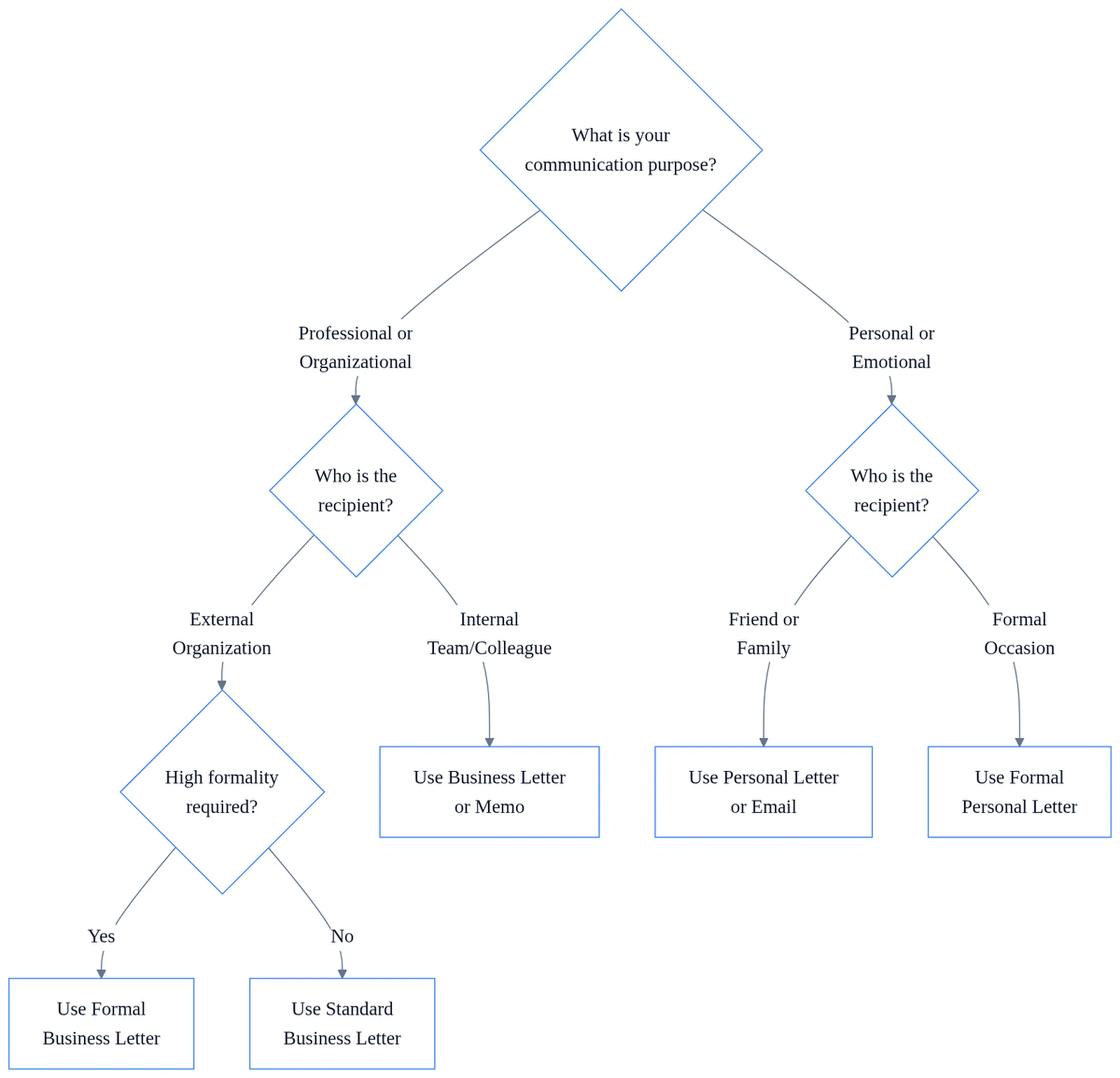
Choose a business letter when you’re communicating in an official capacity or addressing an organization. Job applications, formal complaints, vendor inquiries, contract proposals, recommendation letters for professional purposes, and legal notices all require business letter format and tone.
Use a personal letter when you’re writing to someone you know personally about non-business matters. Thank-you notes to friends, condolence letters to family members, invitations to casual gatherings, apologies for personal conflicts, and updates about your life all fit the personal letter category.
The line blurs with personal business letters, hybrid communications that blend professional purpose with personal warmth. A thank-you letter to a mentor who helped your career, a recommendation letter for a close friend applying to graduate school, or a congratulatory note to a colleague who became a friend might use business letter structure but adopt a warmer tone. If you’re unsure how to write a business letter that feels appropriately warm, start with the formal structure and soften the language slightly while maintaining professionalism.
Here’s a practical test: If the recipient could forward your letter to their legal department, compliance team, or HR without you feeling uncomfortable, it’s a business letter. If you’d be mortified to see it read aloud at a board meeting, it’s personal.
Common mistakes and how to avoid them
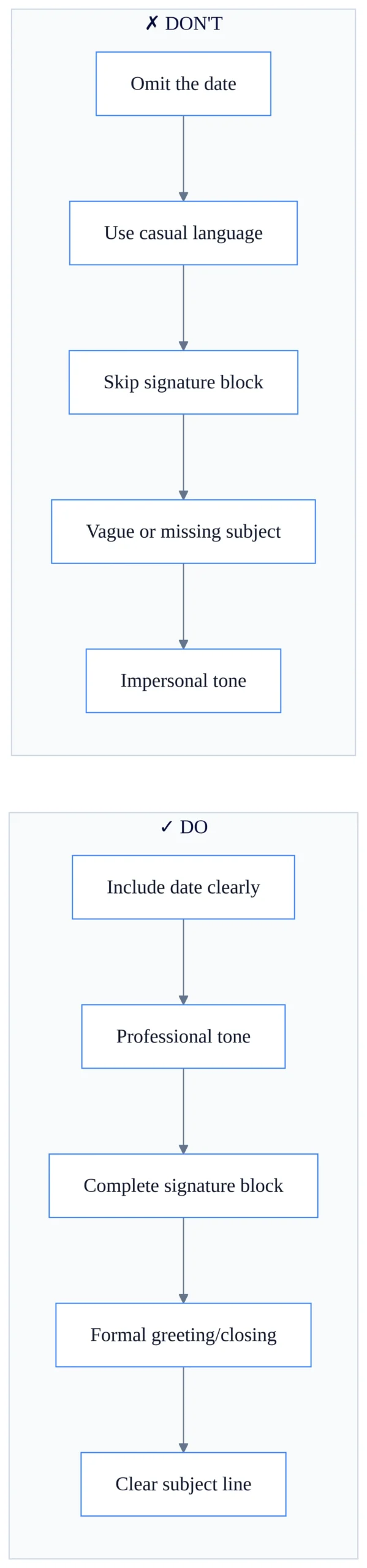
The most frequent error is mixing formality levels. Writing “Hey there!” in a business letter or “To Whom It May Concern” in a note to your cousin creates tonal whiplash. Match your language to your purpose and relationship from the first word to the last.
Another mistake: ignoring structure when it matters. Business letters require proper formatting. Skipping the inside address, forgetting the date, or omitting your contact information undermines your professionalism. Personal letters can be structurally casual, but they should still be legible and organized enough that the recipient can follow your thoughts.
Wrong salutations damage credibility quickly. Addressing your boss’s boss by their first name in a formal request suggests you don’t understand workplace hierarchy. Calling your childhood friend “Mr. Patterson” in a birthday card sounds bizarre. When in doubt about a business contact, err on the side of formality; you can always adjust if they sign their response with just a first name.
Many writers also fail to state their purpose clearly in business letters. Your recipient shouldn’t have to read three paragraphs to understand why you’re writing. Most people bury the lead out of misplaced politeness, but that just wastes time. Lead with the main point, then provide supporting details. Personal letters can meander (that’s part of their charm), but business letters must respect the reader’s time.
Finally, some people over-formalize personal letters out of misplaced politeness or under-formalize business letters out of misguided attempts to seem friendly. A personal letter to your aunt doesn’t need “Respectfully yours.” A complaint letter to a company doesn’t benefit from “Love and kisses.” Trust the conventions; they exist because they work.
If you’re sitting on the fence about which format to use, ask yourself whether the letter could end up in a file cabinet or a lawsuit. That usually clarifies things fast. Business letters create professional records and facilitate transactions between organizations or distant parties. Personal letters build and maintain relationships through authentic expression. The distinction isn’t arbitrary. It reflects fundamentally different purposes that require different approaches.
Frequently asked questions
What if I don’t know the recipient’s name for a business letter?
Use a generic salutation like “Dear Hiring Manager,” “Dear Sir or Madam,” or “To Whom It May Concern.” Better yet, call the organization to find the specific person’s name. If you cannot, “Dear [Department Name] Team” works well. Avoid overly casual openings like “Hi there” in formal business letters, as they undermine professionalism.
Can I mix business letter format with a personal note at the end?
Yes, but use restraint. A brief personal line after your formal closing (“P.S. I hope your family is well”) is acceptable in business letters to people you know. However, keep it short and professional. Extended personal commentary weakens the letter’s authority and can confuse the recipient about whether the message is business or personal.
Should I handwrite or type a business letter today?
Type business letters unless specifically requested otherwise. Typed letters look professional, are easier to read, and create a clear record. Handwritten business letters can appear unprepared or overly casual. Handwriting works well for personal letters and thank-you notes, where it adds warmth and shows extra effort.
Why might my complaint letter get ignored by a company?
Common reasons include unclear purpose, missing contact information, vague details, or poor formatting that makes it hard to route internally. State your complaint clearly in the first paragraph, include specific dates and reference numbers, and address it to the right department. A well-structured business letter signals you’re serious and deserve a response.
Is it ever appropriate to send a personal letter for a professional matter?
No. Using personal letter conventions for business matters risks appearing unprofessional or unclear. Even if you know the recipient well, business matters require business letter format to ensure proper documentation and routing. Save personal tone for actual personal correspondence, not professional transactions.
2 Comments
Good day.
Can we include this in our book? Rest assured, proper citation and referencing will be observed.
Thanks.
I read this blog it’s just a super blog, I am really happy to read this blog,