


If you’ve ever worked on a team project, you’ve probably practiced horizontal communication without even realizing it. When two colleagues share information, discuss a plan, or solve a problem together without going through their boss, that’s horizontal communication in action.
It might sound simple, but this type of communication is the secret sauce behind teamwork, productivity, and innovation in every successful organization. Still, just like any good thing, it comes with its own challenges.
In this post, we’ll dive deep into the advantages and disadvantages of horizontal communication, explore real examples, and learn how to make it truly effective in the modern workplace.
What Makes Horizontal Communication So Special?
Horizontal communication takes place between employees or departments who are on the same level of authority. It’s also known as lateral communication, and it focuses on cooperation, information sharing, and coordination.
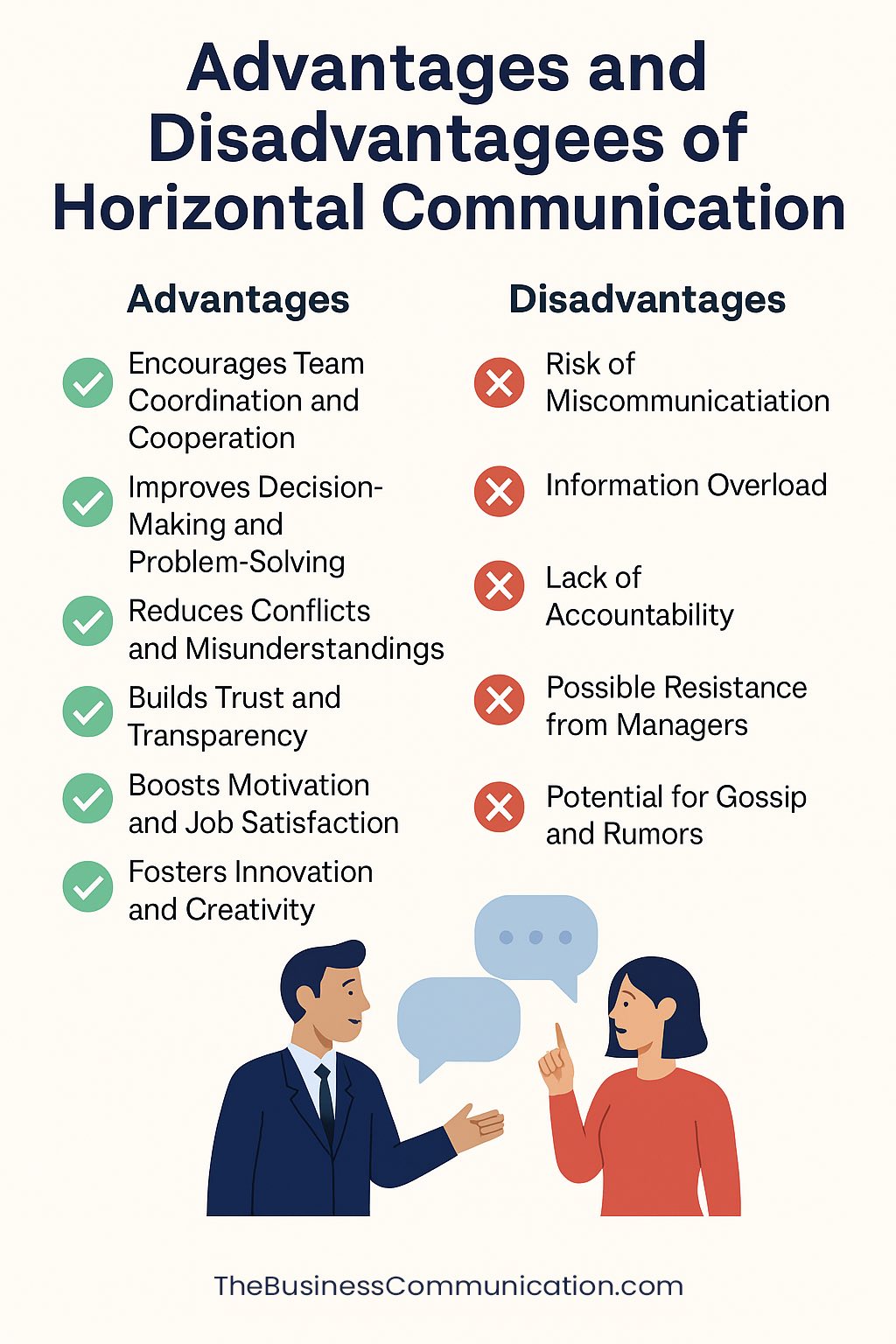
Think of it as colleagues talking directly to one another instead of waiting for orders to trickle down the management ladder. When done right, it keeps everyone informed, improves collaboration, and helps an organization move faster.
Advantages of Horizontal Communication
Horizontal communication offers several benefits that improve efficiency and strengthen workplace relationships. Let’s explore each advantage with real-world relevance.
1. Encourages Team Coordination and Cooperation
Teamwork is more than just working side by side; it’s about understanding each other’s needs. Horizontal communication helps employees coordinate tasks without going through multiple managerial layers.
For instance, when the marketing and sales teams collaborate directly on a product launch, they align their goals faster. The result? A successful campaign that meets targets without unnecessary delays.
If you’re curious about how such coordination shapes workplace culture, you can check out Importance of Horizontal Communication.
2. Improves Decision-Making and Problem-Solving
Good communication often leads to better decisions. When employees freely exchange information, they get multiple perspectives on a problem. This collective input helps them make faster and smarter decisions.
Imagine a project team facing a tight deadline. Instead of waiting for higher management approval, the team members discuss issues among themselves, adjust the plan, and meet the target on time.
That’s the power of direct collaboration.
3. Reduces Conflicts and Misunderstandings
Miscommunication is one of the biggest enemies of productivity. But when people at the same level talk directly, it cuts out unnecessary filters and confusion.
If an issue arises between two departments, they can resolve it immediately through open discussion. No more waiting for instructions or escalating small matters.
For related reading, you might explore Effective Informal Communication, which discusses how friendly exchanges often solve conflicts faster.
4. Builds Trust and Transparency
When people share information openly, they naturally develop trust. Transparency reduces suspicion and fosters a sense of unity among employees.
Imagine an organization where updates are shared directly among peers, not hidden behind closed doors. Everyone feels included and respected. That sense of belonging encourages people to give their best at work.
5. Boosts Motivation and Job Satisfaction
Nothing motivates an employee more than being heard. Horizontal communication gives everyone a voice. When peers exchange ideas freely, they feel recognized and valued.
A positive work atmosphere encourages employees to go the extra mile. This not only increases job satisfaction but also reduces turnover rates.
You can find more insight into how communication boosts motivation in Upward vs Downward vs Horizontal Communication.
6. Fosters Innovation and Creativity
Innovation often begins with a simple conversation. When employees brainstorm ideas together, creativity flows naturally.
For example, designers and developers often exchange suggestions while working on a new app. Their discussions lead to smarter designs and better user experiences.
Such collaboration creates a workplace where creativity thrives instead of being trapped by hierarchy.
7. Saves Time and Reduces Bureaucracy
In many organizations, messages get delayed as they pass through multiple managerial levels. Horizontal communication skips that line.
Employees can directly approach their peers, share updates, and act quickly. This saves valuable time and makes workflows smoother.
To learn how businesses can remove common communication barriers, you might visit Overcome the Communication Barriers in Business.
Disadvantages of Horizontal Communication
Even though horizontal communication sounds perfect, it’s not free from challenges. If handled carelessly, it can create confusion or reduce efficiency. Let’s explore the downsides.
1. Risk of Miscommunication
Since horizontal communication often happens informally, it can sometimes lead to misunderstandings. Without proper documentation, messages may be interpreted differently by each person.
For instance, an employee might take a casual suggestion as an official order. This can create confusion and even errors in project execution.
If you’d like to know how formal channels can reduce such issues, read Advantages and Disadvantages of Written Communication.
2. Information Overload
When everyone keeps communicating all the time, it’s easy to drown in information. Too many group chats, emails, and updates can overwhelm employees.
As a result, people may miss important details simply because they are bombarded with too much data. The key is to keep communication concise and purposeful.
3. Lack of Accountability
When communication flows freely among peers, it can blur responsibility. If something goes wrong, it’s often hard to identify who made the decision.
This issue becomes more visible in large organizations where several departments coordinate at once. Without proper structure, horizontal communication can lead to confusion about accountability.
4. Possible Resistance from Managers
Traditional managers sometimes dislike horizontal communication. They fear it might reduce their control or authority.
This resistance can slow down the adoption of lateral communication systems. However, once managers realize that it improves overall performance, most of them eventually support it.
5. Potential for Gossip and Rumors
Every workplace has a bit of informal chatter, but too much of it can become toxic. Horizontal communication can sometimes turn into gossip, especially when boundaries are unclear.
Rumors can harm reputations, create tension, and distract employees from their work. That’s why organizations need to promote ethical communication and mutual respect.
You can explore more on this issue in Informal Communication Spreads Rumor.
Balancing the Pros and Cons
Like every tool, horizontal communication works best when used wisely. Companies that succeed with it usually follow a few golden rules:
- Encourage open but respectful conversations.
- Use modern tools like Slack, Trello, or Google Chat to organize discussions.
- Keep records of important decisions to avoid confusion.
- Educate employees on communication etiquette.
- Recognize and reward good communicators.
By finding the right balance, businesses can enjoy the benefits of open communication without falling into its pitfalls.
Real-Life Examples of Horizontal Communication
To make things clearer, let’s look at how horizontal communication appears in real workplaces.
Example 1: Collaboration Between Marketing and Design Teams
In a digital agency, the marketing team shares feedback directly with designers. Together, they fine-tune visuals and campaign ideas without waiting for top management. The result is a faster and more creative workflow.
Example 2: Nurses and Doctors in Hospitals
In hospitals, nurses and doctors coordinate patient care daily. They exchange information about treatments, schedules, and emergencies through direct communication. This quick coordination often saves lives.
Example 3: IT Developers and Testers in Tech Firms
Developers and QA testers constantly communicate to fix bugs and improve software performance. Instead of long approval chains, they discuss solutions directly, which speeds up releases.
These examples prove how lateral communication fuels efficiency, teamwork, and success across industries.
For a deeper dive into communication flow between peers and departments, you might also visit Advantages and Disadvantages of Upward Communication.
Conclusion
Horizontal communication is the lifeblood of collaboration in any modern organization. It breaks down barriers, encourages teamwork, and helps employees achieve shared goals.
However, just like any powerful tool, it must be used responsibly. Without structure, it can cause confusion, rumor spreading, or loss of accountability.
The best approach is balance. Let your employees talk freely, but ensure clear guidelines and professional boundaries. When done right, horizontal communication doesn’t just improve productivity—it creates a workplace where people actually enjoy working together.
If you want to understand its foundation better, visit Meaning of Horizontal Communication.
FAQs
1. What are the main advantages of horizontal communication?
It improves teamwork, encourages creativity, and builds trust among employees at the same level.
2. What are the disadvantages of horizontal communication?
Miscommunication, gossip, and lack of accountability can occur if communication is not managed properly.
3. How can businesses improve horizontal communication?
By using clear communication tools, offering training, and promoting transparency and respect.
4. Why is horizontal communication important in organizations?
It enhances collaboration and ensures that employees stay aligned with company goals.
5. What is a real-life example of horizontal communication?
When members of the sales and marketing teams discuss campaign ideas directly, that’s a perfect example of horizontal communication.
Frequently asked questions
When should I escalate a horizontal communication issue to my manager?
Escalate when peers cannot resolve a conflict or disagreement after direct discussion, when a decision affects other departments, or when the issue impacts deadlines or quality. If horizontal communication has been attempted but fails, management involvement becomes necessary to clarify authority and next steps.
How do I prevent casual conversations from being misunderstood as official decisions?
Follow informal chats with a brief email summary confirming what was discussed and agreed upon. Use clear language like “As we discussed” rather than ambiguous phrasing. For important decisions, document them in shared project management tools so everyone sees the same information.
Is horizontal communication appropriate for sensitive topics like performance issues?
No. Performance concerns, disciplinary matters, and confidential information should go through formal channels with management. Horizontal communication works best for task coordination, problem-solving, and idea-sharing. Keep sensitive matters within proper reporting structures to protect both employees and the organization.
What if my workplace culture doesn’t encourage peer-to-peer communication?
Start small by initiating direct conversations on low-stakes topics with trusted colleagues. Model the behavior you want to see. Suggest team meetings or collaboration tools that normalize peer communication. If the culture remains rigid, document the communication barriers and discuss them with management as a productivity concern.
How do I balance horizontal communication with respecting the chain of command?
Horizontal communication and hierarchy coexist. Coordinate directly with peers on day-to-day tasks and decisions within your scope. Inform your manager about outcomes and major decisions. Never bypass your manager for approvals or strategic decisions that fall under their authority.
2 Comments
I wish that it may have much more details about this
grape vine seem to be an opposition to horizontal and yet it should be vertical communication