


Communication is the heartbeat of every successful organization. Without it, even the best teams can stumble. Among all forms of communication, horizontal communication plays a special role. It connects people working at the same level and helps them coordinate, share information, and solve problems together.
In today’s workplaces, where collaboration and teamwork matter more than ever, understanding the importance of horizontal communication is key. Let’s explore why it’s vital, how it works, and how organizations can make it even stronger.
Why Horizontal Communication Is Essential
Imagine working in an office where the marketing team has no idea what sales are doing, or where production never speaks with logistics. How smooth could that company run?
Horizontal communication fixes this. It’s the kind of communication that happens between colleagues or departments on the same level of hierarchy. It ensures everyone stays on the same page, moves toward common goals, and avoids unnecessary confusion.
Unlike upward communication (employee to manager) or downward communication (manager to employee), this one flows side to side — promoting equality, cooperation, and trust.
If you want to understand how it differs from other directions of communication, check out Upward vs Downward vs Horizontal Communication.
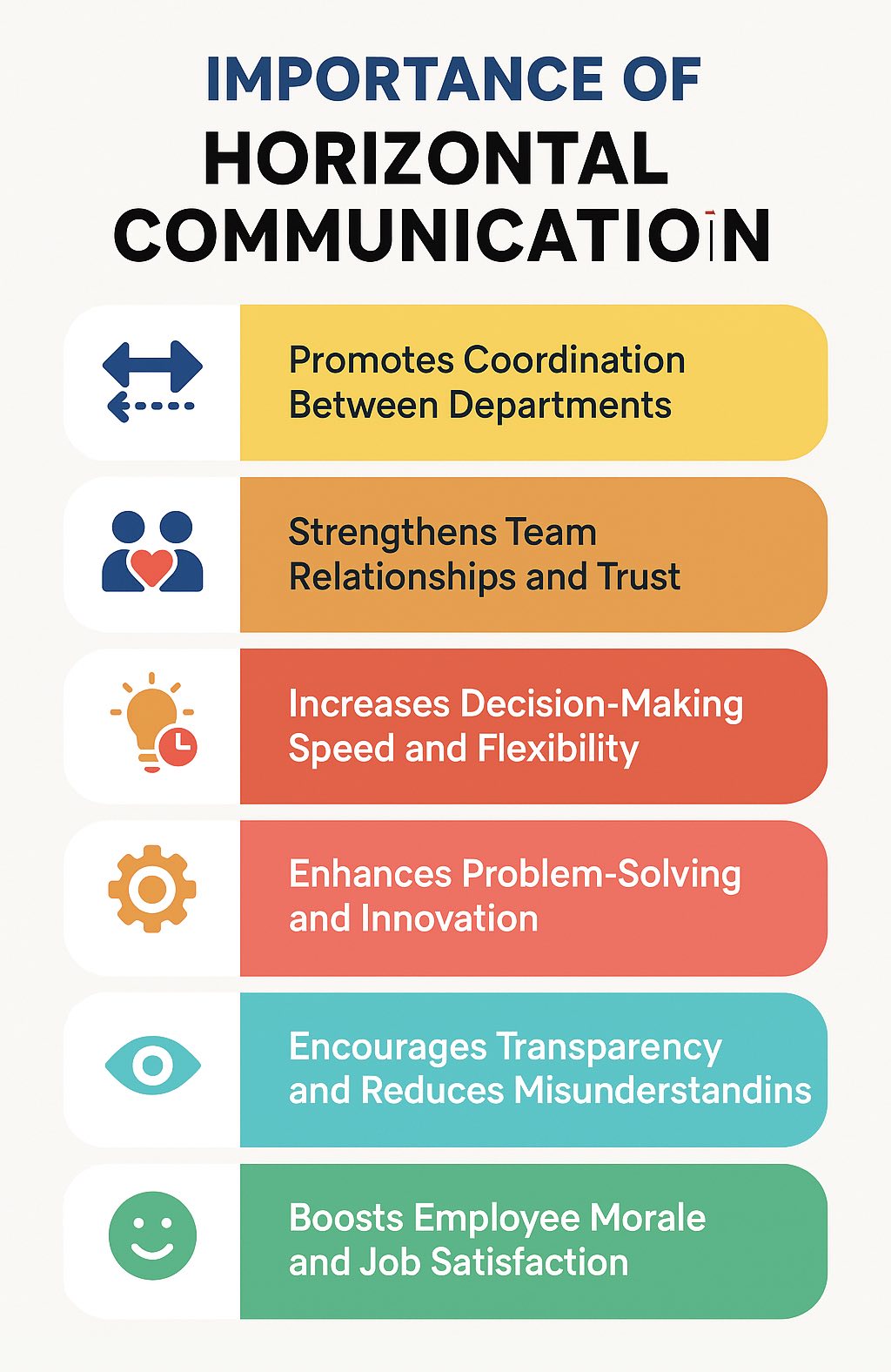
Promotes Coordination Between Departments
One of the clearest signs of strong horizontal communication is smooth coordination. When departments communicate regularly, projects move faster and with fewer mistakes.
Take, for example, a new product launch. The marketing, production, and sales teams must all work together. If they exchange information directly instead of going through managers each time, coordination improves naturally.
That’s why many organizations hold weekly inter-department meetings or use internal chat platforms. These simple steps ensure every team knows what the others are doing.
You can learn more about structured internal communication in Methods of Internal Communication.
Strengthens Team Relationships and Trust
Trust doesn’t come from job titles, it comes from communication. When employees talk openly and listen to each other, they build strong relationships that improve teamwork.
Horizontal communication helps colleagues understand one another’s challenges. For example, if the content team faces tight deadlines, the design team can adjust their workflow to help out.
That simple act of cooperation builds loyalty, mutual respect, and a sense of belonging. Teams that trust each other work more efficiently and enjoy their jobs more.
For further insight on how informal connections shape trust, see Effective Informal Communication.
Improves Decision-Making Speed and Flexibility
Every minute counts in business. When employees have to wait for managers to approve every small action, decisions take forever.
Horizontal communication speeds things up. It allows people at the same level to discuss problems, exchange ideas, and make quick decisions.
For instance, suppose a software bug appears during testing. The developers and testers can collaborate directly, identify the issue, and fix it immediately. There’s no need for a chain of approvals.
This flexibility not only saves time but also shows trust in employees’ expertise. Fast decision-making is one of the biggest reasons why startups and agile companies rely heavily on lateral communication.
Enhances Problem-Solving and Creativity
Creative ideas often emerge from casual conversations. When people from different teams talk, they bring unique experiences and perspectives to the table.
Imagine a designer and a customer support agent brainstorming. One focuses on visuals, the other on user feedback. Together, they might come up with a product improvement that neither would have discovered alone.
This cross-department exchange drives innovation and continuous improvement. When employees are encouraged to talk freely, creativity thrives.
To understand how communication barriers block innovation (and how to remove them), read Overcome the Communication Barriers in Business.
Encourages Transparency and Reduces Misunderstandings
Transparency keeps everyone aligned. When employees communicate directly, information flows faster and more accurately.
Think of a project where finance and HR must collaborate on budgets for new hires. Instead of waiting for upper management to relay details, both departments can clarify things immediately.
This direct exchange minimizes the risk of confusion and rumor spreading. Everyone knows what’s happening, which builds confidence and reliability.
Unfortunately, when organizations lack horizontal communication, gossip often fills the gap. If you want to understand how rumors spread, see Informal Communication Spreads Rumor.
Boosts Employee Motivation and Job Satisfaction
Employees who can freely express their opinions tend to be happier and more motivated. When communication flows laterally, everyone feels involved in the company’s success.
For example, a content writer sharing ideas directly with the product team feels valued and connected to the overall mission. This sense of participation boosts confidence and job satisfaction.
Horizontal communication also reduces stress. Instead of feeling isolated, employees feel part of a collaborative environment where their voices matter.
You can explore related benefits in Advantages of Internal Communication.
Adapts Perfectly to Modern Workplaces
Remote work has made horizontal communication more important than ever. With teams spread across cities or even continents, collaboration tools keep people connected.
Apps like Slack, Microsoft Teams, and Google Chat have replaced office hallways as digital meeting points. These tools make it easy for coworkers to brainstorm, share updates, and solve issues instantly.
However, successful remote communication requires clarity. Messages should be brief, polite, and well-structured. Emojis might add friendliness, but professionalism should always remain.
Organizations that master this balance create an inclusive environment, even when their teams are far apart.
Builds a Positive Organizational Culture
Culture grows from daily communication. If people talk openly, help each other, and share credit, the culture becomes positive and supportive.
Horizontal communication promotes equality. It sends the message that everyone’s input is valuable, no matter the title.
When leaders encourage this kind of communication, employees stop fearing hierarchy. Instead, they feel empowered to share ideas. Over time, this fosters collaboration, respect, and psychological safety — essential elements of a thriving workplace.
Such environments attract and retain talented employees who love teamwork and open dialogue.
Real-Life Examples of Horizontal Communication
Horizontal communication happens everywhere — not just in offices. Let’s look at a few simple examples:
Example 1: Marketing and Sales Collaboration
When a new product is launched, the marketing team gathers customer data, while the sales team provides feedback from the field. Through regular discussions, they refine strategies that lead to better results.
Example 2: Nurses and Doctors in Hospitals
In healthcare, coordination between nurses and doctors is essential. Their direct communication ensures patients get the right treatment without delay.
Example 3: Teachers in Schools
Teachers often collaborate to plan events or discuss student progress. Sharing experiences laterally helps improve teaching quality and teamwork.
Example 4: IT Developers and Designers
In tech companies, developers and designers constantly communicate to align the user interface with functionality. This direct interaction prevents misaligned goals and boosts project quality.
These examples show how peer communication builds efficiency, trust, and harmony in any professional environment.
How to Strengthen Horizontal Communication
Good communication habits don’t just happen — they’re cultivated. Here are some practical ways organizations can enhance horizontal communication:
- Encourage inter-department meetings: Allow teams to share updates regularly.
- Use digital tools wisely: Platforms like Slack and Trello can improve collaboration.
- Offer communication training: Teach active listening and empathy.
- Promote equality: Ensure every employee feels comfortable speaking up.
- Recognize teamwork: Publicly appreciate teams that communicate effectively.
When leaders set the tone and lead by example, communication becomes part of the culture.
Conclusion
Horizontal communication is the invisible thread that connects every corner of an organization. It ensures that people talk, share, and grow together.
From improving coordination to inspiring innovation, its impact touches every aspect of the workplace. Without it, teams can quickly become disconnected and inefficient.
By promoting open dialogue and trust, organizations not only improve productivity but also build a culture where everyone feels respected and valued.
If you’d like to explore its foundation, visit Meaning of Horizontal Communication.
FAQs
1. Why is horizontal communication important?
Because it improves coordination, builds trust, and helps teams work toward shared goals.
2. How does horizontal communication help employees?
It encourages teamwork, reduces stress, and gives employees a sense of belonging.
3. What is a good example of horizontal communication?
When colleagues from different departments exchange updates directly, like sales and marketing teams collaborating on a campaign.
4. How can organizations improve horizontal communication?
By encouraging openness, using collaboration tools, and holding cross-department meetings.
5. What are the benefits of effective horizontal communication?
Faster decision-making, transparency, improved morale, and better teamwork.
Frequently asked questions
What if my manager discourages direct communication with other departments?
This is a red flag for organizational health. Respectfully explain to your manager how direct peer communication speeds up projects and reduces bottlenecks. Share a specific example where lateral communication would have saved time. If resistance continues, document the delays caused and escalate to HR or leadership. Many modern companies now recognize that horizontal communication improves efficiency.
How do I know when to loop in my manager versus communicating directly with peers?
Communicate directly with peers on tactical, day-to-day issues: clarifying deadlines, sharing updates, solving immediate problems. Loop in your manager for decisions that affect strategy, budgets, hiring, or cross-team priorities. When in doubt, ask your manager upfront what decisions they want to approve versus what you can handle laterally.
Can horizontal communication replace formal meetings and status reports?
Not entirely. Casual peer communication handles quick questions and real-time problem-solving. Formal meetings and reports create accountability, document decisions, and ensure nothing falls through cracks. Use both: daily horizontal chats for agility, weekly meetings for alignment and record-keeping.
What should I do if horizontal communication creates conflicting priorities between departments?
Conflicts are normal when teams communicate openly. Document the conflicting priorities clearly, then escalate to the manager or leader responsible for both departments. They can set clear guidelines on which priority wins. Use this as feedback to improve your company’s decision-making process.
How can I encourage horizontal communication if my workplace culture is very hierarchical?
Start small: invite a peer from another department for coffee or lunch. Ask their opinion on a problem you’re solving. Share information proactively. Suggest informal cross-team meetings or chat channels. Model openness and respect. Change spreads slowly in hierarchical cultures, but consistent peer-to-peer connection builds momentum.
1 Comment
I like your communication studies, wish to be offered a free study of communication at your institution