


Have you ever wondered why some candidates leave an unforgettable impression, while others are forgotten seconds after the interview ends? The secret is not only in what they say but how they behave. That’s where interview etiquette comes in.
Interview etiquette means showing respect, confidence, and professionalism throughout every step of the hiring process. From your first email to the thank-you note, your manners speak louder than your words. Let’s explore how you can master the do’s and don’ts of interview etiquette to stand out as the perfect candidate.
Understanding Interview Etiquette
Interview etiquette is more than just saying “thank you” and dressing nicely. It’s about creating a respectful and professional impression through your attitude, behavior, and communication.
Think of it as your “soft skill superpower.” It shows the interviewer that you’re thoughtful, organized, and emotionally intelligent — qualities every employer values.
If you want to understand what really determines interview success, you’ll find useful insights in our guide on the conditions of the success of an interview. That article perfectly explains how communication and personality shape your outcome.
So, let’s dive deeper and see how etiquette works before, during, and after your interview.
Pre-Interview Etiquette: Preparation and Planning
Before you even step into the interview room, your preparation speaks volumes. This is where many candidates either make or break their chances.
Research the Company and Role
Would you walk into a restaurant without checking the menu? Probably not! Similarly, research the company’s goals, culture, and the role you’re applying for. Employers love candidates who understand their organization.
Visit their official website, LinkedIn page, and recent press releases. Doing so helps you sound informed and confident during the interview.
Dress Appropriately
First impressions happen within seconds, and your outfit says a lot before you say a word. Choose formal or business-casual attire based on the company culture. You can get detailed dressing guidance from our post on what to wear for interview. It explains what colors, styles, and accessories make the best impression.
Check the Interview Details
Confirm the date, time, and location. If it’s an online interview, test your camera, microphone, and internet connection. Being early shows reliability and respect for the interviewer’s time.
Prepare Thoughtful Questions
Interviewers appreciate curiosity. Prepare two or three questions about the company’s goals, challenges, or growth opportunities. It proves you’re genuinely interested in the job.
Avoid Last-Minute Panic
Pack your documents, double-check your resume, and prepare your outfit the night before. Calm preparation reflects professionalism, not anxiety.
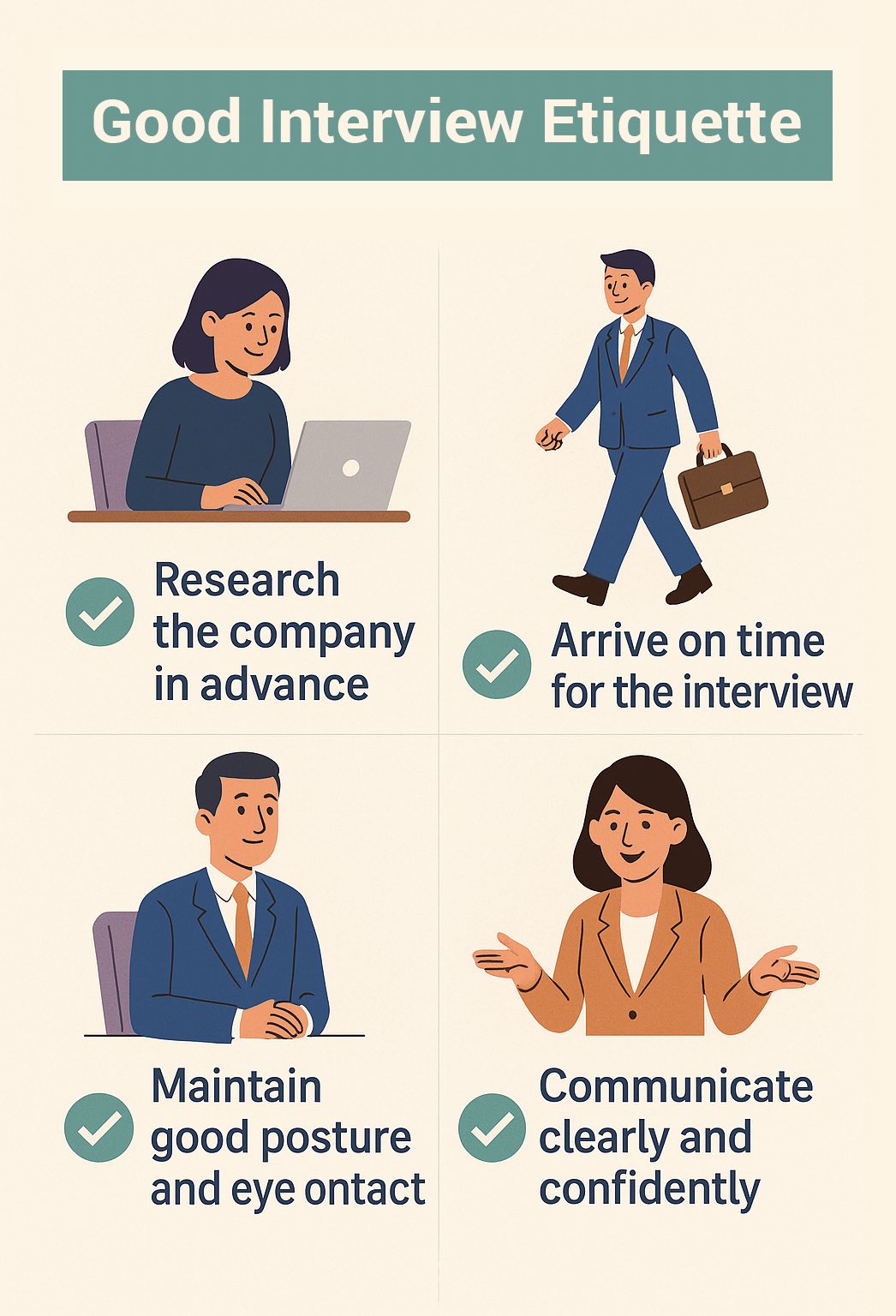
During the Interview: The Do’s
Now comes the most important part, the face-to-face interaction. Your behavior during the interview creates a lasting impression.
1. Greet Confidently
Start with a polite smile, a firm handshake, and a friendly greeting. Small gestures create a big impact.
2. Maintain Good Body Language
Sit up straight, make eye contact, and nod while listening. Non-verbal cues show attentiveness and confidence. To understand this better, explore our article on the importance of non-verbal communication. It will help you communicate effectively without saying a word.
3. Listen Actively
Avoid interrupting. Let the interviewer finish speaking before you respond. Active listening shows patience and respect — qualities every professional needs.
4. Be Polite and Positive
Address the interviewer by their proper title, use “please” and “thank you,” and maintain a pleasant tone. Avoid complaining about previous employers or coworkers.
5. Stay Engaged
Ask relevant questions, use examples when explaining your experience, and show enthusiasm for the role.
If you need help understanding interview behavior more deeply, check out the guidelines for facing employment interview. It provides valuable tips for handling every question with confidence.
During the Interview: The Don’ts
You may have the best qualifications, but even small etiquette mistakes can ruin your chances. Here’s what to avoid.
1. Don’t Speak Negatively
Never badmouth past employers, teachers, or colleagues. It makes you seem unprofessional.
2. Don’t Overshare
Keep your answers relevant to the job. Avoid discussing personal problems or unrelated experiences.
3. Don’t Be Overconfident
Confidence is good, arrogance is not. Employers value humility. Speak clearly but avoid bragging.
4. Don’t Forget Your Phone
Switch your phone to silent mode. Nothing distracts an interviewer more than a ringtone in the middle of a serious question.
5. Don’t Be Robotic
Don’t memorize answers. Speak naturally and genuinely. If you need help understanding different question types, check out types of job interview. It explains how various interviews are structured and how you can adjust your tone for each.
Virtual Interview Etiquette
With remote work becoming common, virtual interviews are now standard. While convenient, they bring their own set of challenges.
1. Set the Scene
Choose a quiet space with good lighting. A clean background helps you appear professional.
2. Check Your Equipment
Always test your camera, microphone, and Wi-Fi before the call. A technical glitch can ruin your rhythm.
3. Dress Professionally
Even though you’re at home, wear proper attire. Dressing well puts you in the right mindset.
4. Maintain Eye Contact
Look directly into the camera, not the screen. This makes your conversation feel natural and confident.
5. Stay Present
Don’t multitask or look away. Nod occasionally to show engagement. A distracted candidate signals disinterest.
Post-Interview Etiquette
Your work isn’t over when the interview ends. What you do afterward can influence the final decision.
Send a Thank-You Email
Always send a short and polite thank-you email within 24 hours. Express gratitude for the opportunity and restate your interest in the position. You can refer to our resource on business thank-you letter to clients to understand the right tone and structure for such messages.
Be Patient
Waiting can be stressful, but following up too soon looks desperate. Give the company a reasonable time to respond, usually a week or two.
Follow Up Professionally
If you haven’t heard back after a couple of weeks, send a gentle inquiry email. Be polite, concise, and positive.
Common Interview Etiquette Mistakes
Even smart candidates make etiquette errors that can cost them the job. Let’s look at the most common ones.
- Arriving late or too early: Both can create awkwardness. Arrive 10–15 minutes before the interview.
- Interrupting the interviewer: It shows impatience.
- Using slang or casual language: Keep it professional.
- Ignoring greetings or thank-yous: Courtesy never goes out of style.
- Speaking too fast: Nervousness often speeds up speech. Slow down and breathe.
If you want to become a better listener and communicator, check out our post on techniques for improving listening ability. Listening well is a key part of good interview manners.
Cultural and Cross-Communication Etiquette
Interview behavior can vary across countries, cultures, and organizations. A gesture that’s polite in one place may seem rude in another.
If you’re applying internationally, study the cultural norms. For example, direct eye contact may be encouraged in Western interviews but considered impolite in some Asian contexts.
To learn how to adapt effectively, read our article on guidelines to improve effectiveness of cross-cultural communication. It will help you avoid misunderstandings during global interviews.
Bonus Tips: Body Language and Non-Verbal Cues
Did you know that 55% of communication during interviews is non-verbal? That means your gestures, posture, and expressions often speak louder than words.
1. Sit Straight
Avoid slouching or leaning too much. Sit comfortably with open shoulders.
2. Use Hand Gestures Wisely
Small, natural gestures help emphasize your points, but avoid overdoing it.
3. Maintain Eye Contact
It builds trust and shows confidence.
4. Smile Naturally
A genuine smile creates a friendly atmosphere and helps ease tension.
For deeper insight, explore our post on importance of non-verbal communication. It’s a great companion piece for mastering this soft skill.
Conclusion
Interview etiquette isn’t about pretending to be perfect, it’s about being respectful, mindful, and professional. When you know what to do and what not to do, you automatically stand out.
Remember, every interview is a learning opportunity. Even if you don’t get the job, the experience helps you grow. The more you practice these etiquettes, the closer you get to your dream offer.
If you’d like to explore the entire journey from resume to job offer, read our detailed guide on The Complete Interview Process: From Application to Offer. It connects perfectly with what you’ve learned here today.
Now that you know the do’s and don’ts, go ace that next interview like a pro!
Frequently asked questions
Should I send a thank-you email or handwritten note after my interview?
Email is faster and more professional for most situations—send it within 24 hours while you’re fresh in the interviewer’s mind. A handwritten note works if the company culture is formal or creative. Either way, personalize it by referencing something specific from your conversation. Never skip this step; it reinforces your interest and manners.
What if I accidentally say something negative about my previous employer?
Stay calm and move forward. Don’t dwell on it or over-apologize, as that draws more attention to the mistake. If the moment allows, briefly redirect: “What I meant was, I learned a lot there, but I’m excited about this opportunity.” Then shift focus to your strengths and why you’re a good fit for the new role.
Is it okay to ask about salary during the first interview?
Avoid it in the first interview unless the employer brings it up. Asking too early signals you’re more interested in pay than the role itself. Wait until a later stage or let HR initiate the conversation. If pressed, say you’re flexible and want to learn more about the position first.
How should I handle a virtual interview if my internet cuts out?
Reconnect as quickly as possible. When you return, apologize briefly and move on without making excuses. Have a backup plan: know the interviewer’s phone number in case you need to call in, or sit near your router to strengthen your connection. Testing your setup 30 minutes early prevents most technical issues.
What if the interviewer asks a question I don’t understand?
Ask for clarification politely: “Could you rephrase that?” or “Can you give me an example?” This shows honesty and active listening, not weakness. Pausing to think before answering is also fine—it beats rambling or guessing what they meant. Interviewers respect candidates who seek clarity.
Should I correct the interviewer if they mispronounce my name?
Gently correct them once, early in the interview: “Actually, it’s pronounced…” Keep it brief and friendly, not defensive. Most interviewers appreciate the correction and will use it correctly afterward. Don’t bring it up again if they slip—focus on the conversation instead.