


When was the last time you received a handwritten thank you note? Chances are, you still remember it. Why? Because gratitude sticks in the mind longer than most things. In business, this principle works even better. A simple thank you letter to clients can strengthen relationships, build loyalty, and keep customers coming back.
In an era when businesses compete fiercely for attention, saying thank you can be your secret weapon. Unlike a quick thank you in conversation, a formal thank you letter adds a professional touch that shows effort and sincerity. It is much more than good manners, it is smart communication.
In this guide, we will explore what a business thank you letter is, why it matters, how to structure it, and when to send it. We will also go through sample templates that you can easily adapt. Along the way, you will see how these letters connect with other types of professional correspondence such as acknowledgement letters and sales letters, both of which also play key roles in client communication.
What Is a Business Thank You Letter?
A business thank you letter is a formal letter or email written by a company or professional to express appreciation to clients, partners, or customers. It acknowledges actions like making a purchase, attending a meeting, or supporting an event.
Unlike casual notes, business thank you letters are structured and follow the conventions of formal letter formats. They are short, polite, and professional while still carrying a warm, personal tone.
Think of them as bridges. They connect you to clients on an emotional level while reinforcing the professionalism that keeps business relationships strong.
Importance of Thank You Letters in Business Communication
Why not just say “thanks” in a quick message? Because in business, details matter. A carefully crafted thank you letter has several benefits.
First, it builds stronger client relationships. Gratitude shows clients that you notice their loyalty and do not take it for granted. Second, it strengthens your brand image. Companies that value appreciation often stand out from competitors who focus only on sales pitches. Third, it expresses professionalism. A written letter reflects more commitment than a casual text or call. Fourth, it helps differentiate your business in crowded markets. Clients remember thoughtful gestures, not standard automated responses. Finally, it creates trust, just as a recommendation letter validates professional credibility.
In short, thank you letters are not just about saying thanks, they are about building lasting impressions.
Structure of a Business Thank You Letter
A business thank you letter should be clear, concise, and well-structured. If you are familiar with the parts of a business letter, you will notice similarities.
Start with the sender’s details, including your name, company, and contact information. Add the date, then include the recipient’s name, designation, and company. Begin with a greeting such as “Dear Mr. Smith.” The opening line should immediately express gratitude, for example, “Thank you for trusting us with your recent order.” In the body, explain the reason for your thanks and highlight specifics such as the meeting, purchase, or collaboration. Keep it personal but professional. Close with a warm sentence about looking forward to future opportunities. End with your signature and printed name.
Unlike an inquiry letter, which asks questions, a thank you letter confirms appreciation. Both are professional, but the tone of a thank you letter is more personal and positive.
Situations Where a Thank You Letter Is Needed
Thank you letters are not only for grand occasions. There are many situations where they are appropriate.
After a successful order or deal, a thank you letter assures the client that their choice was appreciated. Following meetings or negotiations, a thank you note reinforces interest and professionalism. When clients show loyalty or give referrals, a thank you letter encourages them to continue supporting your business. After events, conferences, or sponsorships, sending a thank you letter helps keep the connection alive. During festive seasons, a holiday thank you letter adds a warm human touch.
If you compare this with a complaint letter, the contrast is clear. A complaint letter addresses problems, while a thank you letter celebrates positive actions. Both are essential, but they serve opposite purposes in communication.
Types of Business Thank You Letters
There are several types of thank you letters you might write in business.
A client thank you letter expresses gratitude for a purchase, loyalty, or referral. A meeting thank you letter is written after discussions or presentations to highlight appreciation and build goodwill. An event thank you letter is used after conferences, workshops, or webinars. A holiday thank you letter combines seasonal greetings with appreciation, making it both personal and professional. A follow-up thank you letter is sent after initial contact, showing interest in continuing the relationship.
Each type shares the same purpose, to make the client feel valued.
Key Phrases and Expressions for Thank You Letters
Sometimes, the challenge is not structure but wording. Here are some helpful phrases:
“We sincerely appreciate your continued trust in our company.”
“Your support inspires us to keep improving our services.”
“It was a pleasure meeting you and exploring new opportunities together.”
“We are grateful for your loyalty and look forward to serving you again.”
“Your participation made our event a success, thank you.”
Notice the tone. It is warm, professional, and focused on the client. Unlike the direct tone of a resignation letter, which communicates closure, a thank you letter emphasizes continuity.
Tips for Writing an Effective Business Thank You Letter
Here are some teacher-approved tips.
Personalize each letter. Do not just say “Dear Client,” but use their name and details. Keep it concise but heartfelt. Avoid generic phrases that sound automated. Align with your brand’s voice. If your business is formal, keep the tone formal. If it is friendly, add a touch of warmth. Use positive language to strengthen collaboration. Always proofread before sending, as errors can spoil professionalism.
These are similar principles used in cover letters, where personalization and accuracy also play key roles.
Business Thank You Letter Templates
Here are some ready-to-use templates.
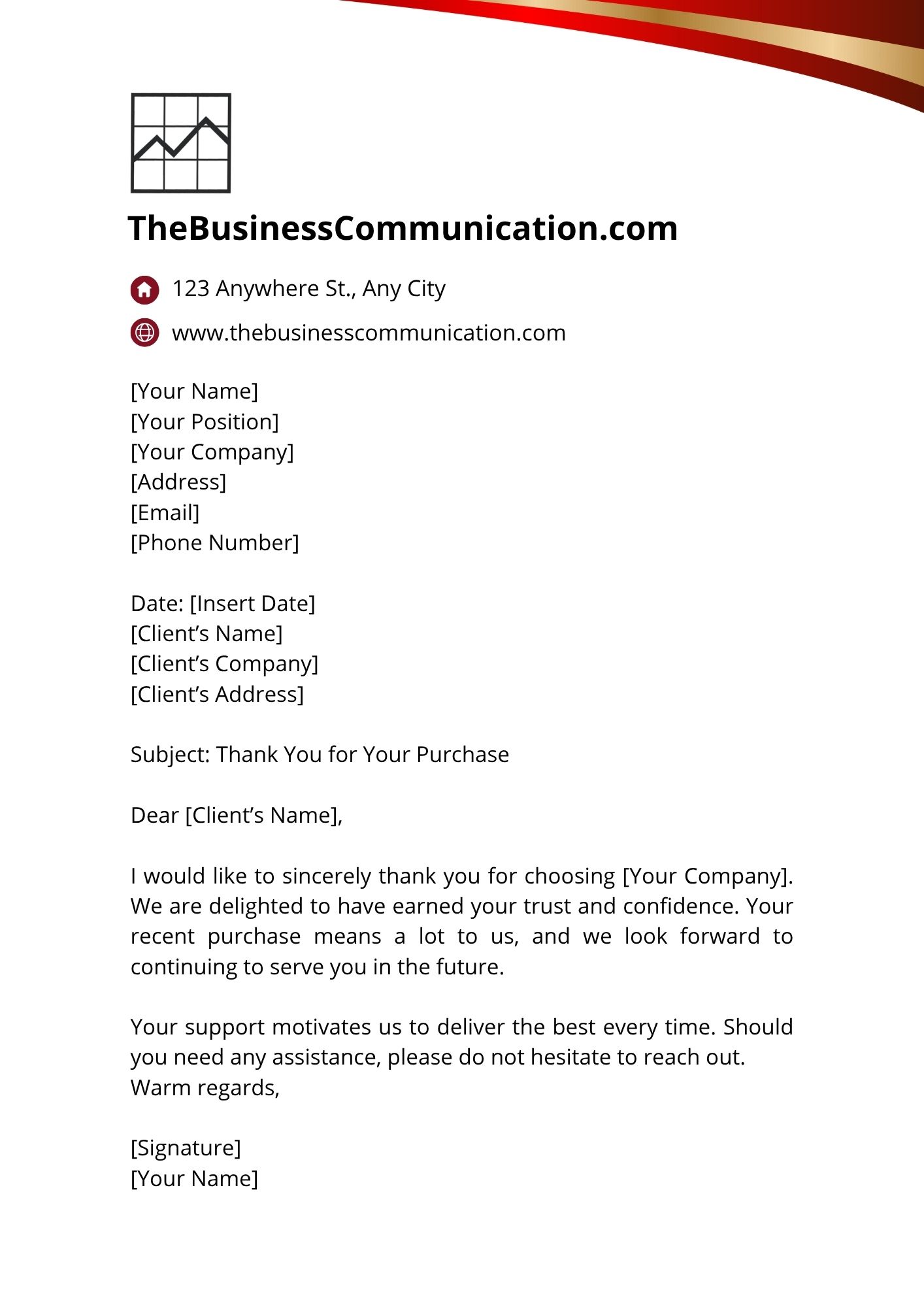
Template 1: Thank You After a Purchase
[Your Name]
[Your Position]
[Your Company]
[Address]
[Email]
[Phone Number]
Date: [Insert Date]
[Client’s Name]
[Client’s Company]
[Client’s Address]
Subject: Thank You for Your Purchase
Dear [Client’s Name],
I would like to sincerely thank you for choosing [Your Company]. We are delighted to have earned your trust and confidence. Your recent purchase means a lot to us, and we look forward to continuing to serve you in the future.
Your support motivates us to deliver the best every time. Should you need any assistance, please do not hesitate to reach out.
Warm regards,
[Signature]
[Your Name]
Template 2: Thank You After a Meeting
[Your Name]
[Your Position]
[Your Company]
[Address]
[Email]
[Phone Number]
Date: [Insert Date]
[Client’s Name]
[Client’s Company]
[Client’s Address]
Subject: Thank You for the Meeting
Dear [Client’s Name],
It was a pleasure meeting with you on [Date]. Thank you for sharing your valuable time and insights with us. I truly appreciated the opportunity to discuss [specific topic or project].
We look forward to exploring the opportunities we discussed and working together in the near future.
Sincerely,
[Signature]
[Your Name]
Template 3: Thank You for Client Loyalty
[Your Name]
[Your Position]
[Your Company]
[Address]
[Email]
[Phone Number]
Date: [Insert Date]
[Client’s Name]
[Client’s Company]
[Client’s Address]
Subject: Thank You for Your Loyalty
Dear [Client’s Name],
I am writing to express my heartfelt gratitude for your continued support of [Your Company]. Your loyalty inspires us to keep improving and innovating.
We are truly honored to serve you and value the relationship we have built over the years. I look forward to many more years of collaboration.
With sincere appreciation,
[Signature]
[Your Name]
Template 4: Thank You After an Event
[Your Name]
[Your Position]
[Your Company]
[Address]
[Email]
[Phone Number]
Date: [Insert Date]
[Client’s Name]
[Client’s Company]
[Client’s Address]
Subject: Thank You for Attending [Event Name]
Dear [Client’s Name],
On behalf of [Your Company], I want to thank you for attending [Event Name]. Your presence added great value, and we are grateful that you took the time to join us.
I hope you found the event enjoyable and insightful. We look forward to welcoming you to our future programs and events.
Kind regards,
[Signature]
[Your Name]
Template 5: Holiday Thank You Letter
[Your Name]
[Your Position]
[Your Company]
[Address]
[Email]
[Phone Number]
Date: [Insert Date]
[Client’s Name]
[Client’s Company]
[Client’s Address]
Subject: Holiday Greetings and Thank You
Dear [Client’s Name],
As the year comes to a close, I want to take this opportunity to thank you for your trust and support. Working with you has been an absolute pleasure, and we are grateful for the confidence you have shown in our services.
We wish you a joyful holiday season and a successful year ahead. May our partnership continue to grow in the coming years.
Warm regards,
[Signature]
[Your Name]
Common Mistakes to Avoid
Even the best intentions can lead to weak thank you letters if you fall into common traps. Avoid being too generic, like saying “Thanks for everything.” Always personalize. Do not make it too long, as clients prefer short and impactful letters. Avoid mixing gratitude with excessive promotion, as it reduces sincerity. Proofread carefully to avoid errors. Finally, do not delay. Send thank you letters promptly when the memory is fresh.
Conclusion
A business thank you letter is one of the simplest yet most powerful tools in professional communication. It is more than a courtesy, it is a way of showing clients that they matter. By using the right structure, tone, and personalization, you can write thank you letters that strengthen trust and keep clients loyal.
Think of it this way, just as a complaint letter sample helps businesses address problems professionally, a thank you letter helps celebrate and nurture positive relationships. Both are vital parts of business communication, and both reflect on your professionalism.
So, next time a client supports your business, do not let the moment pass with a quick email or casual thanks. Write a thoughtful thank you letter. It could be the small gesture that makes the biggest difference.
Frequently asked questions
Should I send a thank you letter via email or printed mail?
Email works for most situations and reaches clients quickly. Print a physical letter for major clients, after significant deals, or when you want to stand out. Handwritten notes are memorable but take longer. Match the formality of the original interaction—a large purchase warrants printed mail; a routine meeting email suffices.
What if I don’t know the client’s preferred title or pronouns?
Use their full name without a title: “Dear Alex Johnson” instead of guessing Mr. or Ms. If you must use a title, check your company records, LinkedIn, or previous correspondence. When in doubt, a general greeting like “Dear Valued Client” works for group thank you letters.
How soon after an interaction should I send the thank you letter?
Send it within 3–5 business days while the interaction is fresh in the client’s mind. For urgent situations like post-event thanks, send within 48 hours. Waiting longer than a week risks seeming delayed or insincere. Timing shows attentiveness.
Can I use a template for every client or should I personalize each letter?
Use a template as your structure, but always personalize the body. Reference the specific client name, transaction, or meeting details. Generic letters feel impersonal and defeat the purpose of building relationships. Personalization takes minutes and significantly increases impact.
What if the client’s action was small—is a thank you letter still appropriate?
Yes, but scale your response. A small purchase or brief meeting might warrant a short email thank you. A referral, repeat business, or significant collaboration deserves a formal letter. Even small gestures of appreciation strengthen relationships and cost nothing.
Should I mention next steps or future business in the thank you letter?
Keep it brief and positive. A closing line like “We look forward to working with you again” is appropriate. Avoid hard sales pitches or detailed proposals—the letter’s purpose is gratitude, not selling. Save detailed next steps for a separate follow-up email.