


Memo and email are two common tools in modern communication. Students often ask which one fits a situation better. Interestingly, the answer is not the same every time. It depends on your purpose, your audience and how official the message is. If you want to understand professional communication in a simple way, this guide will walk you through the differences with clear examples and friendly explanations.
Before choosing between memo and email, it helps to know how they work inside an organization. Many learners study them along with the basics of written communication. That topic explains how written messages support clarity, accuracy and documentation.
What Is a Memo
A memo is a short informative message used inside an organization. It is written when you need to share instructions, updates or reminders with employees. The tone is usually formal. A memo also becomes part of the workplace record, so it is helpful for long term documentation. Think of a memo as a notice that travels faster than a printed letter but still feels official.
A memo also follows a fixed structure. Most of them start with To, From, Date and Subject. This helps readers understand the purpose quickly. If you want a deeper idea of how organizations communicate internally, you may explore topics like internal communication characteristics. It shows why companies prefer clear formats like memos.
What Is an Email
Email is a flexible digital message used both inside and outside organizations. You can send an email to your teacher, your colleague or even a business you want to contact. Emails are quick, interactive and suitable for formal as well as informal situations.
Email allows attachments, links and multimedia. This makes it perfect when you need to share documents or request information. However, people sometimes receive too many emails. That creates confusion if messages are not organized well. For this reason, some workplaces treat important communication separately, especially when the message needs long term attention.
You will understand the role of email better if you compare it with printed messages. For example, this post on business letter vs email explains how email evolved into a modern communication tool.
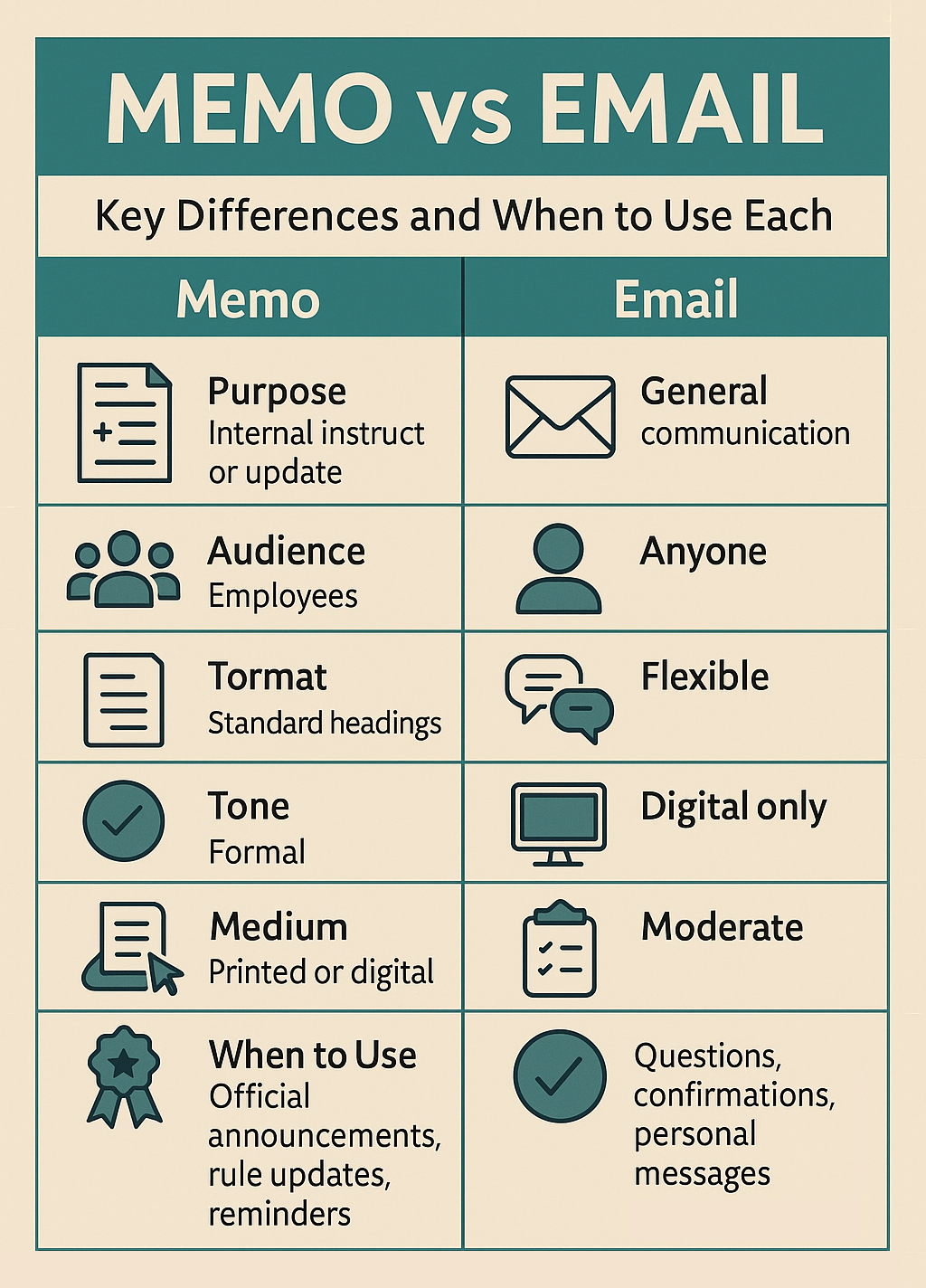
Memo vs Email, 7 Key Differences
Let us explore the differences in a simple way. As you read, try to imagine a real workplace situation. It will help you decide which tool fits your needs best.
1. Purpose
A memo is written to inform or instruct employees. Its purpose is often official. You use it when the message must stay documented for future reference. An email serves many purposes. It can be used to ask a question, reply to a client or share casual updates. As much as possible, choose a memo when the message needs authority.
2. Audience
Memos are created for internal audiences. These include departments, teams or any group inside the organization. Email, on the other hand, works for both internal and external users. You can email a customer, a supplier or anyone outside your workplace. This flexibility is one of the biggest strengths of email.
3. Structure and Format
Memos follow a fixed structure. They have headings that guide the reader. Emails are more flexible and include greetings, closings and a signature block. The structured format of a memo makes it easy to scan important points. The friendly nature of email makes communication more interactive and personal.
If you want to explore how different business messages are formatted, the explanation in this guide on parts of a business letter may help you understand formal writing elements better.
4. Tone and Style
Memos sound formal and focused. There is no greeting or friendly introduction. They talk straight to the point. Emails allow a wider range of tones. You may write formally or casually depending on the purpose and your relationship with the receiver. This flexibility makes email more comfortable in many situations.
5. Distribution Method
Memos may be printed or shared digitally inside the organization. They often appear on notice boards or internal platforms. Email is always digital. You can access it from mobile or computer anytime. This makes email convenient, however it also increases the chance of message overload.
If you want to understand challenges in digital communication, the discussion on electronic communication problems is an interesting read.
6. Length and Detail Level
Memos are usually short and focused. They may include detail when needed, especially for policy changes. Emails may be as short as one line or longer depending on the situation. However, long emails often discourage readers. A clear and short message works best in most cases.
7. Documentation and Record Value
A memo carries strong record value. Many organizations keep memos as part of their official documentation. Emails are stored easily, however they may not always serve as formal records. If you want accountability, a memo supports you better than an email.
Memo vs Email, Quick Comparison Table
| Point | Memo | |
|---|---|---|
| Purpose | Internal instruction or update | General communication |
| Tone | Formal | Flexible |
| Audience | Employees | Anyone |
| Format | Standard headings | Greeting and closing |
| Medium | Printed or digital | Digital only |
| Record Value | High | Moderate |
When Should You Use a Memo
Use a memo when the message must feel official. For example, policy announcements, rule updates, meeting outcomes or reminders. Memos help create clarity because they present information in a compact and neutral style. They prevent misunderstandings because everyone receives the same message.
If you want to see how memos support formal communication, the topic on functions of memo offers useful insights.
When Should You Use an Email
Email is the right choice when you want convenience. You can share information quickly, attach documents and communicate with people from any location. Email works well for questions, confirmations, follow ups and personal messages. It is also perfect for external communication.
If you want to explore different types of inquiry messages, you may check this post on inquiry email vs letter. It shows how email helps in professional inquiries.
Memo vs Email, Practical Examples
Example Memo
To, All Employees
From, HR Department
Date, 20 November 2025
Subject, Updated Attendance Rules

Please note that the updated attendance rules will take effect from next Monday.
All employees are requested to follow the guidelines strictly.
Thank you.
Example Email
Subject, Request for Updated Attendance Rules

Hi HR Team,
I hope you are doing well.
Could you please share the updated attendance rules?
I want to make sure I follow them correctly.
Thanks and regards,
Staff Member
Advantages and Limitations
Both memo and email have strong advantages. A memo creates authority, clarity and long term documentation. An email gives you speed, interaction and flexibility. Despite this, both have limits. Memos may feel too formal. Emails may crowd your inbox. Understanding the purpose helps you choose wisely.
You will also notice that the effectiveness of a message depends on how well it is written. If you want to upgrade your writing skills, the guide on 7 Cs of communication offers practical tips.
How to Choose Between Memo and Email
Ask yourself a few simple questions before deciding:
- Is the message official
- Do you need a permanent record
- Is the audience internal only
- Is speed more important than formality
- Do you want a friendly or flexible tone
If you want strict documentation and authority, a memo is better. If you prefer flexibility and speed, choose email. Despite the differences, both tools help you communicate effectively.
Final Verdict
Memos and emails are equally important. They support different needs. A memo helps when you want formality, clarity and record value. An email helps when you need a quick and flexible message. The more you practice, the easier it becomes to choose the right tool. Above all, effective communication is not about the tool, it is about how clearly you share your message.
Frequently asked questions
Should I send a memo if only a few people need the information?
Yes, if the message is official or requires documentation. Memos work well for small groups when the content involves policy, instructions, or decisions that must be recorded. However, if it’s a quick question or casual update to one or two colleagues, email is more practical and less formal than necessary.
What if my workplace uses email for everything, not memos?
Follow your organization’s culture. If memos aren’t standard practice, email is acceptable. However, for important announcements or policy changes, consider marking the email as formal or requesting read receipts to add weight. You can also use email subject lines and formatting to signal importance when memos aren’t the norm.
Can I send a memo to someone outside my organization?
No. Memos are internal only. For external communication, always use email. Memos assume shared workplace context and internal systems. Sending a memo to a client, vendor, or external contact will seem unprofessional and confusing since they won’t have access to your internal distribution methods.
Is it okay to use memo format but send it as an email attachment?
Yes, this works well. Formatting your message with memo headings (To, From, Date, Subject) and sending it as an email attachment gives you the formality and record value of a memo with the reach of email. This approach is useful when communicating with external partners who need official documentation.
Why would someone ignore my complaint memo or email?
Memos get ignored when they lack urgency signals or clear action steps. Use a specific subject line, state what you need upfront, and include a deadline if relevant. For emails, avoid burying complaints in long text. Make the issue obvious in the first sentence and specify exactly what response you expect.