


Imagine this. You join a team meeting every morning, it lasts only 15 minutes, and you quickly share what you did yesterday, what you will do today, and if anything is blocking you. That is a daily standup meeting.
Now, imagine another style. Once a week, your team gathers for an hour, maybe longer. Reports are shared, strategies are discussed, and the big picture is reviewed. That is a weekly staff meeting.
Both sound useful, right? But which one is better? The truth is, neither is always superior. The answer depends on your team’s goals, the type of work, and even how disciplined people are in running meetings.
In this guide, we will compare the daily standup meeting with the weekly staff meeting. We will look at definitions, objectives, structures, benefits, challenges, and best practices. Along the way, we will also connect to related meeting essentials such as agenda writing and meeting minutes so you can see the full picture.
What is a Daily Standup Meeting?
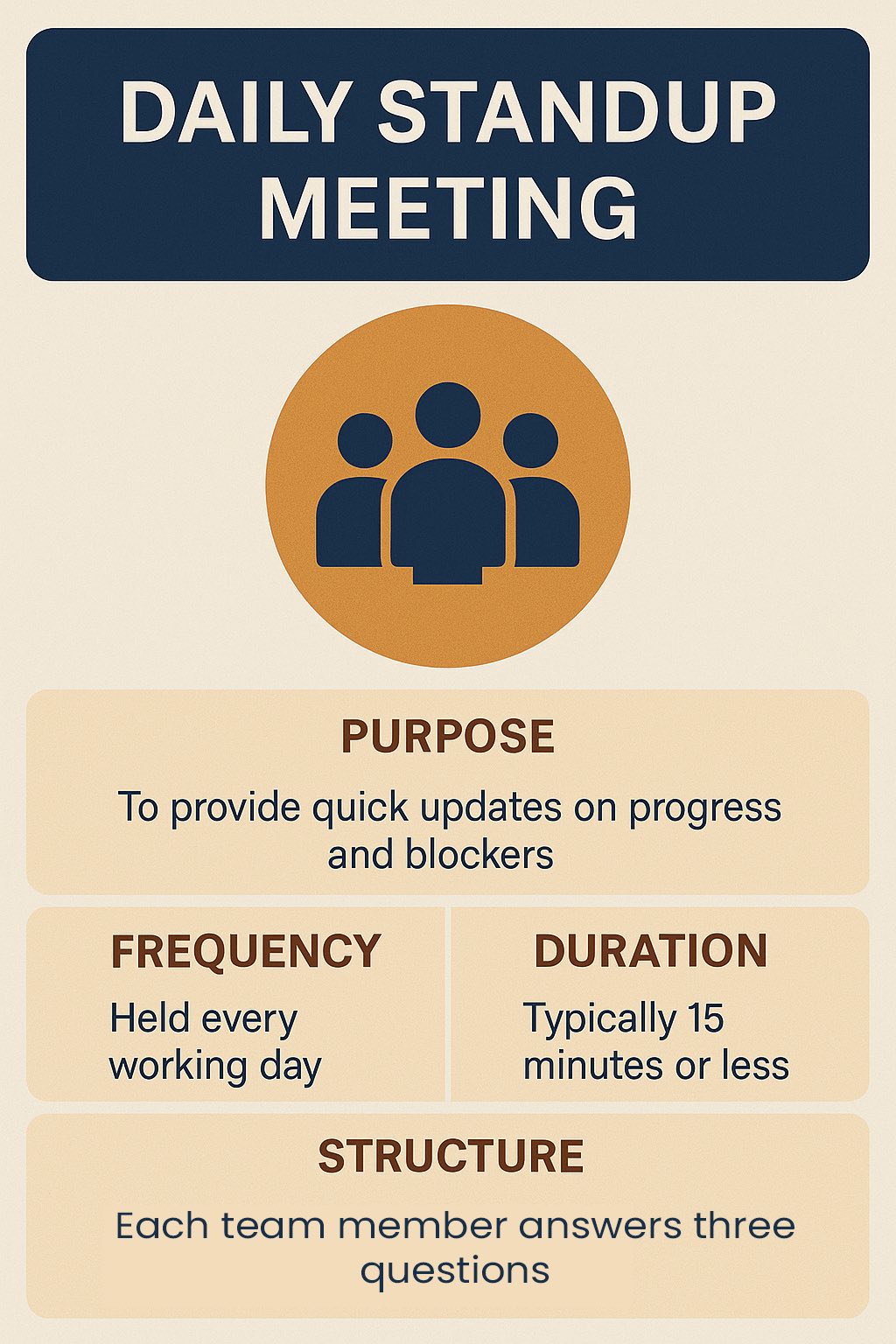
A daily standup meeting is a short, focused meeting held once every working day, usually lasting no more than 15 minutes. The name “standup” comes from the idea that if participants remain standing, they will naturally keep the meeting short.
The daily standup originated from Agile and Scrum practices in software development, but it has now spread to many industries. The goal is not to solve every problem. Instead, it is about synchronization. Everyone gets visibility on progress, and blockers are highlighted quickly.
Typically, each person answers three simple questions:
- What did I work on yesterday?
- What will I work on today?
- Is anything blocking my progress?
If you have already studied the different types of company meetings, you know that daily standups fall under functional meetings, designed to keep work flowing smoothly.
What is a Weekly Staff Meeting?
A weekly staff meeting is held once a week and is usually longer, ranging from 30 minutes to an hour or more. Unlike daily standups, staff meetings are not just for quick updates. They often cover strategic topics, performance reviews, policy discussions, or brainstorming sessions.
In a weekly meeting, the agenda may include reviewing reports, aligning departmental goals, and addressing complex issues that cannot be handled in a short standup.
The format is more formal than a daily standup and sometimes resembles a simplified version of a board meeting, where structure and documentation matter more.
Objectives Compared
The purpose of daily standups and weekly staff meetings is not the same. Let us compare their objectives.
- Daily Standup Objectives:
- Provide quick updates.
- Identify blockers immediately.
- Keep the team aligned daily.
- Maintain momentum on tasks.
- Weekly Staff Meeting Objectives:
- Review progress in detail.
- Plan ahead for the week or beyond.
- Discuss strategic or cross-team issues.
- Encourage longer discussions and brainstorming.
Both serve important purposes, but they operate at different levels. Daily standups are like quick check-ups, while weekly meetings are like full medical examinations.
This fits into the broader objectives of meetings, where some gatherings focus on information flow and others on decision-making.
Structure of Daily Standups vs Weekly Staff Meetings
Daily Standup Structure
- Held at the same time every day.
- Usually limited to 15 minutes.
- Everyone answers the three core questions.
- No problem-solving during the meeting, only identification of blockers.
Weekly Staff Meeting Structure
- Scheduled once a week.
- Usually lasts between 30 minutes and 1 hour.
- Formal agenda circulated in advance.
- Includes reports, discussions, and decision-making.
- Ends with assigned action items and responsibilities.
The key difference lies in depth. Standups focus on updates. Weekly meetings go deeper into planning and solving problems.
Benefits of Daily Standup Meetings
- Accountability
Each member publicly shares progress, which encourages responsibility. - Team Alignment
Everyone knows what others are working on. This avoids duplication of effort. - Early Problem Detection
Blockers are identified quickly, preventing delays from snowballing. - Momentum
Regular check-ins keep projects moving.
Think of daily standups as the oil that keeps the company machine running smoothly. Without them, small issues may go unnoticed until they become major roadblocks.
Benefits of Weekly Staff Meetings
- Bigger Picture Discussions
Weekly meetings allow for in-depth conversations that daily standups cannot accommodate. - Efficiency for Stable Workflows
Teams that do not need daily syncs save time by meeting only once a week. - Space for Brainstorming
Strategic ideas often need longer conversations, which a weekly meeting can provide. - Comprehensive Updates
Managers can get a full overview instead of fragmented daily updates.
Weekly staff meetings are especially useful in non-Agile environments where projects evolve more slowly.
Challenges of Daily Standup Meetings
- Repetition: Updates may sound the same every day, leading to boredom.
- Time Zone Issues: For global teams, finding a suitable time can be difficult.
- Rushed Nature: If discussions run over time, standups lose their purpose.
- Remote Fatigue: In online settings, daily calls can feel exhausting.
This is where applying virtual meeting best practices helps. Keeping standups short and disciplined prevents them from becoming a burden.
Challenges of Weekly Staff Meetings
- Overload of Information: Too much is discussed at once, leading to confusion.
- Delayed Problem Solving: Issues that arise early in the week may go unnoticed until the next meeting.
- Risk of Lengthy Sessions: Weekly meetings can drag on if not well-structured.
- Participation Issues: Some members may dominate while others remain silent.
One way to improve is by maintaining clear meeting minutes so decisions and responsibilities are not forgotten.
When to Use Daily Standup vs Weekly Staff Meeting
- Daily Standup Works Best For:
- Agile teams in software or project-based work.
- Remote teams needing daily alignment.
- Fast-moving projects where blockers must be spotted quickly.
- Weekly Staff Meeting Works Best For:
- Strategic teams with slower workflows.
- Departments where daily updates are unnecessary.
- Teams that need more room for brainstorming and planning.
It is not about choosing one forever. Many companies combine both. For example, a team may hold daily standups for progress tracking and a weekly meeting for strategy.
Checklist for Running Effective Standups and Weekly Meetings
Daily Standup Checklist
- Fixed time and short duration.
- Limit to three key questions.
- Keep it standing (if physical).
- No problem-solving during the meeting.
- Follow-up offline if needed.
Weekly Meeting Checklist
- Circulate agenda in advance.
- Allocate time for each topic.
- Encourage participation from everyone.
- Assign responsibilities clearly.
- Record and distribute minutes.
These steps connect naturally with the roles of participants in meetings, where discipline and clarity are vital.
Modern Trends in Team Meetings
- Asynchronous Standups
Instead of live calls, some teams share daily updates via Slack or project management tools. - Hybrid Meetings
Weekly meetings often combine in-person and online participation. - AI Integration
Tools now summarize meetings automatically, making note-taking easier. - Flexible Frequencies
Some teams hold daily standups during critical phases and switch to weekly syncs when projects stabilize.
These trends reflect how companies are adapting, just as they adapted earlier with video conferencing.
Conclusion
So, which is better, the daily standup or the weekly staff meeting? The answer is simple: it depends.
- Daily standups are great for speed, accountability, and immediate alignment.
- Weekly staff meetings are better for strategy, brainstorming, and detailed updates.
Neither format is perfect. Both have benefits and challenges. The smartest approach is to understand your team’s needs and apply the right type of meeting at the right time. Some teams will thrive on daily check-ins, while others will find them exhausting. Conversely, some teams will value weekly discussions, while others may find them too slow.
The key is balance. Use standups to keep work flowing, and staff meetings to look at the bigger picture. Together, they make a powerful combination.
If you want to master the full art of business meetings, explore related topics like meeting agendas and valid meeting essentials. These resources will help you run both daily and weekly meetings more effectively.
So the next time someone asks, “Which is better, a daily standup or a weekly staff meeting?” you can smile and say, “It depends on what you want to achieve.”
Frequently asked questions
Can a team use both daily standups and weekly staff meetings?
Yes, many teams do both successfully. Daily standups keep work flowing and blockers visible. Weekly meetings handle strategy, planning, and deeper discussions. The key is ensuring they serve different purposes—don’t use the weekly meeting to repeat daily updates. This combination works well for fast-paced, complex projects where both quick alignment and strategic planning matter.
What if my team is spread across multiple time zones?
Daily standups become harder with time zones. Consider asynchronous updates (written or recorded) instead of live meetings. For weekly staff meetings, rotate meeting times or record sessions for those who cannot attend live. Some teams use a hybrid approach: async daily updates plus one live weekly meeting at a time that works for most people.
How do I know if my team needs daily standups or just weekly meetings?
Ask yourself: Does your work change rapidly? Are blockers common? Do team members depend on each other daily? If yes to most, use daily standups. If your team works independently on stable projects, weekly meetings may be enough. Start with one format, measure engagement and blocker resolution, then adjust based on results.
What should I do if daily standups keep running over 15 minutes?
This signals a discipline problem. Set a strict timer and enforce it. If discussions arise, table them for a separate meeting. If standups consistently run long, you may have too many people attending—consider smaller team standups instead. Alternatively, switch to written async updates to preserve the speed benefit.
Should I take meeting minutes for daily standups or weekly staff meetings?
Daily standups rarely need formal minutes—they are too brief and repetitive. A simple shared document listing blockers is enough. Weekly staff meetings should have detailed minutes documenting decisions, action items, and owners. This becomes a reference for those who missed the meeting and holds people accountable for follow-up.