


Picture this. A boardroom filled with directors, papers scattered across the table, everyone talking at once, and yet nothing concrete gets decided. Does that sound familiar? Sadly, many board meetings turn into long discussions with very little outcome.
The truth is, board meetings are not just routine gatherings. They are where strategic decisions are made, risks are managed, and the future of the company is shaped. When run effectively, they strengthen governance and guide the business in the right direction. When run poorly, they waste time, money, and sometimes even damage trust among directors.
In this guide, you will learn how to run an effective board meeting step by step. We will cover definitions, objectives, legal requirements, preparation tips, challenges, and even give you a handy checklist. Along the way, we will connect to related topics such as company meetings and minutes of meeting so you can build a complete understanding.
What is a Board Meeting?
A board meeting is a formal meeting of a company’s board of directors. Unlike an Annual General Meeting (AGM) where shareholders are involved, a board meeting is primarily for directors. They meet to discuss strategy, finances, compliance, and company policies.
If you already read about types of company meetings, you know that a board meeting falls under the category of statutory and functional meetings. It is legally significant, since many company laws require boards to meet a certain number of times each year.
In short, a board meeting is the steering wheel of the company. Without it, the business risks going off course.
Objectives of a Board Meeting
Why do boards meet? Let us explore the main objectives:
- Reviewing Performance
Directors analyze financial and operational reports. They check if the company is on track with its goals. - Approving Policies and Budgets
From new projects to next year’s budget, big decisions are approved in board meetings. - Risk Management
Boards discuss potential risks such as legal issues, market competition, or compliance matters. - Future Strategy
Directors brainstorm on growth opportunities, expansions, or restructuring.
In essence, board meetings are not about daily operations. They focus on the big picture, unlike staff meetings where routine work is discussed.
Legal Framework and Requirements
Board meetings are regulated by company law in most countries. Let us look at some of the legal essentials.
- Notice: Every director must receive proper notice. The notice should include the date, time, place, and agenda. For details, see the guide on notice of meeting.
- Quorum: A minimum number of directors must be present for the meeting to proceed.
- Voting: Decisions are usually made by majority, though some require special resolutions.
- Minutes: The company secretary must record minutes as an official record.
These rules are part of the essentials of a valid meeting, which ensure transparency and legality.
Key Participants in a Board Meeting
Who sits in a board meeting?
- Board of Directors: The main decision-makers.
- Chairperson: Leads the meeting and ensures order.
- Company Secretary: Handles notices, agenda, and minutes of meeting.
- Invited Executives: Sometimes senior managers or auditors attend to present reports.
The roles are similar to what you learned about participants’ responsibilities, but with a stronger emphasis on governance.
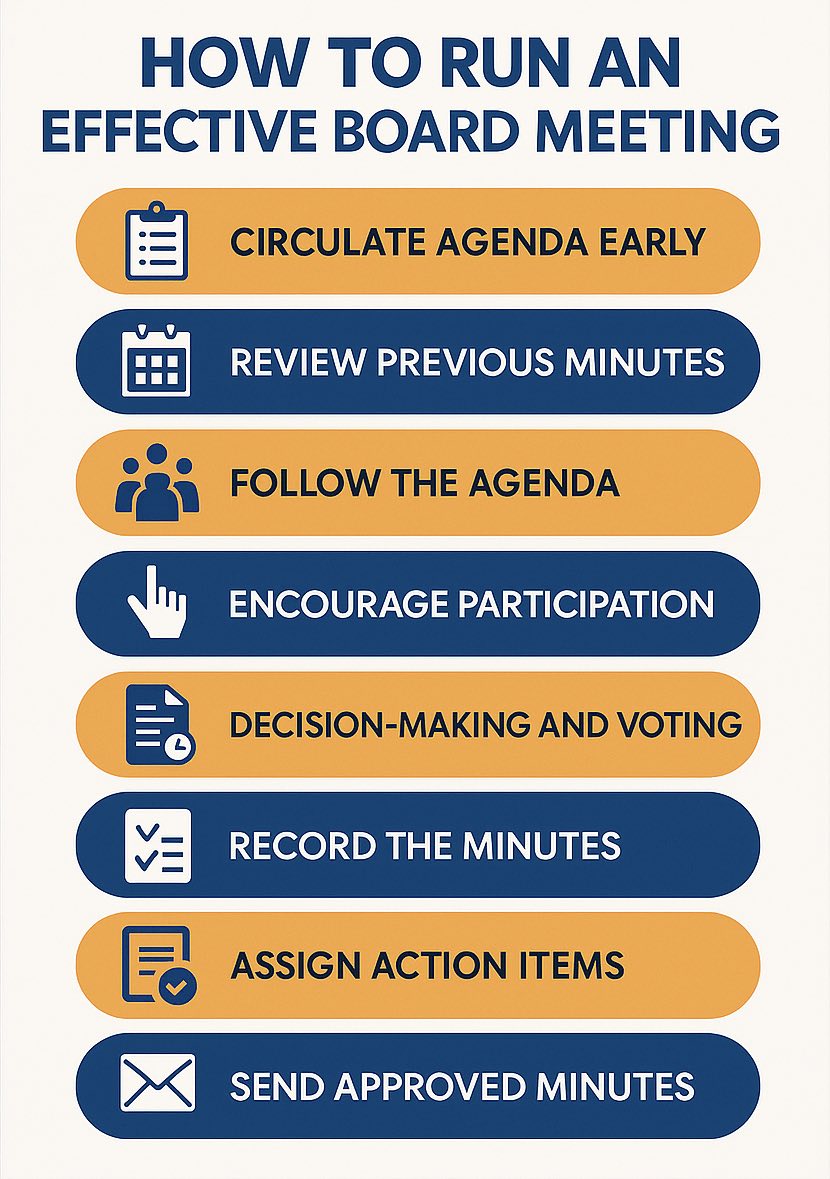
Pre-Meeting Preparation
Running an effective board meeting starts long before the meeting itself. Preparation is half the battle won.
- Circulate Agenda Early
The agenda should be clear, specific, and shared at least a week in advance. If you need help drafting one, check the guide on how to write a meeting agenda. - Review Background Materials
Directors should receive reports, financial data, and proposals beforehand. - Plan Logistics
Ensure the meeting venue or virtual platform is ready. Small details like working microphones or stable internet matter. - Confirm Attendance
Make sure quorum will be met. If key directors are unavailable, rescheduling may be better than rushing.
Preparation signals professionalism and respect for everyone’s time.
How to Run a Board Meeting Step by Step
Step 1: Opening by Chairperson
The chairperson welcomes everyone, confirms quorum, and starts the meeting.
Step 2: Review of Previous Minutes
The board approves the minutes of the last meeting. This provides continuity.
Step 3: Follow the Agenda Systematically
Each item is discussed in order. This keeps the meeting focused.
Step 4: Encourage Participation
The chairperson ensures all directors have a voice. Dominant voices should not silence others.
Step 5: Decision-Making and Voting
Resolutions are discussed and put to vote. Clear outcomes must be documented.
Step 6: Record the Minutes
The secretary writes down decisions, responsibilities, and deadlines. For guidance, refer to the meeting minutes examples.
Step 7: Closing
The chairperson summarizes outcomes, thanks participants, and closes the meeting.
Tips for Effective Board Meetings
Here are some teacher-approved tips to make board meetings more productive:
- Stay Focused: Avoid drifting into irrelevant discussions.
- Time Management: Allocate time to agenda items and stick to it.
- Encourage Diversity of Opinions: Different perspectives often lead to better decisions.
- Communicate Clearly: Apply the 7 Cs of communication to avoid misunderstandings.
- Assign Action Items: Every decision should end with a responsible person and a deadline.
Above all, keep in mind that the goal is quality decisions, not endless debates.
Common Challenges and How to Overcome Them
Even with preparation, board meetings face challenges.
- Dominant Voices: Some directors may talk too much. The chairperson must balance participation.
- Lack of Preparation: Directors arriving without reading documents waste time. The solution is strict pre-reading policies.
- Conflicts of Interest: Sensitive topics like executive pay may cause bias. Transparency helps reduce this.
- Virtual Distractions: In online meetings, multitasking can dilute focus. Ground rules are essential.
These challenges are not unique to boards. They are common in all meetings, as discussed in the company meeting guide.
Checklist for Running a Successful Board Meeting
A practical checklist ensures no step is missed. Here is one you can use:
- Notice sent to all directors.
- Agenda circulated with supporting documents.
- Venue or virtual setup confirmed.
- Attendance confirmed to meet quorum.
- Chairperson ready to lead.
- Minutes of the previous meeting prepared.
- Discussions held as per agenda.
- Resolutions voted and recorded.
- Action items assigned with deadlines.
- Meeting formally closed.
Print it out, and you will never forget a step again.
Role of the Company Secretary in Board Meetings
The company secretary is the silent hero of board meetings. Their responsibilities include:
- Drafting and sending the notice.
- Preparing the agenda.
- Recording and storing minutes.
- Ensuring compliance with legal rules.
To understand why this role is so important, see the guide on appointment of a company secretary.
Post-Meeting Follow-Up
The meeting does not end when everyone leaves the room. Follow-up is just as important.
- Circulate Approved Minutes: Send to all directors quickly.
- Track Action Items: Follow up on responsibilities assigned.
- Schedule Next Meeting: Decide tentative dates for continuity.
Without follow-up, even the best discussions lose impact.
Modern Trends in Board Meetings
Board meetings today are not what they were twenty years ago. Technology is reshaping them.
- Virtual Meetings: Directors can join from anywhere.
- Hybrid Models: Some attend physically, others online.
- Digital Voting: Faster and more transparent.
- AI Tools: Some companies use AI to draft agendas or minutes automatically.
These trends resemble the growth of video conferencing in business. The future is clearly digital.
Conclusion
Board meetings are not just a box to tick. They are the powerhouse of governance, the stage where directors shape the company’s destiny. Running them effectively requires preparation, structure, active participation, and careful follow-up.
In this guide, we explored the definition, objectives, legal framework, participants, preparation steps, running process, challenges, checklist, secretary’s role, and modern trends.
If you want to strengthen your knowledge further, explore connected topics such as meeting minutes and notice of meeting. Together, they provide the full picture of how to manage formal business meetings.
So, next time you walk into a boardroom, do not just attend. Be prepared to run an effective board meeting that makes a real difference.
Frequently asked questions
What should I do if a director dominates the discussion and silences other voices?
The chairperson must intervene tactfully. Acknowledge the director’s point, then explicitly invite quieter members to share their views. Use phrases like “Let’s hear from those who haven’t spoken yet.” This ensures diverse perspectives are heard and prevents groupthink. Document all viewpoints in the minutes.
Can board meetings be held virtually, or must they be in person?
Most jurisdictions now allow virtual board meetings, especially post-pandemic. However, check your company’s bylaws and local company law first. Virtual meetings must meet the same legal standards: proper notice, quorum confirmation, clear voting records, and documented minutes. Ensure technology is reliable.
What happens if quorum isn’t met when the meeting is scheduled to start?
The meeting cannot proceed legally. The chairperson should wait a reasonable grace period (typically 15 minutes), then adjourn. Reschedule promptly and notify all directors. Document the adjournment in writing. Proceeding without quorum risks invalidating decisions and creates legal liability.
How detailed should board meeting minutes be?
Minutes should record decisions, resolutions passed, who voted for or against, action items with owners and deadlines, and key discussion points—not verbatim transcripts. Include attendance and any conflicts of interest disclosed. This level of detail protects the company legally and ensures accountability.
Should board meetings follow a strict agenda, or is flexibility acceptable?
Follow the agenda closely to respect everyone’s time and keep discussions focused. However, allow brief flexibility for urgent matters. If new topics arise, note them for the next meeting rather than derailing the current one. Always prioritize agenda items already distributed to directors.
What’s the best way to handle disagreements or conflicts during voting?
Allow each director to state their position clearly before voting. Record the vote count and note any dissenting opinions in the minutes. This transparency protects minority directors and demonstrates sound governance. Never pressure dissenters to change their vote.