


Ever found yourself staring at a blank page, wondering whether you need to write an official letter or a business letter? You’re not alone. Most professionals mix up these two formats, and honestly, it’s an easy trap to fall into. Both look formal, both involve professional communication, but they’re not the same thing at all.
Think of it this way: all official letters are formal, but not all formal letters are official. Confusing? Don’t worry. By the end of this guide, you’ll know exactly which format to use and when. Let’s dive in.
What Exactly is an Official Letter?
An official letter is a formal document that comes from or goes to a government body, public institution, or any regulatory authority. These letters carry legal weight and administrative power. In other words, they’re not just suggestions, they’re often legally binding communications.
For instance, when the tax department sends you a notice, that’s an official letter. When you apply for a business license from the municipal corporation, you’re writing an official letter. These documents follow strict protocols, include reference numbers, and often bear official seals or stamps.
The key characteristic? Authority. Official letters represent governmental or institutional power. They deal with administrative matters, legal notifications, public records, and regulatory compliance. Moreover, they maintain an impersonal, bureaucratic tone because they represent institutions rather than individuals.
Understanding Business Letters (A Quick Recap)
On the other hand, a business letter serves commercial and professional purposes. Companies write them to communicate with clients, vendors, partners, and even employees. These letters build relationships, facilitate transactions, and maintain professional connections.
Unlike official letters, business letters come from private organizations or individuals. They’re professional but more flexible in tone and structure. You might write a business letter to propose a partnership, inquire about products, or follow up with a client. The focus here is on building and maintaining commercial relationships.
Additionally, while business communication requires formality, it also values personalization and relationship-building. That’s something official letters typically avoid.
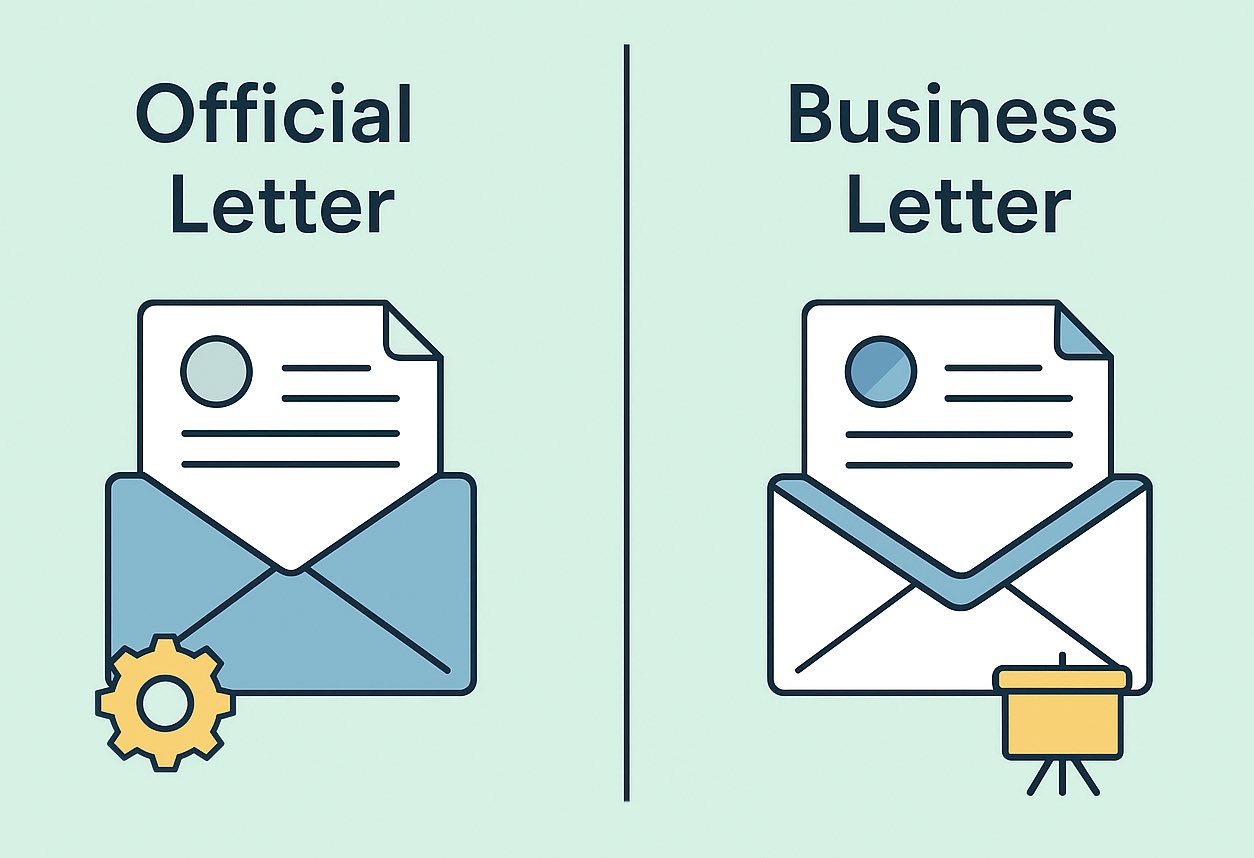
The Critical Differences That Matter
Purpose and Intent
Official letters handle administrative, legal, and governmental functions. They notify citizens about policy changes, issue permits, or communicate regulatory decisions. Conversely, business letters focus on commercial transactions, professional inquiries, and relationship management.
For example, a letter from the health department closing a restaurant due to violations is official. However, a letter from a supplier offering a new product line is purely business correspondence.
Who Sends Them?
Here’s where the distinction becomes crystal clear. Government bodies, public institutions, regulatory authorities, and official agencies send official letters. These could be tax departments, licensing boards, municipalities, or courts.
In contrast, private companies, entrepreneurs, organizations, and individual professionals send business letters. Whether you’re a startup founder or a multinational corporation, your correspondence falls under business letters, not official ones.
Tone and Language Style
Official letters maintain a highly formal, bureaucratic tone. They’re impersonal by design because they represent institutional authority rather than individual opinion. You’ll rarely see friendly language or personal touches in official correspondence.
Business letters, meanwhile, strike a balance. They’re professional yet personable. Companies want to build relationships, so they adopt a warmer tone while maintaining professionalism. That’s why understanding different types of business communication helps you adjust your tone appropriately.
Format and Structure Requirements
Official letters follow rigid protocols. They must include specific elements like reference numbers, file numbers, official letterheads, and sometimes even security features. These aren’t optional, they’re mandatory.
Business letters offer more flexibility. While they follow standardized formats like block, modified block, or semi-block styles, companies can adapt these based on their branding and preferences. The essential parts of a business letter remain consistent, but there’s room for customization.
Legal Weight and Binding Nature
This is huge. Official letters often carry legal implications. Ignoring a tax notice or regulatory order can result in penalties, fines, or legal action. These documents create legal obligations and rights.
Business letters may have contractual implications, particularly when discussing terms, agreements, or proposals. Nevertheless, they don’t automatically carry the same governmental authority. They’re binding only when they form part of a contractual relationship.
Response Requirements
Official letters frequently demand responses within specific timeframes. Missing these deadlines can have serious consequences. The government expects compliance, not negotiation.
Business letters operate on professional courtesy. While timely responses are expected and appreciated, the timelines are usually negotiable. It’s about maintaining good relationships rather than legal compliance.
Comparison Table: Official Letter vs. Business Letter
To make it easy to scan, here is a quick comparison of the two styles.
| Parameter | Official Letter | Business Letter |
| Primary Objective | Administration, Governance | Profit, Relationship Building |
| Tone | Impersonal, Commanding | Personal, Persuasive, Friendly |
| Target Audience | Government, Public, Officials | Clients, Vendors, Partners |
| Language Style | Passive, Bureaucratic | Active, Conversational |
| Structure | Rigid, Uses File Numbers | Flexible, Uses Branding |
When Should You Use Each Format?
Situations Requiring Official Letters
You need an official letter format when dealing with government agencies or public institutions. This includes applying for licenses or permits, responding to regulatory notices, submitting compliance documents, or requesting public records.
For instance, if you’re applying for a trade license, you’re writing to a government body. That requires an official format. Similarly, correspondence with tax authorities, courts, or municipal corporations demands official formatting.
Situations Requiring Business Letters
Use business letters for commercial activities. This includes sales and marketing communication, customer service responses, vendor negotiations, partnership proposals, and professional inquiries. Essentially, anything involving private business transactions.
Need to send a proposal to a potential client? That’s a business letter. Want to inquire about job vacancies? Business letter again. Planning to write a thank you note to clients? You guessed it, business letter.
Common Mistakes People Make
One of the biggest mistakes? Using business letter formats for official communication. Government offices expect specific formats, protocols, and language. Sending a casual business-style letter might get your application rejected or delayed.
Another common error is over-formalizing business letters to the point where they sound robotic. Remember, business communication aims to build relationships. You don’t want to sound like a government notice when you’re trying to win a client.
Also, many people ignore protocol requirements in official letters. Every reference number, file number, and date matters. Missing these details can cause processing delays or rejections.
Furthermore, confusing written communication methods leads to inappropriate tone choices. An official letter demanding payment sounds different from a business collection letter requesting payment.
The Gray Areas and Overlaps
Sometimes the lines blur. Large corporations communicating with government bodies on regulatory matters often need to blend both styles. They maintain business letter professionalism while incorporating official letter protocols.
For instance, when a pharmaceutical company responds to FDA inquiries, the letter follows business formatting but adopts the gravitas of official correspondence. Similarly, banks writing to regulatory authorities maintain business identity while respecting official communication standards.
In these cases, lean toward official protocols while maintaining your corporate identity. When in doubt, check with legal or compliance teams. They’ll guide you on the appropriate format.
The Modern Context
Interestingly, digital transformation has impacted both formats. Many governments now accept emails instead of traditional letters for certain communications. E-governance platforms allow online submission of official documents.
Nevertheless, some official communications still require physical letters with original signatures and seals. Business letters, on the other hand, have largely transitioned to email format while maintaining their structural elements.
The key takeaway? Format matters less than understanding the underlying principles. Whether digital or physical, official communication requires one approach, business communication another.
Wrapping Up
Understanding the difference between official letters and business letters isn’t just about formats and structures. It’s about recognizing authority, purpose, and context. Official letters represent institutional power and legal obligations. Business letters facilitate commercial relationships and professional interactions.
Next time you sit down to write, pause and think: who’s my audience, what’s my purpose, and what authority am I representing? That clarity will guide you toward the right format every time.
Remember, mastering these distinctions elevates your professional communication skills. It shows you understand the nuances of effective business communication and respect institutional protocols. That’s the mark of a true professional.
Got questions about specific situations? Drop them in the comments below. And if you found this helpful, share it with colleagues who might be struggling with the same confusion.
Frequently Asked Questions
Is an official letter always from the government?
Not always, but usually. Official letters typically originate from government bodies, public institutions, or regulatory authorities. However, some quasi-government organizations and statutory bodies also issue official letters. The key identifier is institutional authority rather than private commercial interest.
Can a business write an official letter?
No, businesses write business letters, not official letters. However, when businesses communicate with government bodies on regulatory matters, they write formal business letters that follow official protocols. The difference lies in the authority represented, not just the format used.
What happens if I use the wrong format?
Using business format for official communication might delay processing or get your submission rejected. Conversely, using overly official formats for business communication can make you seem cold and unapproachable. Neither outcome is ideal, so choose wisely based on context.
Are official letters always legally binding?
Most official letters carry legal weight, especially those involving notifications, orders, or regulatory decisions. Nevertheless, not every official communication creates legal obligations. The content and context determine legal implications more than the format alone.
How do I know if I need to write an official letter?
If you’re communicating with a government agency, public institution, or regulatory body about administrative or legal matters, you likely need an official format. Check the recipient’s guidelines or ask their office directly if you’re unsure.
Can official letters be sent via email?
Increasingly, yes. Many government agencies now accept email submissions for certain types of official communication. However, some matters still require physical letters with original signatures. Always verify the preferred method with the relevant authority before sending.