


Insurance is something we often ignore until life surprises us. Think about it, how many people really read their insurance documents carefully? Yet when something goes wrong, those letters from insurance companies suddenly become very important.
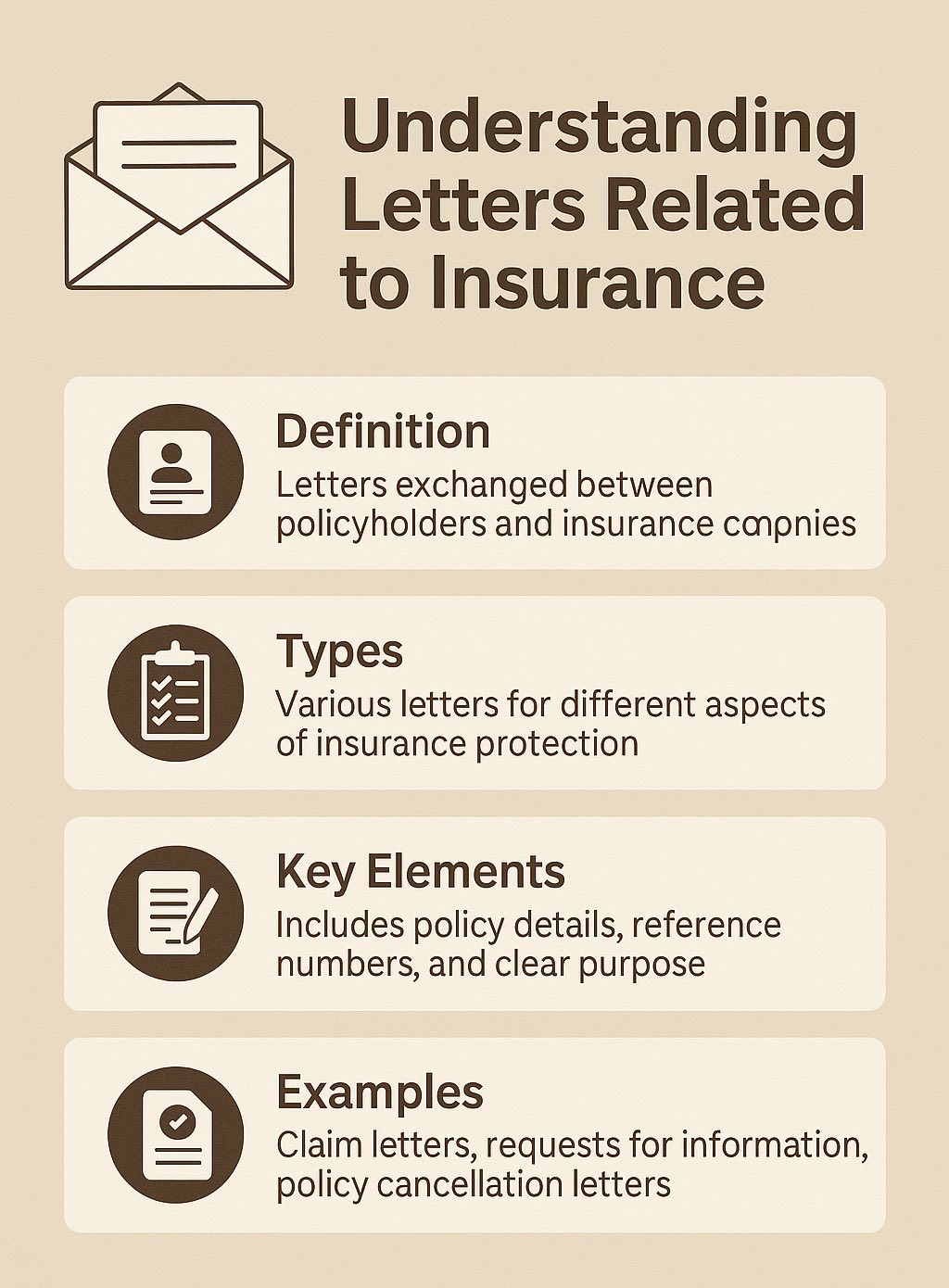
So, what exactly is a letter related to insurance? It is a formal business letter exchanged between an insurance company and the insured person or organization. These letters may confirm coverage, request payments, communicate claim decisions, or notify about policy changes.
Unlike a friendly chat message, these letters are legally significant. They protect both parties and serve as evidence in case of disputes. You can think of them as the official voice of the insurance process.
Before we dive deeper, it helps to understand how these letters differ from other types of business letters. For example, you may have seen a claim letter written by a customer demanding compensation. Insurance letters are broader. They do not only demand or settle claims, they also cover renewals, cancellations, reminders, and confirmations.
Importance of Insurance Letters in Business Communication
Why should we care about insurance letters? After all, they might seem like just another formality. But in reality, they play a crucial role.
- Building trust: A well-written insurance letter assures customers that their concerns are taken seriously.
- Legal protection: These letters act as proof in court or arbitration. For instance, a rejection letter with reasons protects the insurer.
- Transparency: Clear communication prevents confusion about terms, premiums, or claim status.
- Decision-making: Customers often decide to renew or cancel policies based on these letters.
Without proper insurance correspondence, the relationship between policyholder and insurer can break down. Unlike a simple business letter, an insurance letter often deals with sensitive financial matters. So clarity and accuracy are non-negotiable.
Types of Letters Related to Insurance
Not all insurance letters are the same. Depending on the situation, the format and tone change. Here are the main types:
1. Letter of Insurance Cover Confirmation
This letter assures the policyholder that coverage has started. It usually includes policy number, coverage details, and effective date. Imagine buying health insurance and receiving a confirmation letter. That piece of paper is your security blanket.
2. Claim Intimation Letter
When a customer faces loss or damage, the first step is to inform the insurer. A claim intimation letter does this job. It mentions what happened, when it happened, and what is being claimed. Without this letter, the claim process cannot begin.
3. Claim Settlement or Rejection Letter
Once the insurer investigates, they either settle the claim or reject it. A settlement letter states the amount approved. A rejection letter explains why the claim was denied. Unlike casual emails, these letters must be very clear to avoid disputes.
4. Premium Payment Reminder Letter
Insurance companies send polite reminders when a premium is due. These letters often state the due date, amount, and consequences of non-payment. Think of them as gentle nudges to avoid policy lapses.
5. Policy Renewal or Lapse Notice
Policies do not last forever. Renewal letters invite policyholders to continue coverage, while lapse notices inform them that the policy has expired. This is similar to getting a subscription reminder but with much higher stakes.
6. Letter of Endorsement
Sometimes policyholders want changes, such as adding a new nominee or updating an address. The insurer issues a letter of endorsement to confirm these changes.
7. Cancellation of Policy Letter
Not all relationships last, even with insurance companies. Cancellation letters officially terminate the policy. They may be written by the customer or the insurer.
Interestingly, some of these resemble other formal letters you may know. For example, a cancellation letter has similarities with an order cancellation letter, although the subject is insurance instead of business goods.
Structure and Format of an Insurance Letter
Now that we know the types, let us look at the structure. Most insurance letters follow a standard business letter format. If you already know the parts of a business letter, this will sound familiar.
Key Components:
- Sender’s address and date
- Recipient’s name and address
- Subject line (e.g., Claim Settlement for Policy #12345)
- Salutation (Dear Mr. Smith)
- Body of the letter with clear details: policy number, incident date, action required
- Closing and signature with designation
What makes insurance letters unique is the heavy use of details. Policy numbers, claim amounts, deadlines, and attached documents are essential. Without them, the letter loses its value.
Writing Guidelines for Effective Insurance Letters
Anyone can write a letter, but not everyone can write a clear, professional insurance letter. Here are some guidelines:
- Be formal yet clear: Do not use casual words like “Hey” or “Thanks a lot.” Keep it professional.
- Avoid ambiguity: Instead of writing “soon,” mention a specific date.
- Highlight actions: If the customer must submit documents, mention exactly which ones.
- Stay polite in rejection letters: Even bad news should be communicated with respect.
- Follow company rules: Many insurers have templates. Stick to them.
If you need a refresher on good writing, check out these killer tips for writing a business letter.
Specimens of Letters Related to Insurance
Examples make everything clearer, right? Let us look at some sample letters.
Specimen 1: Policy Issuance Confirmation
Subject: Confirmation of Policy Coverage
Dear [Customer Name],
We are pleased to confirm that your health insurance policy, number 45678, is now active from 01 January 2025. Please find attached the policy document for your records.
Sincerely,
[Manager, ABC Insurance]
Specimen 2: Claim Intimation Letter (Customer to Insurer)
Subject: Intimation of Claim under Policy #67890
Dear Sir,
This is to inform you of a fire incident at my warehouse on 15 March 2025. I request you to process my claim under the fire insurance policy. Supporting documents are attached.
Sincerely,
[Customer Name]
Specimen 3: Claim Settlement Letter
Subject: Settlement of Claim under Policy #67890
Dear [Customer],
We are glad to inform you that your claim has been approved. A payment of $25,000 has been credited to your registered bank account.
Sincerely,
[Claims Manager]
Specimen 4: Premium Payment Reminder
Subject: Reminder for Premium Due on 10 May 2025
Dear [Customer],
This is a gentle reminder that your premium of $500 is due on 10 May 2025. Kindly make the payment to avoid policy lapse.
Sincerely,
[Insurance Officer]
Specimen 5: Cancellation of Policy Letter
Subject: Policy Cancellation Confirmation
Dear [Customer],
As per your request, your motor insurance policy has been canceled effective 01 June 2025. Please contact us if you need further assistance.
Sincerely,
[Branch Manager]
These letters follow the standard structure but differ in tone and content depending on the situation.
Common Mistakes in Insurance Letters and How to Avoid Them
Even experienced professionals sometimes make errors in insurance correspondence. Here are common mistakes:
- Missing key details: Forgetting to mention the policy number or claim amount.
- Vague language: Writing “We will get back to you soon” instead of giving a date.
- Ignoring documents: Not attaching necessary forms or reports.
- Unprofessional tone: Being too casual or too harsh.
These mistakes can cause disputes or even legal issues. To avoid them, always keep the purpose of business letters in mind. Every word should serve the goal of clarity and professionalism.
Conclusion
So, what is meant by a letter related to insurance? It is more than just a formal piece of writing. It is the backbone of communication between insurance companies and customers. From policy confirmation to claim settlement, each letter carries weight.
By following a proper structure, writing with clarity, and avoiding common mistakes, you can make insurance correspondence effective and professional. Above all, remember that these letters build trust. And trust, in the world of insurance, is everything.
If you wish to explore related topics, you might also find the types of collection letters interesting. Both insurance letters and collection letters require careful tone and detail to maintain professionalism.
Frequently asked questions
Should I keep insurance letters even after the claim is settled?
Yes. Insurance letters serve as legal proof of coverage, claim decisions, and policy changes. Keep them for at least the duration of your policy, plus several years after. They protect you in disputes, tax audits, or if you need to reference past coverage. Store them safely alongside your policy documents.
What if an insurance letter contains an error or unclear information?
Contact your insurer immediately with the specific issue. Request a corrected letter in writing. Do not ignore errors, especially in claim amounts, policy numbers, or coverage details. Keep copies of your complaint and their response. Errors can affect your claim or renewal eligibility.
Can I submit a claim intimation letter via email instead of mail?
Check your policy or contact your insurer first. Many insurers now accept email claims, but some require certified mail or specific forms. Email provides proof of delivery, but ensure you use the correct address and request a confirmation receipt. Speed matters in claims, so email is often faster.
What should I do if I receive a claim rejection letter I disagree with?
Review the rejection reasons carefully. Gather supporting documents and contact your insurer to discuss. Request a detailed explanation if the letter lacks clarity. You may file an appeal or complaint with your insurance regulator. Keep all correspondence for your records during this process.
Is a verbal confirmation from an insurer as valid as a written letter?
No. Always request written confirmation. Verbal promises lack legal standing and are difficult to prove later. Insurance matters require documentation for disputes, claims, or policy changes. A written letter protects both you and the insurer by creating an official record.