


Every organization, whether it is a small business or a global corporation, depends on communication. Without it, nothing would move forward. Instructions would remain unclear, tasks would be delayed, and employees would feel lost. Interestingly, communication in the workplace is not just one thing. It comes in two broad flavors, formal and informal.
Some people think formal communication is everything. Others believe informal chats run the real show. The truth lies somewhere in between. Both are essential, but they serve very different purposes. So let us dig deeper into the world of formal vs informal communication, find out their key differences, and explore when to use each.
What is Formal Communication?
Formal communication is the official way of sharing information within an organization. It is structured, documented, and carefully designed to follow hierarchy. For example, when a manager writes a memo or sends an official email, that is formal communication.
In business, formal communication is vital because it ensures clarity and leaves a record. That is why tools like business letters are still relevant today. They provide a documented format that can be stored, retrieved, and even used in legal matters if needed.
In short, formal communication is about professionalism, structure, and precision.
What is Informal Communication?
On the other hand, informal communication is relaxed, spontaneous, and personal. It does not follow hierarchy or structure. Think of quick chats during a coffee break, or colleagues exchanging jokes in a WhatsApp group. That is informal communication in action.
Although it may not seem serious, informal communication plays a big role in keeping employees motivated and connected. As explained in our guide on informal communication, it spreads fast and often fills the gaps left by official channels.
So, if formal communication is the skeleton, informal communication is the flesh and blood that keeps the workplace alive.
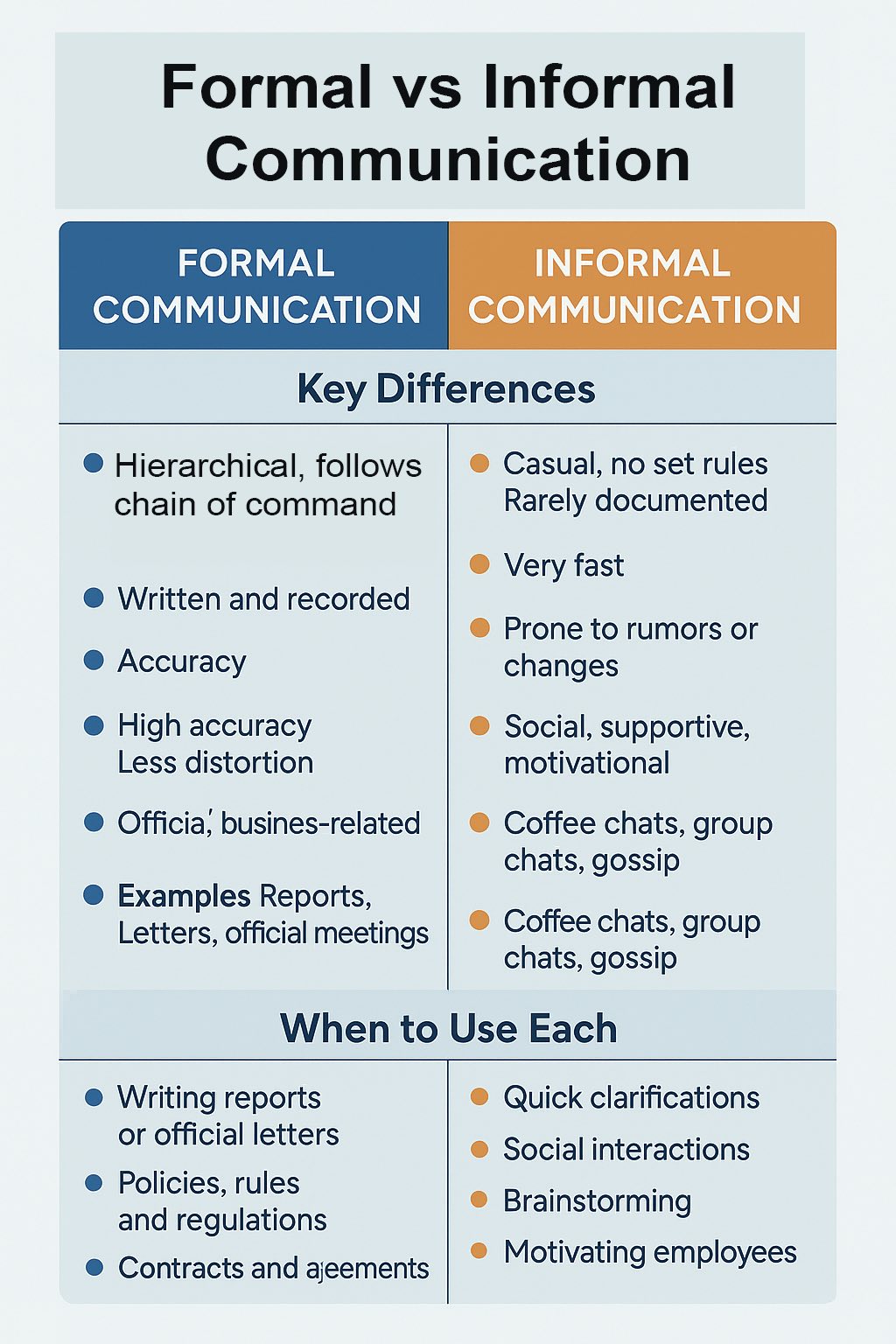
Key Differences Between Formal and Informal Communication
It is easier to understand the two forms when we compare them side by side.
| Aspect | Formal Communication | Informal Communication |
|---|---|---|
| Structure | Hierarchical, follows chain of command | Casual, no set rules |
| Documentation | Written and recorded | Rarely documented |
| Speed | Often slower due to approvals | Very fast |
| Accuracy | High accuracy, less distortion | Prone to rumors or changes |
| Purpose | Official, business-related | Social, supportive, motivational |
| Examples | Reports, letters, official meetings | Coffee chats, group chats, gossip |
This simple comparison shows that both serve different needs. For more on the official side, you may check the advantages of formal communication. And if you are curious about the informal side, there is a detailed piece on the grapevine in communication.
Advantages of Formal Communication
Formal communication comes with many strengths:
- Clarity and precision: Messages are carefully worded and documented.
- Accountability: Because it is recorded, it can be traced back.
- Professionalism: Keeps the tone serious and respectful.
- Decision-making: Helps leaders make informed decisions based on reliable data.
Imagine a company signing a contract without formal communication. That would be chaos, right?
Advantages of Informal Communication
Now let us switch sides. Informal communication is often underestimated, but it is just as important.
- Speed: Information travels faster, sometimes in seconds.
- Bonding: Builds trust and friendships among employees.
- Motivation: Boosts morale when people feel comfortable sharing thoughts.
- Creativity: New ideas often come up during informal chats.
In many cases, informal talks actually support formal communication. For example, a manager may announce a new project formally, but employees often discuss and clarify it informally over lunch.
Disadvantages of Formal Communication
Of course, formal communication has its downsides.
- Time-consuming: Messages often pass through several approvals.
- Rigid: Too structured, leaving little room for flexibility.
- Discourages openness: Employees may hesitate to speak up in formal settings.
That is why relying solely on formal communication can sometimes slow an organization down.
Disadvantages of Informal Communication
Informal communication is not perfect either.
- Rumors: Messages can change as they spread.
- No accountability: It is hard to trace the source of information.
- Conflict: Misunderstandings can lead to disputes.
If you want to see how rumors spread, take a look at our article on how informal communication spreads rumors. It shows how easily messages can distort.
When to Use Formal Communication
Formal communication is best used when accuracy and record-keeping are important. Some situations include:
- Writing reports or official letters.
- Communicating policies, rules, and regulations.
- Legal contracts and agreements.
- Performance reviews and disciplinary actions.
If you are curious about the structured side of workplace messages, check out business letter formats.
When to Use Informal Communication
Informal communication is best for building connections and supporting teamwork. Examples include:
- Quick clarifications that do not need formal documentation.
- Social interactions to build trust.
- Brainstorming and creativity sessions.
- Motivating employees or reducing stress.
Managers can also make grapevine work positively, as explained in how to use grapevine communication effectively.
Role of Balance: Why Organizations Need Both
So which one is better? The answer is simple, neither. An organization that only uses formal communication becomes too rigid. On the other hand, one that only relies on informal chats risks spreading confusion.
The best approach is balance. Formal channels provide reliability, while informal ones provide speed and warmth. For example, a company may send a formal email announcing a new policy, but employees often understand it better when discussed informally in smaller groups.
Practical Tips for Managers
Here are some practical ways managers can handle both:
- Encourage openness: Let employees feel safe to share ideas informally.
- Control rumors: Monitor grapevine discussions but avoid suppressing them.
- Integrate both: Use informal feedback to improve formal policies.
- Promote teamwork: Support social interactions alongside official meetings.
This balanced approach makes communication more effective overall.
FAQs on Formal vs Informal Communication
Q1: Which is better, formal or informal communication?
Neither is better on its own. Formal is reliable, informal is fast. Both together make communication effective.
Q2: Can informal communication replace formal communication?
No, because formal communication is necessary for records, accuracy, and professionalism.
Q3: Why is formal communication important in business?
It ensures clarity, accountability, and proper documentation.
Q4: Is gossip always a part of informal communication?
Not always, but it is common. Healthy informal communication is not just gossip, it also includes friendly chats and sharing ideas.
Conclusion
Formal and informal communication are like two sides of the same coin. One provides structure, the other provides warmth. One is slow but accurate, the other is fast but risky. Together, they create a balanced system that keeps organizations both efficient and human.
So the next time you attend an official meeting, remember that the quick chat afterward is just as important. In the end, communication is not just about words, it is about connection.
If you want to explore more, take a look at the types of communication in organizations. It will give you a broader perspective on how different channels work together in business.
Frequently asked questions
Should I send a formal email or chat informally if both seem acceptable?
Choose formal if the message needs a record, affects decisions, or involves multiple people. Use informal for quick clarifications, team bonding, or brainstorming. When in doubt, formal is safer—it shows professionalism and creates documentation. You can always follow up informally to build rapport after a formal message.
What if informal communication spreads wrong information about my announcement?
Follow your formal announcement with informal check-ins. Ask employees what they heard and clarify misunderstandings directly. Informal channels fill gaps, so proactively use them to reinforce accurate details. This combines formal precision with informal speed to prevent rumors from taking root.
Can I mix formal and informal styles in the same message?
Yes, but carefully. Start formal (clear subject, professional tone) for the main point, then add a brief informal closing to build connection. Avoid this mix in legal or sensitive matters. For routine updates or team announcements, a formal structure with a warm sign-off works well.
How do I know if my complaint or request will be ignored?
Use formal channels—email with a clear subject line, documented request, or official letter. Informal complaints often get lost in conversation. Formal communication creates accountability and a paper trail. If ignored, you have proof of when and how you communicated.
Is it unprofessional to use informal communication with senior leaders?
Context matters. Formal communication is standard for official matters. However, informal chats during meetings or casual settings can build relationships and show authenticity. Read the leader’s style. If they initiate informal conversation, reciprocate. Never use informal for critical business decisions.
1 Comment
Use the language which can be simple to use others here we are still students