


When it comes to collecting overdue payments, businesses have more than one option. Should you send a quick collection email, or go the old-fashioned way with a printed letter? This is a common question in today’s digital world. Both methods work, but in very different ways.
In this guide, we will explore the pros and cons of each, show you when to use them, and even share a collection letter email template to get you started. By the end, you will be able to decide which method is best for your business and your customers.
What Are Collection Emails and Printed Letters?
Before we jump into comparisons, let’s clarify the basics.
A collection email is a payment reminder sent electronically, usually through a business email account. It is fast, inexpensive, and reaches the recipient instantly. You might have received one from your bank or a subscription service reminding you about a missed payment.
On the other hand, a printed collection letter is the traditional approach. It is a physical document printed on company letterhead and delivered to the customer’s mailing address. While slower, it feels more formal and often carries more weight.
If you are new to the topic, I recommend first checking our detailed guide on the definition and purpose of a collection letter. That article will give you a strong foundation before diving into this comparison.
Pros of Collection Emails
Why do so many businesses prefer email reminders these days? Let’s break down the advantages.
- Instant delivery
Emails reach your customer within seconds. No waiting for postal services. - Cost-effective
No printing, no postage, no extra staff. Just hit “send.” - Trackable
With modern email tools, you can see whether the recipient opened your message. This helps you know if they are ignoring you. - Eco-friendly
No paper, no ink, no physical delivery. Environmentally responsible businesses love this. - Flexible design
You can add clickable links for online payments, attach invoices, or use your branding for a professional look.
Example: Imagine a SaaS company whose client missed a subscription renewal. A polite email reminder with a “Pay Now” button can get the job done in minutes.
Cons of Collection Emails
Despite all the positives, collection emails have drawbacks.
- Ignored easily
With hundreds of emails flooding inboxes daily, yours can get buried. - Spam filters
Sometimes, even professional emails end up in the spam folder. - Less formal
Emails may not carry the same seriousness as a physical letter. - Legal validity
In some regions, a printed document is still stronger as legal evidence.
On the contrary, while emails are great for speed, they may lack the psychological impact of a physical notice.
Pros of Printed Collection Letters
Printed letters may feel old-fashioned, but they still offer unique advantages.
- Professional appearance
A letter on official company letterhead looks formal and serious. - Harder to ignore
Unlike an email that can be deleted in a second, a physical letter sits on a desk as a constant reminder. - Legal documentation
Printed letters are often considered stronger evidence if legal disputes arise. - Effective for final notices
When a case becomes serious, a printed demand letter often pushes customers to act.
For instance, banks usually rely on printed final notices because they carry authority.
Cons of Printed Collection Letters
Of course, printed letters also have disadvantages.
- Costly
Printing, envelopes, postage, and staff time all add up. - Slower delivery
A postal letter can take several days, unlike an email sent instantly. - Less eco-friendly
Paper and ink consumption is not the greenest choice. - Perceived as outdated
Younger customers may find paper letters unnecessary in the digital age.
Nevertheless, for some clients, the seriousness of a physical letter outweighs the drawbacks.
Key Differences Between Collection Emails and Printed Letters
Let’s compare them side by side:
| Aspect | Collection Email | Printed Collection Letter |
|---|---|---|
| Delivery speed | Instant | 2–7 days |
| Cost | Minimal | Higher (printing + postage) |
| Formality | Moderate | High |
| Impact | Easy to ignore | Hard to ignore |
| Legal weight | Varies | Stronger in most cases |
If you are interested in a broader context, check our article on business letter vs email. It explains how traditional letters compare with digital communication in general.
When to Use Email and When to Use Printed Letters
Now the big question: which one should you choose?
- Use email when:
- It is the first reminder.
- The overdue amount is small.
- The client is a regular customer.
- Speed is important.
- Use printed letters when:
- You are sending a firm or final reminder.
- The overdue amount is large.
- Legal action might be considered.
- You want to leave a stronger impression.
To understand the stages of escalation, see our guide on types of collection letters. It shows how tone changes across reminders, which also helps you choose between email and print.
Collection Letter Email Template
Here’s a simple collection letter email template you can adapt:
Subject: Friendly Reminder – Invoice #12345

Dear [Customer’s Name],

We noticed that invoice #12345, amounting to [$____], was due on [Date]. As of today, we have not received your payment.

We kindly request you to settle this invoice by [New Deadline]. If you have already completed the payment, please disregard this message.

For your convenience, you may pay directly using this link: [Payment Link].

Thank you for your prompt attention to this matter.

Sincerely,
[Your Name]
[Your Position]
[Company Name]
For a structured approach to creating letters at different stages, check our article on methods of writing collection letters.
Best Practices for Both Mediums
Whether you choose email or print, some rules apply to both.
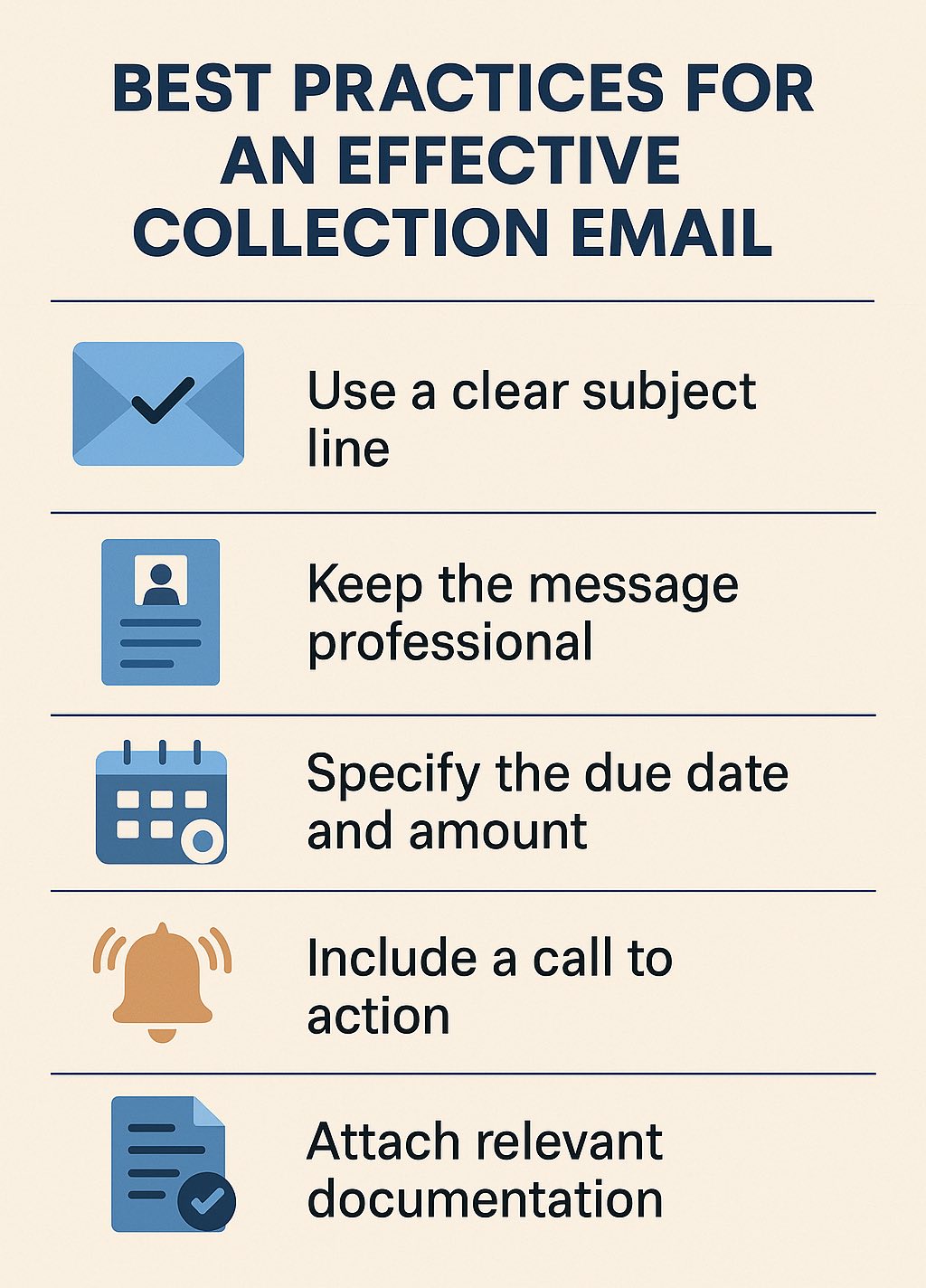
- Personalize the letter, do not send generic text.
- Keep the tone polite but firm.
- Include all important details: invoice number, amount, deadline.
- Maintain proper records for legal protection.
- Use professional formatting, whether in Word documents or emails.
To explore further, read our article on factors to be considered in writing collection letters.
Common Mistakes to Avoid
Let’s be honest, many businesses make mistakes when sending reminders. Avoid these:
- Sending a harsh final notice too early.
- Copy-pasting without changing names or dates.
- Writing long, confusing paragraphs.
- Ignoring cultural or legal differences.
These mistakes reduce professionalism and can hurt customer relationships.
Conclusion
So, what is the verdict in the collection email vs letter debate? Both have their place. Emails are fast, cheap, and convenient. Printed letters are formal, professional, and powerful for serious cases.
The best practice is to combine both. Start with a polite email. If the payment is still overdue, follow up with a firm printed letter. This balanced approach saves time and money while ensuring you still get paid.
If you are looking for more inspiration, we also have a library of sample collection letters you can adapt for different situations.
Frequently asked questions
Should I send both email and printed letter together?
Yes, for serious overdue accounts. Send the email first for speed, then follow with a printed letter 3–5 days later. This dual approach increases visibility and shows escalation. The printed letter reinforces urgency while the email provides immediate payment options. Use this strategy when the amount is significant or legal action is possible.
What if my collection email lands in the customer’s spam folder?
Use a clear, professional subject line (avoid words like “urgent” or “final notice” that trigger spam filters). Include the customer’s name and invoice number. Test your email template beforehand. If you suspect spam delivery, follow up with a phone call or printed letter. For important accounts, request email confirmation of receipt.
Can I use email for a final demand before legal action?
Email alone is risky for final demands. While it’s faster, printed letters carry stronger legal weight in most jurisdictions. Send the final demand as a printed letter with tracking (certified mail). You can send an email copy simultaneously, but the printed version should be your primary method to establish clear legal documentation.
How many email reminders should I send before switching to print?
Send 2–3 polite email reminders spaced 7–10 days apart. After the third email with no response, escalate to a printed letter. This shows good faith effort while respecting the customer’s inbox. For large amounts or unresponsive accounts, move to print sooner—after just one email if the debt is serious.
Is a printed letter still effective for younger customers or digital-first businesses?
Yes, but with caution. Younger customers may ignore paper mail, so email is usually more effective for first reminders. However, a printed letter still signals seriousness and can shock someone into action when emails fail. For digital-native clients, combine email with a phone call instead of printing.
What’s the best way to track if a printed letter was actually received?
Use certified mail with return receipt or a tracked postal service. This provides proof of delivery and signature confirmation. Standard mail offers no guarantee the recipient opened it. For high-value debts, certified mail is worth the extra cost because it creates legal documentation that the letter reached them.