


A job application is often the first professional document an employer reads about you, and it shapes their decision to shortlist or reject your candidacy. This guide walks you through the research, planning, writing, and formatting steps that turn a generic application into a compelling case for why you’re the right hire. You’ll learn how to translate your experience into employer-relevant skills, avoid common mistakes that trigger rejection, and submit with confidence.
What is a job application and why it matters
A job application is a formal written request for employment. It introduces you to the employer, summarizes your qualifications, and explains why you’re a strong match for the role. Think of it as a sales pitch where the product is your professional capability.
First impressions count. Hiring managers often spend less than 30 seconds scanning an application before deciding whether to continue reading. A well-crafted application signals professionalism, attention to detail, and genuine interest in the position. A sloppy one, full of typos, generic language, or irrelevant information, lands in the rejection pile.
Your application is the gateway to an interview. Even if you have impressive credentials, a weak application can prevent you from ever getting the chance to present them in person. According to SHRM research, employers prioritize candidates whose applications clearly demonstrate understanding of the role and alignment with organizational needs.
Research the employer and role before you write
Most people skip this step and pay for it later. You cannot write a strong application without understanding what the employer actually needs. Start by reading the job posting three times. On the first pass, get the general idea. On the second, highlight the two most important requirements. On the third, note the language they use, do they highlight “collaboration,” “innovation,” or “efficiency”? Mirror that language in your application.

Research the company itself. Visit their website and read the “About” section, recent news, and any public statements from leadership. If they’re a small Dhaka-based agency, check their social media presence and client portfolio. If they’re a multinational, look for annual reports or press releases. You’re looking for clues about culture, priorities, and current challenges.
If the job posting names a hiring manager, search for them on LinkedIn. What’s their professional background? What skills do they value based on their own career path? This isn’t intrusive, it’s smart preparation that helps you frame your experience in terms they’ll recognize and appreciate.
Job descriptions are often vague. When a posting says “strong communication skills,” ask yourself: do they mean written reports, client presentations, or cross-functional coordination? Research similar roles at comparable organizations to infer what they really mean. Document your findings in a simple checklist: company mission, top two role requirements, cultural keywords, and any red flags or special considerations.
Plan your content and structure
Before you write a single sentence, inventory your relevant experience. Include full-time jobs, internships, volunteer work, academic projects, certifications, and even significant extracurricular activities. Don’t self-censor yet, list everything that might be relevant.
Now match each experience to the job requirements. If the posting asks for “project management,” which of your past roles involved coordinating tasks, managing timelines, or leading a team? If they want “analytical skills,” where have you gathered data, identified patterns, or solved problems systematically? This matching process is the foundation of a strong application.
Decide on a logical flow. Most effective applications follow this structure: an opening statement that declares your fit for the role, two body paragraphs that bridge your experience to their requirements, and a closing that invites further conversation. For detailed guidance on formatting conventions, see our post on business letter format.
Draft a rough outline before writing full paragraphs. Jot down the key point of each section in a few words. This prevents you from rambling or burying your strongest qualifications in the middle of a long paragraph.
Write a strong opening that states your fit
Your opening sentence should immediately tell the employer which position you’re applying for and why you’re a strong match. Avoid generic openers like “I am writing to express my interest in the position advertised on your website.” That wastes precious attention on information the employer already knows.
Instead, lead with value: “I am applying for the Marketing Coordinator position because my three years managing social media campaigns for retail brands aligns directly with your need for audience engagement expertise.” This opener names the role, highlights relevant experience, and connects it to a stated requirement, all in one sentence.
If someone referred you, mention it in the opening. If the company recently launched a new product line or won an award, reference it briefly to show you’ve done your homework. But keep your opening to two sentences maximum. The goal is to earn the reader’s interest, not to tell your whole story upfront.
Translate experience into relevant skills, not job duties
Here’s where most applications fail. People list job titles and responsibilities without explaining what those experiences demonstrate. “Managed a team of five” tells the employer what you did. It doesn’t tell them what skill you developed or what outcome you delivered.
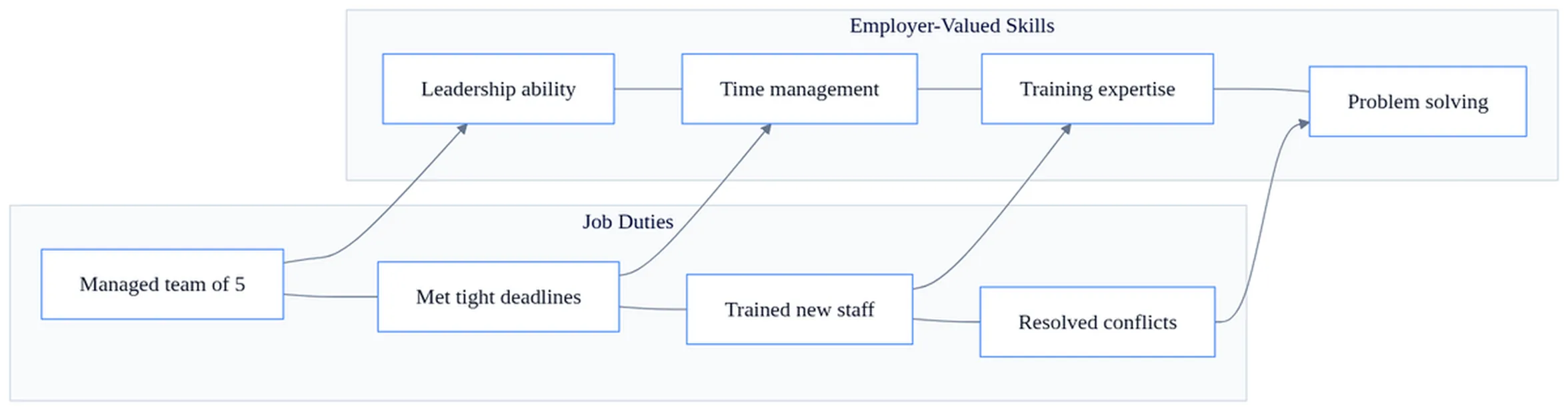
Translate duties into skills and outcomes. Instead of “Managed a team of five,” write “Led a cross-functional team of five to deliver a website redesign project two weeks ahead of schedule, demonstrating leadership and deadline management under pressure.” The second version shows the employer exactly which competencies you bring.
Focus on the top two priorities from the job posting. You don’t need to address every single requirement or list every job you’ve ever held. If the role shows client relations, spend a full paragraph on your customer service experience and skip the unrelated technical project. Depth on relevant topics beats shallow coverage of everything. Most candidates make the mistake of trying to check every box in the job description, which dilutes their strongest selling points and makes them look scattered rather than focused.
| Weak (duty-focused) | Strong (skill-focused) |
|---|---|
| Responsible for monthly reports | Prepared monthly financial reports that identified cost-saving opportunities, resulting in 12% budget reduction |
| Answered customer emails | Resolved 50+ customer inquiries weekly with 95% satisfaction rating, demonstrating problem-solving and communication skills |
| Attended training sessions | Completed advanced Excel certification and applied new data analysis techniques to streamline inventory tracking |
| Worked with international team | Coordinated with colleagues across three time zones (Dhaka, London, New York) to launch product on schedule |
Don’t limit yourself to employment history. If you speak multiple languages, hold relevant certifications, or have volunteer experience that demonstrates a needed skill, include it. A candidate who organized a fundraising event may have stronger event-planning skills than someone whose job title includes “event coordinator” but who only handled logistics.
Polish language, tone, and correctness
Use simple, clear language. Avoid jargon and overly complex sentences. If you wouldn’t say it in conversation with a respected colleague, don’t write it in your application. Replace “I am writing to inquire about the possibility of employment” with “I’m applying for the Sales Associate position.”
Maintain a professional but authentic tone. You want to sound like yourself, not like you fed a template through a formality machine. According to Harvard Business Review, hiring managers respond better to applications that reflect genuine personality within professional boundaries. Balance formality with warmth.
Proofread ruthlessly.
A single typo or grammar mistake signals carelessness and lack of attention to detail. Employers assume that if you can’t proofread a one-page application, you won’t proofread client emails or reports. Read your application aloud to catch awkward phrasing. Then ask a trusted friend or mentor to review it with fresh eyes.
Verify you’ve addressed the hiring manager by name if it’s provided in the posting. If no name appears, use “Dear Members of the Selection Committee” or “Dear Hiring Manager” rather than the outdated “To Whom It May Concern.” Small details like this demonstrate that you’ve paid attention.
Avoid abbreviations, including the ampersand (&). Write out “and,” “percent,” and other words in full. Don’t use text-message shorthand, emoji, or casual internet language. These choices undermine your professionalism regardless of industry.
Format and submit correctly
Place your contact information at the top of the page: full name, mailing address, phone number, and professional email address. Do not include your current job title or employer name, which can create awkwardness if you’re applying while still employed. Below your information, add the date, then the recipient’s name, title, and organization address.
Use standard business letter structure: salutation, body paragraphs, closing (“Sincerely” or “Respectfully”), and your typed name with space for a signature if submitting a printed copy. Keep your application to one page. Use single spacing within paragraphs, double spacing between them, and a readable font like Arial or Times New Roman at 11 or 12 points.
For digital submissions, follow every instruction exactly. If the posting requests a PDF, don’t send a Word document. If they specify a file-naming convention (“LastName_FirstName_Application.pdf”), use it precisely. Many organizations use applicant tracking systems that filter submissions based on compliance with instructions. For a comprehensive overview of different submission formats and channels, see our guide to job application types and formats.
For printed applications submitted in person or by mail, ensure absolute cleanliness. No overwriting, strikethroughs, correction fluid, or smudges. Use high-quality white or off-white paper. If you’re submitting through your current employer (as some organizations require), include a routing slip and maintain confidentiality about your job search.
Attach required enclosures in the order requested: typically a resume, academic certificates, experience letters, and a recent photograph if requested. A cover letter often accompanies the application as a separate document that provides narrative context for your qualifications. Label each attachment clearly and ensure all copies are legible.
Common mistakes that trigger rejection
Generic language kills applications faster than anything else. If your application could be sent to any company for any role with minimal changes, it will be rejected. Employers can spot template-based applications instantly. Customize every application for the specific role and organization.
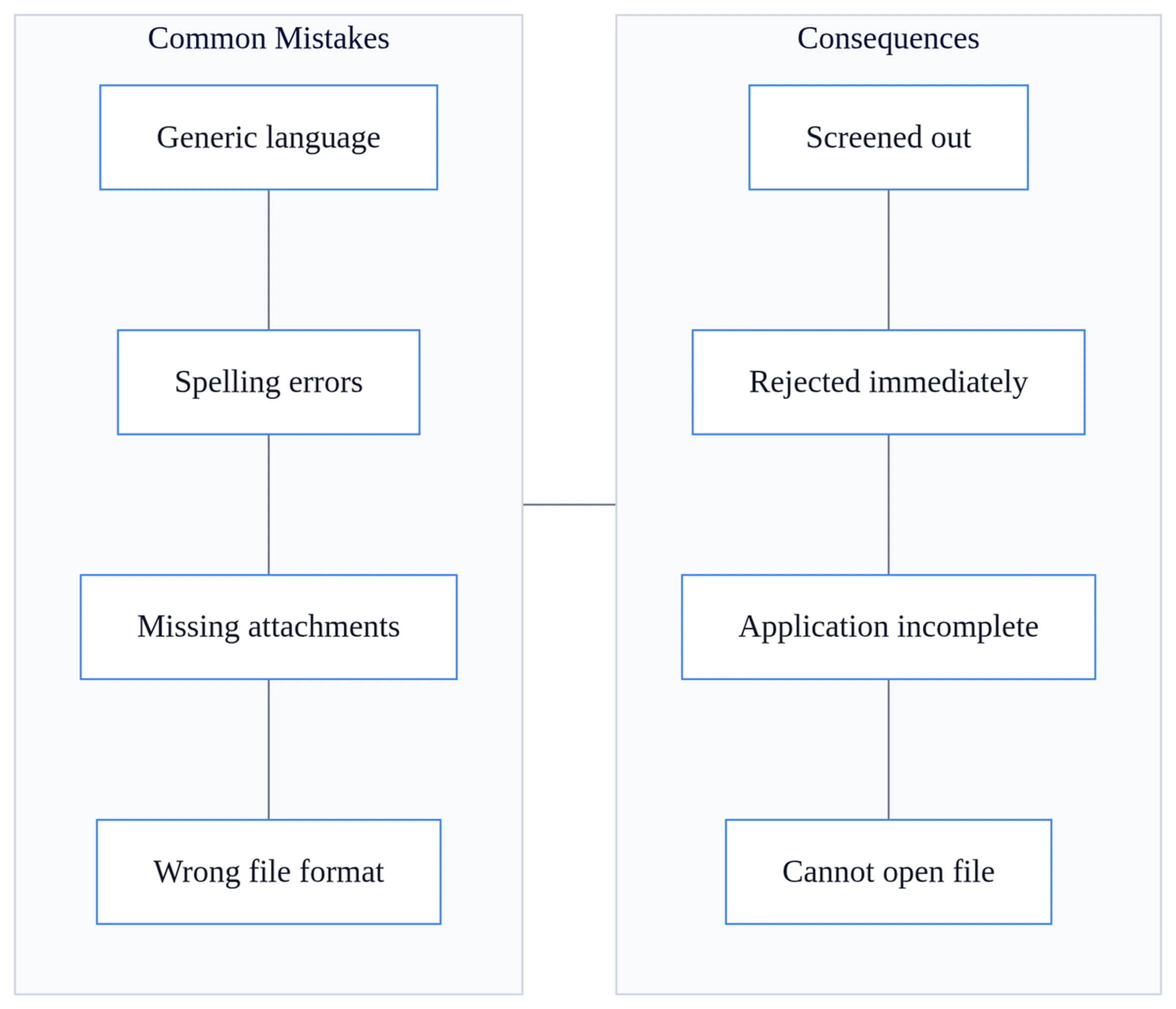
Focusing on what you want from the job instead of what you offer the employer is another fatal error. Statements like “This position would allow me to develop my skills” or “I’m looking for a role with growth opportunities” center your needs, not theirs. Employers hire to solve problems and fill needs. Frame everything in terms of the value you bring.
Grammatical or spelling errors suggest you don’t care enough to proofread or lack basic communication skills. Either interpretation disqualifies you. One hiring manager at a Dhaka-based tech firm told me she automatically rejects any application with more than one error, regardless of qualifications. Fair or not, that’s the reality.
Exceeding one page or including irrelevant personal information wastes the reader’s time. Don’t mention your marital status, age, religion, or hobbies unless directly relevant to the role. Don’t explain why you left previous jobs or include salary expectations unless the posting specifically requests that information.
Failing to follow submission instructions signals that you don’t read carefully or follow directions. If the posting says “no phone calls,” don’t call. If it requests three references, provide exactly three. If it specifies a deadline, submit before that deadline, not on the day itself when systems may be overwhelmed.
Submitting without customization is perhaps the most common mistake. You must tailor each application to the specific role. Change the opening to reference the exact position. Adjust body paragraphs to highlight the most relevant experience. Mirror the language and priorities of the job posting. Generic applications rarely succeed.
Next steps: from application to interview
Close your application by offering to provide additional information. A simple statement like “I would welcome the opportunity to discuss how my experience aligns with your needs” invites the next step without sounding presumptuous.
Include a brief, professional thank-you: “Thank you for considering my application.” This small courtesy leaves a positive final impression and demonstrates good professional manners, which are part of effective communication in any business context.
Keep a copy of every application you submit, along with the original job posting. If you’re called for an interview, you’ll want to review exactly what you wrote and what the employer was looking for. This preparation gives you a significant advantage. For comprehensive guidance on what comes next, see our step-by-step interview preparation guide.
Strong job applications don’t guarantee interviews, but weak ones guarantee rejection. The difference between a generic application and a targeted, polished one is often the difference between a form rejection and a phone call inviting you to interview.
Frequently asked questions
Should I customize my application for each job or use a template?
Always customize. A template saves time but signals to hiring managers that you haven’t researched their specific role or company. Use the same structure each time, but rewrite your opening, skill examples, and closing to match the job posting and company culture. Hiring managers can spot generic language in seconds.
What if my most relevant experience is from a volunteer role, not paid work?
Include it and frame it the same way you would paid experience. Translate the volunteer work into skills and outcomes. If you managed event logistics as a volunteer, that demonstrates project management and organizational ability just as much as paid work does. Employers care about what you can do, not whether you were compensated.
How long should my job application be?
One page is standard for most roles. Three to four paragraphs of body text, plus opening and closing. If you have extensive relevant experience, two pages is acceptable, but never longer. Hiring managers spend under 30 seconds on initial review, so brevity forces you to prioritize your strongest qualifications.
Should I address the hiring manager by name or use a generic greeting?
Use their name if you find it in the job posting or on LinkedIn. If you can’t find a name, use “Hiring Manager” or “Hiring Team” rather than “To Whom It May Concern.” A specific name shows effort and respect. If the posting lists multiple names, address the primary contact or use a team greeting.
What if the job posting asks for skills I don’t have?
Don’t claim them. Instead, highlight related skills that demonstrate your ability to learn quickly. For example, if they want Python and you know JavaScript, explain your programming foundation and willingness to develop Python expertise. Be honest about gaps while showing adjacent strengths and growth mindset.
Can I mention salary expectations or benefits in my application?
Only if the job posting explicitly asks for it. If they request salary expectations, provide a realistic range based on industry research and your experience level. Keep it brief and professional. Don’t volunteer this information unprompted, as it can narrow your negotiating room later.