


Have you ever lent money to a friend who promised to pay you back “next week” but months later you are still waiting? Now imagine that situation in the world of business where customers delay payments or even forget about them entirely. Businesses cannot just wait and hope, they need a polite yet firm way to remind clients about overdue payments. That is where a collection letter comes in.
This post will guide you through everything you need to know about collection letters. We will look at the definition, the purpose, why they matter in business communication, and how they differ from other letters. By the end, you will clearly understand why collection letters are not only about getting your money back but also about building professional trust.
Definition of a Collection Letter
A collection letter is a written message that a business or individual sends to remind a customer or debtor of an overdue payment. It is not just a random note asking for money. It is a structured, professional document that states how much is owed, when it was due, and what steps the recipient should take to settle the account.
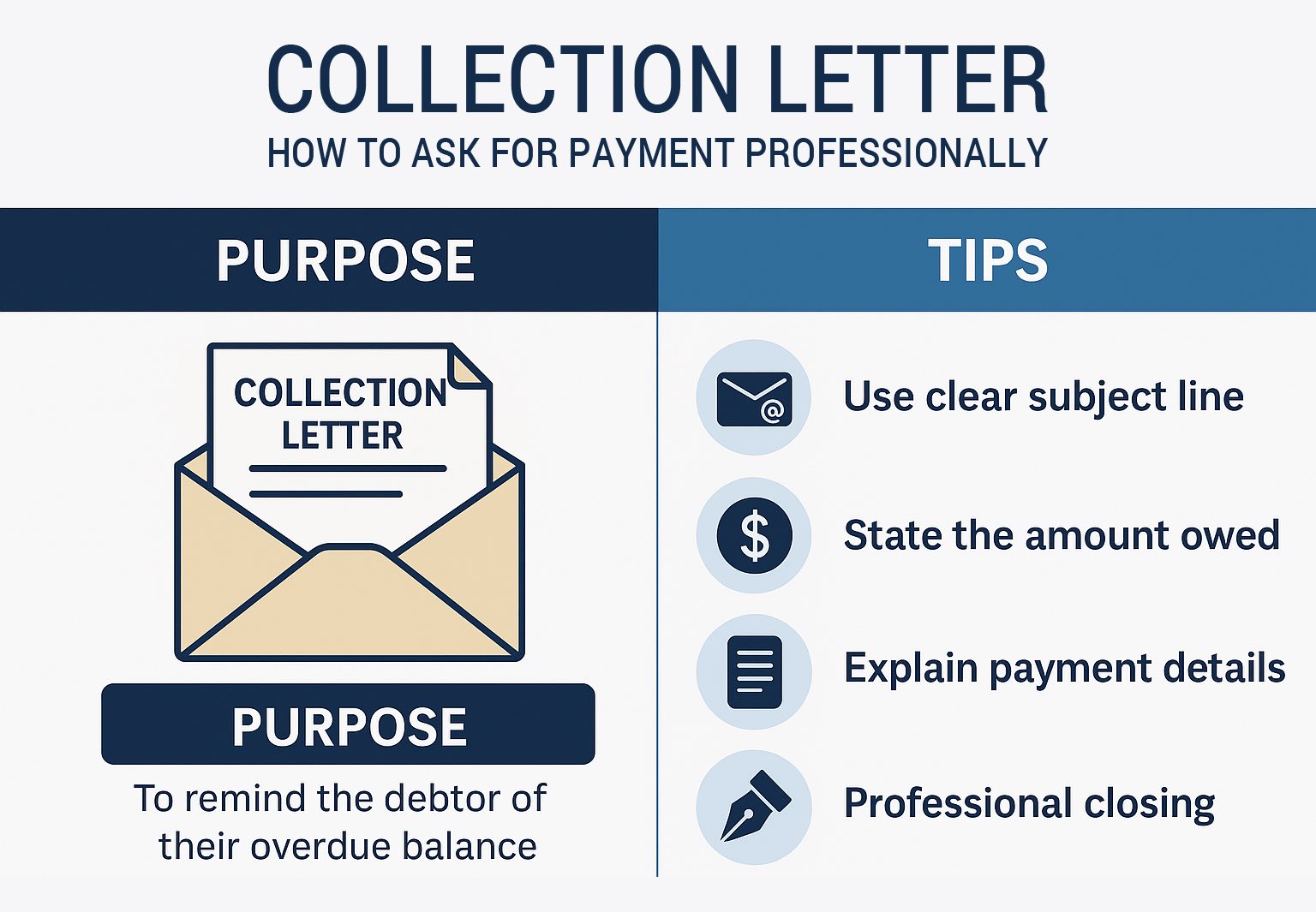
Unlike an invoice, which simply informs someone of the amount payable, a collection letter communicates that the deadline has already passed. It creates a sense of urgency, but in a polite way. Think of it as a nudge that says, “Hello there, remember your unpaid bill? Please take care of it.”
Interestingly, collection letters are also called debt recovery letters, overdue payment notices, or even reminder letters depending on the situation. The name may change, but the purpose remains the same.
Purpose of Collection Letters
So, what is the main purpose of writing a collection letter? Is it just about collecting money? Of course, recovering payment is the primary goal, but there is more to it than meets the eye.
- Ensuring Payment Collection
Above all, the main purpose is to remind the customer of the outstanding balance. The letter makes sure the client cannot claim ignorance or forgetfulness. - Maintaining Goodwill
Businesses depend on repeat customers. A well-written collection letter manages to be firm yet polite, so the customer does not feel attacked. - Creating a Formal Record
A collection letter serves as proof that you reached out. If the case ever goes to court, these letters become evidence of your efforts to resolve the matter professionally. - Reducing Bad Debts
The longer a payment is delayed, the lower the chances of collecting it. A collection letter motivates customers to act quickly, reducing financial risk.
👉 For related insights, you can check our post on the objectives of collection letters where we explain how letters serve broader communication goals.
Core Features of a Collection Letter
A collection letter has certain characteristics that make it effective. Without these, it may not work as intended.
- Professional tone: The language must stay formal and respectful. You are asking for money, not picking a fight.
- Clarity: Mention the exact amount due, the invoice or reference number, and the deadline clearly.
- Politeness with firmness: A little friendliness can go a long way, but the message should still communicate seriousness.
- Documentation value: The letter acts as a legal and business record. Keep copies for your files.
👉 To learn about the detailed factors of collection letters, see our dedicated guide.
Importance in Business Communication
Why are collection letters so significant in business communication? The answer lies in balance. On one side, businesses need their money. On the other side, they want to preserve a positive image. A collection letter provides this balance.
- Builds credibility: When a business communicates in writing, it shows professionalism.
- Prevents misunderstandings: Everything is clear on paper, leaving little room for confusion.
- Maintains long-term relationships: Even when asking for payment, the business shows respect, which helps retain customers.
- Legal safeguard: Written communication often acts as the first line of defense if disputes arise.
👉 For a deeper perspective, see our article on the importance of business communication.
Collection Letter vs Other Letters
At this point, you might be wondering, is a collection letter the same as a reminder letter or even a legal notice? The short answer is no. Let’s break down the differences.
- Collection Letter vs Reminder Letter
A reminder letter is usually the first gentle nudge before the payment is overdue. A collection letter, on the other hand, comes after the due date has already passed. - Collection Letter vs Legal Notice
A legal notice is much stronger and usually involves lawyers. A collection letter is less formal and serves as an attempt to resolve matters before involving courts. - Collection Letter vs Claim or Adjustment Letter
Claim and adjustment letters are written when there is a problem with a product or service, not when there is unpaid money. They are different forms of business communication altogether.
👉 To explore similar correspondence, check our guide on the adjustment letter in business.
When and Why Businesses Send Collection Letters
Not every late payment requires an immediate collection letter. Timing is key. Businesses usually send them in stages, depending on how overdue the payment is.
- After a few days: A soft, polite letter reminding the customer about the missed due date.
- After a month: A firmer letter stressing the urgency.
- After two or three months: A strong letter that might mention possible consequences.
For example, a landlord may send a collection letter when rent is overdue by two weeks. A bank may issue one after a loan payment is missed for a month. Businesses typically escalate the language gradually, starting with a friendly reminder and moving toward stronger wording.
👉 You can see more about the structured methods of writing collection letters in our complete guide.
Benefits of Using Collection Letters
Collection letters may seem old-fashioned in the age of emails and instant messages, but they still bring many benefits.
- Professional approach: Clients respect a written communication more than a casual phone call.
- Reduced confrontation: A letter is less emotionally charged than a heated conversation.
- Clear documentation: Everything is recorded in black and white.
- Cost-effective: Writing a letter is cheaper than hiring debt collectors or going to court.
Above all, collection letters help businesses recover money while still maintaining goodwill. This combination makes them invaluable.
Best Practices (Quick Overview)
Although this post focuses on definition and purpose, it is important to highlight some best practices.
- Always keep the tone polite, even when firm.
- Provide all necessary details, such as invoice numbers, amounts, and deadlines.
- Avoid blaming or insulting language, as this can harm relationships.
- Use consistent formatting so your business appears reliable.
👉 For more, see our guide on writing collection letters effectively.
Conclusion
So, what is a collection letter? It is a professional, written communication that reminds a customer of overdue payments, ensures collection, maintains goodwill, and provides a legal record. Its purpose goes beyond money. It is about communication, professionalism, and relationship management.
Businesses that master the art of writing effective collection letters not only recover payments faster but also protect their reputation. After all, good communication is the backbone of successful business relationships.
👉 If you want to see real-life collection letter samples, check our dedicated post.
Frequently asked questions
Should my first collection letter be friendly or firm?
Start friendly. Your first letter should be polite and assume the delay was unintentional—maybe the invoice got lost or overlooked. Use a gentle tone that reminds without accusing. Save firmness for follow-up letters if payment still doesn’t arrive. This approach protects the customer relationship while still creating urgency.
What if the customer claims they never received the original invoice?
Your collection letter becomes proof of contact. Include the original invoice number, amount, and due date in the letter itself. Send the collection letter via a trackable method (certified mail, email with read receipt). Keep copies of everything. This documentation protects you if the customer continues to deny responsibility.
Can I send a collection letter via email, or should it be printed?
Email works fine and is faster, but use a professional format and request a read receipt for documentation. For larger amounts or repeat offenders, certified mail adds legal weight. Choose based on your relationship with the customer and the debt amount. Either way, keep records of when you sent it.
How many collection letters should I send before giving up?
Typically three to four letters over two to three months, with increasing firmness. After that, consult a lawyer about small claims court or debt collection agencies. The exact number depends on your industry and the debt size. Document each attempt—this record is valuable if you pursue legal action.
What tone should I use if the customer is a long-term client?
Stay professional but warmer. Acknowledge the relationship and express surprise at the delay rather than suspicion. Offer to discuss payment arrangements or potential issues. A loyal customer may have a legitimate reason for the delay. Preserving the relationship matters here, so balance firmness with understanding.
Should I mention late fees or legal action in the first letter?
No. Save threats for the second or third letter. The first should focus on reminding and requesting payment politely. Mentioning consequences too early can damage goodwill and may seem aggressive. Escalate your language only if earlier attempts fail.