


An appointment letter is the formal document an employer sends to confirm a candidate’s selection for a job, outlining the position, salary, start date, and employment terms. This guide explains what an appointment letter is, how it differs from an offer letter, what it must contain, and provides a step-by-step writing method with a practical template you can adapt.
What is an appointment letter?
An appointment letter is a formal written confirmation from an employer to a selected candidate that they have been hired for a specific position. It documents the agreed-upon terms of employment, including job title, compensation, start date, and responsibilities. Also called a job offer letter, letter of appointment, or employment confirmation letter, this document is the official record of the employment agreement.

Employers send appointment letters after candidates successfully complete the complete interview process, including background checks and reference verification. The letter arrives once both parties have verbally agreed to terms and the organization is ready to formalize the relationship.
The appointment letter serves multiple purposes beyond simple notification. It protects both employer and employee by creating a written record of what was promised. It reduces onboarding confusion by documenting expectations in one place. It initiates the formal employment relationship, often requiring the candidate’s signature as acceptance before their first day. Unlike informal email confirmations, appointment letters follow professional formatting conventions and are printed on company letterhead. They carry legal weight and become part of the employee’s permanent HR file. Many organizations require new hires to sign and return a copy before they can begin work or access company systems.
Appointment letter vs. offer letter: key differences
Many people use “appointment letter” and “offer letter” interchangeably, but they represent distinct stages in the hiring process. Understanding the difference matters for both employers drafting documents and candidates tracking their application status.
An offer letter is the preliminary document sent when an organization wants to hire someone but negotiations may still be ongoing. It typically includes the proposed salary range, general benefits overview, and conditional language such as “pending successful background check” or “subject to reference verification.” The offer letter invites the candidate to accept, counter-propose, or decline.
An appointment letter arrives after that conversation concludes. It’s the final, formal confirmation that all terms have been agreed upon and verified. The language is definitive rather than conditional. Where an offer letter might say “We are pleased to offer you the position,” an appointment letter states “You are hereby appointed to the position.” This document includes complete details on salary breakdown, benefits enrollment, probationary period terms, and specific start date with reporting instructions.
In practice, the offer letter precedes the appointment letter by days or weeks. A candidate receives an offer, accepts it, completes any required checks or paperwork, and then receives the appointment letter as the official employment contract. Some smaller organizations skip the offer letter stage entirely and send only an appointment letter, but larger companies and government agencies typically maintain the two-document sequence for legal clarity.
What most people get wrong: assuming the offer letter is the binding contract. In jurisdictions with strong employment law, the appointment letter often carries more legal weight because it documents the final agreed terms after any negotiations. Always read both documents carefully and note any discrepancies between them.
When each document is used
Send an offer letter when you want to extend an opportunity but need flexibility for negotiation or verification. Send an appointment letter when all terms are final and you’re ready to commit to a start date.
Essential contents of an appointment letter
A complete appointment letter leaves no room for confusion about the employment relationship. Each element serves a specific purpose, and omitting any of them can create problems during onboarding or later disputes.
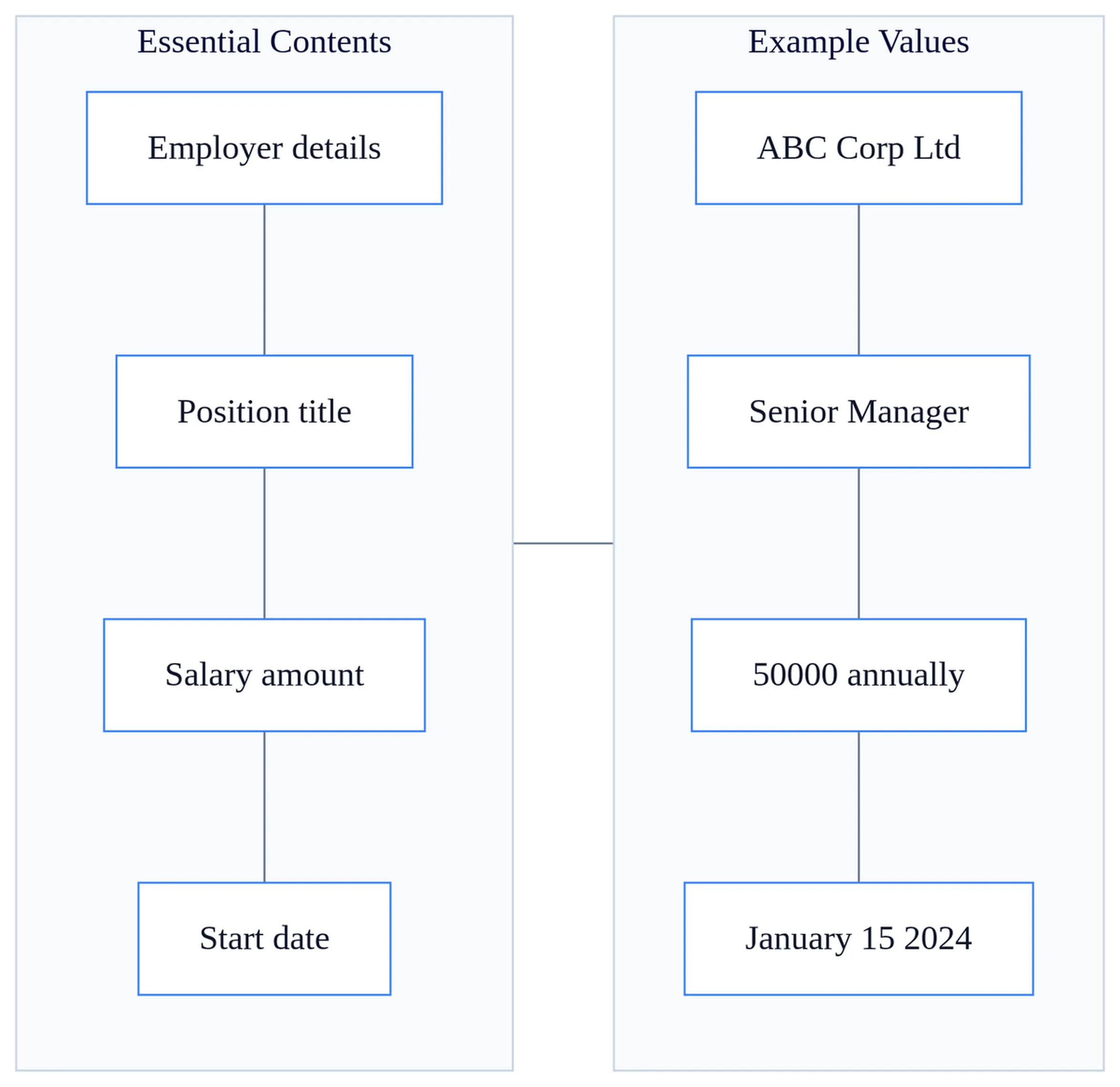
Employer details: The letter should appear on official company letterhead showing the organization’s legal name, registered address, contact information, and logo. This establishes authenticity and provides the candidate with official contact points for questions. Include the HR department’s direct phone number and email address.
Candidate details: Use the candidate’s full legal name exactly as it appears on their identification documents, along with their current mailing address and contact information. Consistency here prevents payroll and benefits enrollment problems later. If the candidate goes by a preferred name different from their legal name, note both.
Position information: State the exact job title, department or division, and reporting structure. Specify who the new hire will report to by name and title. If the role involves dotted-line reporting or matrix management, clarify those relationships here.
Compensation: Break down the total compensation package into clear components: base salary, performance bonuses, commissions, allowances (travel, housing, phone), and payment frequency (monthly, bi-weekly). State the currency and whether figures are gross or net of taxes. Include information about salary review cycles and eligibility for raises. Clear compensation terms prevent many early-stage employment disputes.
Employment terms: Specify whether the position is permanent, temporary, or contract-based. If temporary or contract, state the end date or contract duration. Define the probationary period length (commonly 3 to 6 months) and what happens at the end of it. Clarify whether employment is full-time or part-time and what constitutes standard working hours. For remote or hybrid roles, specify the expected work location and flexibility terms.
Start date and joining instructions: Provide the exact first day of work, reporting time, and location. Include the name and contact information of the person the new hire should ask for upon arrival. List any documents they must bring on day one (identification, education certificates, previous employment records). If there’s a joining letter the candidate must submit, mention that requirement and deadline.
Job responsibilities and expectations: Outline the primary duties and key performance expectations for the role. This doesn’t need to be an exhaustive job description, but it should give the new hire a clear picture of what success looks like. Include any travel requirements, professional certifications that must be maintained, or continuing education expectations.
Benefits and leave policies: Summarize health insurance, retirement contributions, paid time off, sick leave, parental leave, and other benefits. Specify when benefits become active (immediately, after probation, after 90 days). Reference the employee handbook or benefits guide for complete details, but provide enough information here that the candidate understands the total value of the package.
Conditions and clauses: Include any confidentiality agreements, non-compete clauses, intellectual property assignments, or code of conduct requirements. Be specific about the scope and duration of these restrictions. Overly broad non-compete clauses may be unenforceable in some jurisdictions, so consult legal counsel when drafting these sections. Also specify grounds for termination and notice period requirements for both parties.
Acceptance deadline: Give the candidate a clear date by which they must sign and return the letter to confirm acceptance. A typical window is 7 to 14 days from the letter date. Specify the method of return (email scan, postal mail, in-person delivery) and who should receive it.
| Appointment Letter Element | Why It Matters | Common Mistake |
|---|---|---|
| Exact start date and time | Prevents confusion about first day logistics and payroll start | Vague language like “early next month” or “to be determined” |
| Salary breakdown by component | Candidate understands take-home pay vs. total compensation | Listing only gross annual figure without explaining deductions or bonuses |
| Probationary period terms | Sets clear performance expectations and evaluation timeline | Mentioning probation exists but not defining length or assessment criteria |
| Reporting structure | New hire knows who to approach for guidance and approvals | Omitting manager name or using outdated org chart information |
| Remote work policies | Clarifies location flexibility, equipment provision, and communication norms | Assuming “remote work” means the same thing to everyone |
Step-by-step guide to writing an appointment letter
Writing an effective appointment letter requires attention to structure, tone, and legal precision. Follow these steps to create a document that protects your organization while welcoming your new hire. The business letter format provides the foundation, but appointment letters have specific requirements.
Step 1: Use professional letterhead. Begin with your organization’s official letterhead including logo, full legal name, registered address, and contact details. If you’re sending a digital version, ensure the letterhead is embedded in the document, not just a separate image file that could be altered.
Step 2: Date and address the letter properly. Place the current date at the top, followed by the candidate’s full name and mailing address. Use a formal salutation such as “Dear Ms. Patel” or “Dear Mr. Rahman” rather than first names only, even if you’ve been informal during interviews.
Step 3: Open with a clear statement of appointment. Your first paragraph should immediately confirm the appointment: “We are pleased to appoint you to the position of Senior Marketing Manager in our Digital Strategy Division, reporting to Jane Chen, Director of Marketing.” The candidate is looking for confirmation, not preamble.
Step 4: Structure the body by category. Organize subsequent paragraphs or sections by topic: compensation and benefits in one section, employment terms in another, responsibilities in a third. Use subheadings or bold labels if the letter runs longer than one page. This makes the document easier to reference later when the employee has a specific question.
Step 5: Use bullet points for complex information. When listing benefits, job duties, or required documents, bullet points improve readability. For guidance on professional formatting, review how to write a professional business letter.
Step 6: Be specific about probation and evaluation. Don’t just say “You will be on probation for three months.” Explain what happens during and at the end of probation: “During your three-month probationary period, your performance will be evaluated against the goals outlined in your onboarding plan. At the end of this period, your manager will conduct a formal review. Successful completion of probation results in confirmation of permanent employment.”
Step 7: Address modern work arrangements explicitly. If the role is remote, hybrid, or involves flexible hours, spell out the expectations. “You will work remotely from your home office in Chattogram three days per week and report to our Dhaka office on Tuesdays and Thursdays. The company will provide a laptop and monitor; you are responsible for reliable internet access.”
Step 8: Close with acceptance instructions. Your final paragraph should tell the candidate exactly what to do next: “Please sign both copies of this letter and return one to the HR Department at hr@company.com by March 15, 2024. Retain the second copy for your records. If you have any questions, contact Ayesha Khan at 01711-234567.”
Step 9: Sign with appropriate authority. The letter should be signed by the hiring manager, HR director, or other authorized representative. Include the signer’s full name, title, and signature (digital or physical). Add a line for the candidate’s signature and date to indicate acceptance.
Step 10: Proofread ruthlessly. Errors in an appointment letter undermine your organization’s credibility before the employee even starts. Double-check the candidate’s name spelling, salary figures, start date, and job title. Have a second person review the letter.
Common mistakes to avoid in appointment letters
Even experienced HR professionals make predictable errors when drafting appointment letters. These mistakes range from minor annoyances to serious legal risks.
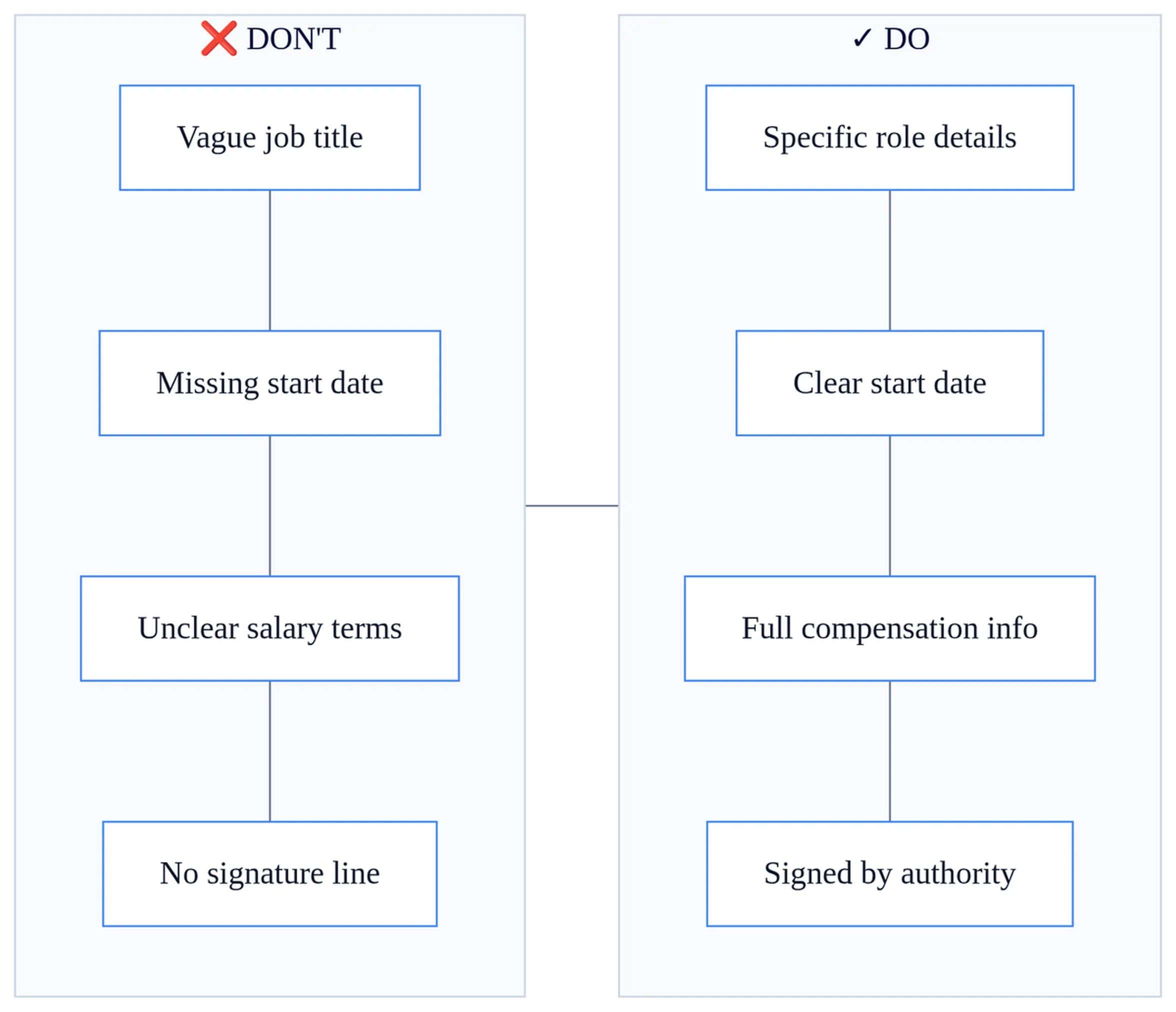
Vague or missing start date. “You will begin work in early April” leaves too much room for interpretation. The candidate doesn’t know when to give notice at their current job, and payroll doesn’t know when to start processing. Always use a specific date: “Your first day of work will be Monday, April 8, 2024, at 9:00 AM.”
Incomplete salary breakdown. Stating only the annual gross salary without explaining components creates confusion when the first paycheck arrives. Break down base salary, bonuses, allowances, and any deductions. Specify payment frequency and method (bank transfer, check). If the role includes variable compensation, explain how it’s calculated and when it’s paid.
Ambiguous probationary period terms. Many letters mention probation but fail to explain the evaluation process, performance standards, or what happens if the employee doesn’t pass. This ambiguity can lead to disputes if you need to terminate during probation. Be explicit: “Probation lasts 90 days. You will receive feedback at 30 and 60 days. Failure to meet performance standards may result in termination with one week’s notice.”
Overly broad non-compete clauses. Restricting an employee from working “anywhere in the industry” or “for any competitor” for “three years” will likely be unenforceable and may deter talented candidates from accepting. Tailor non-compete terms to what’s genuinely necessary to protect your business.
Inconsistent job titles. If the interview process referred to the role as “Marketing Coordinator” but the appointment letter says “Marketing Associate,” the candidate will wonder which is correct. Ensure consistency between the job posting, offer letter, appointment letter, and HR system.
Missing benefits details. Don’t assume the candidate remembers everything discussed in interviews about health insurance, retirement plans, or leave policies. Summarize the key benefits in the appointment letter and reference where they can find complete details. Understanding employment contract terms helps candidates evaluate the total compensation package.
Failing to address remote work specifics. In 2024, many roles involve remote or hybrid work, but appointment letters often treat this as an afterthought. Specify work location expectations, equipment provision, home office stipends, communication norms, and any requirements for occasional in-person attendance. A software developer accepting a “remote position” needs to know whether that means “work from anywhere” or “work from home within your city.”
Typos and formatting inconsistencies. An appointment letter with misspelled names, inconsistent fonts, or grammatical errors signals sloppiness. Proofread multiple times and have someone else review the document before sending.
Appointment letter template and example
Here’s a practical template you can adapt for your organization. Replace bracketed placeholders with specific information for each new hire. This example uses a lecturer appointment at a private university, showing how to handle academic-specific terms like teaching load and research expectations.
[Company Letterhead]
[Company Name]
[Company Address]
[City, Postal Code]
[Phone] | [Email] | [Website]
[Date]
[Candidate Full Name]
[Candidate Address]
[City, Postal Code]
Dear [Mr./Ms./Dr. Last Name],
Subject: Appointment as [Position Title]
We are pleased to appoint you to the position of Lecturer in Business Communication in the Department of Business Administration at [University Name], reporting to Dr. Farida Akhter, Head of Department. Your appointment will commence on January 15, 2025.
Position Details and Responsibilities:
- Teach undergraduate courses in business communication, professional writing, and presentation skills (12 contact hours per week)
- Develop course materials, assignments, and assessments aligned with program learning outcomes
- Supervise student projects and provide academic advising to assigned students
- Participate in departmental meetings, curriculum development, and faculty development programs
- Contribute to research and publication activities as per university guidelines
- Maintain office hours for student consultation (6 hours per week)
Compensation and Benefits:
- Monthly gross salary: BDT 75,000
- House rent allowance: BDT 15,000
- Medical allowance: BDT 5,000
- Annual performance bonus: Up to two months’ basic salary based on evaluation
- Provident fund: 10% employer contribution after confirmation
- Health insurance: Coverage for employee and two dependents
- Annual leave: 20 working days after probation, plus public holidays
Employment Terms:
This is a permanent position subject to successful completion of a six-month probationary period. During probation, your teaching effectiveness, student feedback, and professional conduct will be evaluated. Either party may terminate the appointment during probation with two weeks’ written notice. Upon successful completion of probation, the notice period increases to three months.
Standard working days are Sunday through Thursday. You are expected to be on campus during scheduled teaching hours, office hours, and required meetings. Additional hours may be necessary during examination periods.
Joining Requirements:
Please bring the following documents on your first day:
- Two recent passport-size photographs
- Copies of all academic certificates and transcripts
- National ID card and passport copies
- Previous employment certificates (if applicable)
- Medical fitness certificate from a registered physician
Report to the HR Office, Room 305, Administration Building, at 9:00 AM on January 15, 2025. Ms. Tasnima Haque will coordinate your onboarding and orientation schedule.
Confidentiality and Conduct:
You will be required to maintain confidentiality regarding student records, examination materials, and internal university matters. You must adhere to the university’s code of conduct, anti-harassment policy, and academic integrity standards. Complete details are provided in the Faculty Handbook, which you will receive during orientation.
Acceptance:
Please sign both copies of this letter and return one to the HR Department at hr@university.edu.bd by December 20, 2024. Retain the second copy for your records. If you have questions, contact the HR Department at 02-9876543.
We look forward to welcoming you to [University Name] and are confident you will make valuable contributions to our academic community.
Sincerely,
[Signature]
[Name]
[Title, e.g., Registrar or Director of Human Resources]
[University Name]
—
Acceptance:
I, [Candidate Name], accept the appointment as Lecturer in Business Communication under the terms and conditions outlined in this letter.
Signature: _______________________
Date: _______________________
This template works for many roles with adjustments. For an accountant, replace teaching duties with financial reporting responsibilities and CPA certification requirements. For an intern, shorten the probation period, clarify the learning objectives, and specify whether the internship can convert to full-time employment. For a remote contractor, remove office reporting requirements and add deliverable-based milestones and payment terms.
Why appointment letters matter: legal and cultural benefits
Appointment letters do more than formalize hiring decisions. They serve as the foundation of the employment relationship and provide benefits that extend throughout an employee’s tenure.
They reduce onboarding confusion. When a new hire arrives on their first day, they should already know their salary, reporting structure, benefits, and job responsibilities. The appointment letter is a single reference document that answers most basic questions. This allows onboarding to focus on culture, systems training, and relationship-building rather than clarifying terms that should have been settled weeks earlier.
They protect both parties legally. If a dispute arises about what was promised during hiring, the appointment letter is the primary evidence. Did the employer promise a signing bonus? Is the employee entitled to commission on sales closed before their start date? Does the probationary period last three months or six? Without a written record, these questions become he-said-she-said conflicts.
They build trust and demonstrate professionalism. A comprehensive, well-written appointment letter signals that your organization is competent and values clarity. It shows you’ve thought through the details of the role and are prepared to support the new hire. Conversely, a vague or error-filled letter raises red flags. Candidates who receive sloppy appointment letters often experience buyer’s remorse and may continue job searching even after accepting.
They prevent salary and benefits disputes. Most employment conflicts in the first year involve misunderstandings about compensation. The candidate thought the salary was net; it was gross. They expected immediate health insurance; it starts after 90 days. They assumed “performance bonus” meant guaranteed; it’s discretionary. A detailed appointment letter that breaks down every component of compensation and explains timing prevents these disputes.
They set clear performance expectations. By outlining key responsibilities and probationary evaluation criteria, appointment letters give new hires a roadmap for success. They know what they’ll be measured on and when. This clarity is especially important for roles with quantitative targets or complex deliverables.
They provide HR documentation for compliance. Appointment letters become part of the permanent employee file and support compliance with labor laws, tax regulations, and audit requirements. They document that employment terms were disclosed in writing, that the employee acknowledged them, and that both parties entered the relationship with informed consent. This documentation is essential if you ever face a labor dispute, wrongful termination claim, or regulatory audit.
Appointment letter for different employment types
Not all employment relationships look the same, and appointment letters should reflect those differences.
Permanent employees receive the most comprehensive appointment letters because the relationship is open-ended. Highlight career development opportunities, long-term benefits like retirement contributions, and growth pathways within the organization. Include details about annual performance reviews and salary increment policies. For a permanent hire, the appointment letter is setting the tone for a multi-year relationship.
Temporary or contract workers need clear end dates and renewal terms. Specify whether the contract can be extended and under what conditions. Clarify which benefits they’re eligible for (many organizations exclude temporary workers from health insurance or retirement plans). State the notice period required if either party wants to end the contract early. Be explicit about what happens when the contract ends: “Your employment will conclude on June 30, 2025, unless extended in writing by mutual agreement. No severance payment is due at contract completion.”
Interns and trainees require appointment letters that highlight learning objectives over pure productivity. Outline the mentorship structure, training schedule, and evaluation criteria. Specify whether the internship is paid or unpaid (unpaid internships must meet specific legal criteria in most jurisdictions). If there’s potential for conversion to full-time employment, state the conditions: “High-performing interns may be considered for permanent positions. Conversion decisions are made in the final month of the internship based on performance evaluations and role availability.”
Remote or hybrid workers need detailed work location and communication expectations. Specify whether “remote” means work-from-anywhere or work-from-home within a specific geography. Clarify what equipment the company provides (laptop, monitor, chair) and what the employee must supply (internet, desk, office space). State expectations for video calls, response times, and any required in-person attendance: “You will work remotely from your home in Sylhet. The company will ship you a laptop, monitor, and headset. You must maintain reliable internet with minimum 10 Mbps upload speed. You are expected to attend quarterly team meetings in Dhaka; travel expenses will be reimbursed.”
Contractors and freelancers receive a different document altogether, often called a statement of work or contractor agreement rather than an appointment letter. These focus on deliverables, payment terms, and intellectual property rights rather than employment benefits. Specify the scope of work, milestone deadlines, payment schedule, and ownership of work product. Make clear that this is not an employment relationship: “You are engaged as an independent contractor, not an employee. You are responsible for your own taxes, insurance, and benefits. This agreement does not create an employer-employee relationship.”
An appointment letter is your opportunity to start the employment relationship with clarity. When you document terms thoroughly, use precise language, and address modern work arrangements explicitly, you create a foundation that serves both employer and employee throughout the relationship. The hour you invest in writing a comprehensive appointment letter prevents dozens of hours of confusion later.
Frequently asked questions
Can I send an appointment letter via email instead of printing it?
Yes, email is acceptable for delivery, but best practice is to send a printed copy on company letterhead as well. Email serves as quick notification, but the formal printed version on letterhead carries more legal weight and becomes the official HR record. Ask the candidate to print, sign, and return the physical copy before their start date.
What if the candidate disagrees with terms in the appointment letter?
Stop the process immediately. An appointment letter documents final, agreed-upon terms—if disagreement exists, you’re still in negotiation. Revert to offer letter stage, clarify which terms are non-negotiable, and resolve differences before sending the appointment letter. Never ask a candidate to sign a document they dispute.
Should the appointment letter include at-will employment language or non-compete clauses?
Yes, include at-will employment status if applicable in your jurisdiction. Non-compete clauses belong in a separate agreement, not the appointment letter, because they require specific legal review and may not be enforceable depending on location. Consult your legal team before adding restrictive covenants to any employment document.
What happens if a candidate never signs and returns the appointment letter?
Follow up within 24-48 hours. If they don’t return it before their start date, document the non-response and proceed with onboarding while keeping the unsigned copy on file. Some jurisdictions consider the candidate’s first day of work as acceptance. Clarify your company’s policy with HR and legal counsel beforehand.
Can I use the same appointment letter template for all job levels?
Use one template structure but customize key sections for each role. Executive positions may require additional clauses on confidentiality, equity grants, or severance terms. Entry-level roles need simpler language. Always adjust compensation breakdown, reporting structure, and benefits eligibility to match the specific position and candidate.
Should I mention salary negotiation or counter-offers in the appointment letter?
No. The appointment letter documents final terms only, not negotiation history. If salary was negotiated, the letter should reflect the agreed amount. Never reference “this is our final offer” or leave room for further discussion. That language belongs in the offer letter stage, not the appointment letter.
6 Comments
Hi, nice cover letter
my company refused to pay me,who should i report to.
My appointment letter is not on original school letter pad it is printout of original letter pad.. should I ask on original letter pad or what
This post is very informative! I had a lot of questions about appointment letters, and the specimen you provided is really helpful. Thanks for breaking it down so clearly!
This post really clarifies the purpose of an appointment letter. I appreciate the specimen you included—it’s helpful to visualize what to expect in my own letter. Thank you for the insightful information!
I really appreciate the article on what is an appointment letter. It is very helpful.