


Have you ever wondered why your office memos sometimes go unread, even when you’ve written them with good intentions? The answer is simple — most memos fail because of poor formatting and unclear structure. In the world of business communication, a memo is not just a piece of paper or an email. It’s a professional tool that helps an organization function smoothly.
So, if you’re looking to master the format of a memo in business communication, you’re in the right place. Let’s dive into every part of it step by step and learn how to write a memo that gets noticed, read, and acted upon.
What Is a Memo in Business Communication?
A memo, short for memorandum, is an internal communication document used within an organization. It’s typically used to share information, make requests, provide updates, or issue reminders.
Unlike a letter, which is usually for external communication, a memo circulates inside a company — between departments, managers, and employees.
For a deeper understanding of what a memo actually is, you can check this detailed post on the Meaning of Memo and Its Features.
Why Following a Memo Format Matters
You might ask, “Why does format matter? Isn’t content more important?”
Well, think about it. Would you read a memo that looks messy, has no headings, and jumps between ideas? Probably not.
The format of a memo ensures:
- Clarity in communication,
- Professional presentation, and
- Easier understanding for the reader.
A well-formatted memo saves time for both the writer and the reader. It sets a standard for communication that enhances the overall efficiency of a business.
If you’re interested in the wider role of communication in organizations, check out What is Business Communication. It’ll give you the big picture of how memos fit into the system.
Key Components of a Memo Format
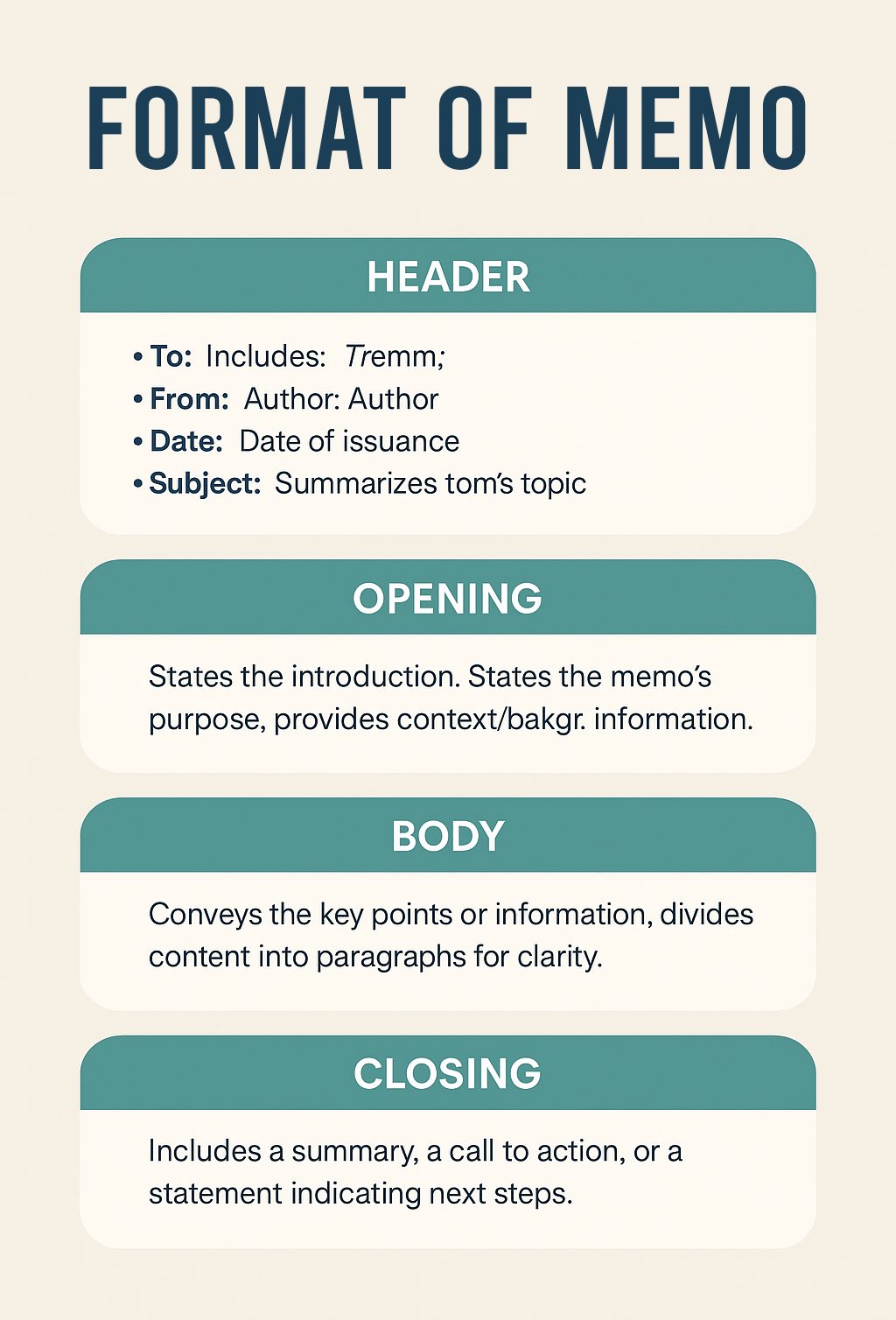
A professional memo follows a simple and consistent layout. Let’s go through the main sections you must include:
- Header Section – includes To, From, Date, and Subject.
- Opening Segment – explains the purpose of the memo.
- Body Segment – gives the details and supporting information.
- Closing Segment – wraps up with action points or a summary.
Each section has its own role, and skipping any of them can make your memo look incomplete.
Detailed Explanation of Each Part
Let’s take a closer look at what each part does.
To:
This line identifies who the memo is meant for. It could be one person, an entire department, or everyone in the organization.
Example:
To: All Sales Team Members
From:
This indicates the sender’s name and designation. Readers must know who issued the memo.
From: John Carter, Sales Manager
Date:
Always write the full date. A date ensures accountability and helps with record-keeping.
Date: October 30, 2025
Subject:
Keep it short and specific. A clear subject line helps readers grasp the topic instantly.
Subject: Weekly Sales Report Submission Deadline
Opening Paragraph:
This part tells the reader why the memo exists. Keep it concise and to the point.
Body Paragraphs:
This is where you share details, background, and reasoning. Use short paragraphs or bullet points to improve readability.
Closing Paragraph:
End with a summary or a call to action. Let the reader know what you expect next.
If you want to explore more about structuring official documents, see Arrangement of Contents in Letter, Report, and Memo.
Formatting Rules and Layout Design
A memo should look neat and professional. Here are a few formatting rules that never go out of style:
- Use a standard font like Arial or Times New Roman, 12pt size.
- Keep 1-inch margins on all sides.
- Align text to the left and use single spacing.
- Separate sections with bold headings or spacing.
- Avoid fancy colors or fonts.
If your company uses branded templates, follow those guidelines strictly.
For digital memos, consistency is key. Whether you’re writing a printed memo or sending one via email, maintain a clean layout that is easy to scan.
Memo Writing Style and Tone
Writing a memo doesn’t mean being stiff or robotic. Keep it simple, professional, and conversational.
Here’s how you can do that:
- Use short sentences.
- Avoid jargon or overly technical language.
- Write in the active voice.
- Be polite yet direct.
For example, instead of saying “It is requested that reports be submitted by Friday,” write “Please submit your reports by Friday.”
If you want to polish your writing style further, explore Advantages and Disadvantages of Written Communication. It’s a great resource for understanding tone and clarity.
Different Types of Memo Formats
Depending on your purpose, memos can take various forms. Let’s explore the most common ones:
a. Informational Memo
Used to share updates or general information.
Example: Announcing a new company policy.
b. Request Memo
Used to ask for approval, data, or resources.
Example: Requesting budget allocation for training.
c. Confirmation Memo
Documents decisions or agreements made during meetings.
d. Policy Memo
Outlines organizational policies and procedures.
e. Proposal Memo
Introduces new ideas, plans, or strategies.
f. Short vs Long Memo
A short memo covers a single topic in a few paragraphs, while a long memo may include sections, headings, and data tables.
For examples of short and long reports, you can read Short Report vs Long Report. The same principles apply when drafting different memo lengths.
Common Mistakes in Memo Formatting
Even experienced professionals make simple memo mistakes. Let’s make sure you don’t:
- Writing vague subject lines.
- Using long paragraphs that look intimidating.
- Forgetting the sender’s name or date.
- Being too casual in tone.
- Ignoring formatting rules.
Remember, a memo is not a personal note. It’s an official record of communication.
Sample Memo Format Template
Here’s a professional sample you can follow:
MEMORANDUM
To: All Department Heads
From: Maria Lopez, HR Director
Date: October 30, 2025
Subject: Reminder – Annual Performance Review Deadlines
Introduction:
This memo serves as a reminder to all department heads about the upcoming deadline for submitting performance reviews.
Body:
Please ensure all evaluations are completed and submitted to HR by November 15, 2025. Late submissions may delay the appraisal process and employee salary adjustments.
If you need any clarification, contact the HR office before November 10.
Closing:
Your cooperation in maintaining timely submissions is highly appreciated.
Maria Lopez
HR Director
Want to learn about the internal parts of a memo in more depth? Visit Different Parts of a Memo.
Memo Format vs Other Business Documents
A memo is often confused with other types of business communication. Let’s clear that up.
| Document Type | Purpose | Audience |
|---|---|---|
| Memo | Internal communication | Employees or departments |
| Letter | External communication | Clients or external parties |
| Report | Analytical or informational | Management or stakeholders |
| Notice | Public announcement | Employees or the public |
For a detailed comparison, check Circular Letter vs Memo vs Notice. It explains how each serves a unique function within business settings.
Best Practices for Effective Memo Writing
To make your memo stand out and serve its purpose, follow these tips:
- Start with a clear objective.
- Keep paragraphs short and focused.
- Use bullet points for clarity.
- Be specific about deadlines and actions.
- Always proofread before sending.
These simple steps can make your memo both professional and reader-friendly. For more guidance on crafting short documents, check out Guidelines for Writing Short Report in Business.
Modern Digital Memos
In today’s workplace, memos are not always printed. Most are shared digitally through emails or internal communication tools like Slack, Microsoft Teams, or Google Workspace.
Here’s how you can adapt your memo format for digital communication:
- Keep the header simple (To, From, Date, Subject).
- Use bold headings for each section.
- Include links or attachments if necessary.
- Maintain a polite, professional tone — even in informal channels.
For example, in an email memo:
Subject: Reminder – Departmental Meeting Tomorrow
Hi everyone,
This is a quick reminder about our team meeting scheduled for 10 AM tomorrow in Conference Room A.
See you all there!
– Alex
Digital memos should still look neat and consistent, even though they travel faster than paper.
Conclusion
To sum up, the format of a memo in business communication is what transforms plain text into a professional message. A memo is not just about what you say but also how you say it.
When formatted properly, a memo can:
- Save time,
- Improve internal communication, and
- Build a culture of professionalism within your organization.
So, the next time you sit down to write a memo, use the structure and tips from this guide. You’ll not only look more professional but also ensure your message hits the mark.
If you’re ready to go beyond memos and explore related communication forms, check out Functions of Memo and What is Business Communication.
Happy writing — and remember, a good memo is one that gets read and acted upon!
Frequently asked questions
Should I send a memo via email or print it out?
Email is standard for most internal communications today. Print only if your company requires physical records or if the recipient lacks email access. Digital memos are faster, searchable, and easier to archive. If printing, maintain the same professional format as you would in email. Check your company’s document retention policy to decide.
What if my memo needs to go to multiple departments with different concerns?
Tailor the memo to the broadest audience, but use clear section headings or bullet points to separate department-specific information. Alternatively, send targeted versions to each group with a customized opening that explains relevance. Avoid one-size-fits-all memos that confuse readers about what applies to them.
How long should a memo be before it becomes too long?
One page is ideal for most memos. If you exceed one page, you likely need a formal report instead. Use bullet points and short paragraphs to stay concise. If your content truly requires length, add section headings and a table of contents so readers can scan quickly.
Can I use a memo to deliver bad news or criticism?
Yes, but use a professional, neutral tone. State facts without emotion. Lead with context, explain the issue clearly, and end with next steps or solutions. For sensitive feedback, consider a private conversation first, then follow up with a memo to document the discussion and agreed actions.
What should I do if I need approval before sending a memo?
Route the draft to your manager or relevant stakeholder before distribution. Use your email’s draft or internal review process. Once approved, send the final version with the original date and sender information intact. Never alter the memo after approval without noting the revision.