


Have you ever wondered why some people can stand in front of a crowd and speak confidently, while others struggle to find their words? The secret is not just confidence, it’s planning and understanding the art of speech. In this guide, we will explore what speech is, why it’s so powerful, and how you can plan one that truly connects with your audience.
Introduction
Speech is one of the most natural and powerful forms of communication. Whether you’re delivering a motivational talk, explaining a project to your team, or presenting a report in class, a well-structured speech helps you express ideas clearly and influence others.
Unlike casual conversation, a speech is a structured and purposeful form of oral communication. It has a clear goal — to inform, persuade, motivate, or entertain. Understanding how to craft and plan a speech can make the difference between being heard and being remembered.
Understanding Speech in Communication
So, what exactly is a speech?
A speech is a formal talk delivered to an audience with the purpose of sharing information, ideas, or emotions. It’s not just about words, but about connecting minds. Speech, as a form of oral communication, bridges thoughts between speaker and listener, transforming information into influence.
Speech is part of a wider communication process that includes verbal, non-verbal, and written forms. You can explore how these work together in your communication strategy by checking out Types of Communication.
Key Elements of Speech
Every good speech involves five essential elements:
- Speaker – the person delivering the message.
- Message – the information, idea, or feeling being expressed.
- Audience – the group listening to the speech.
- Medium or Channel – how the speech is delivered (in person, online, through video, etc.).
- Feedback – reactions from the audience that show understanding and engagement.
These elements work together to create meaningful interaction. Without them, even the most brilliant ideas can fall flat.
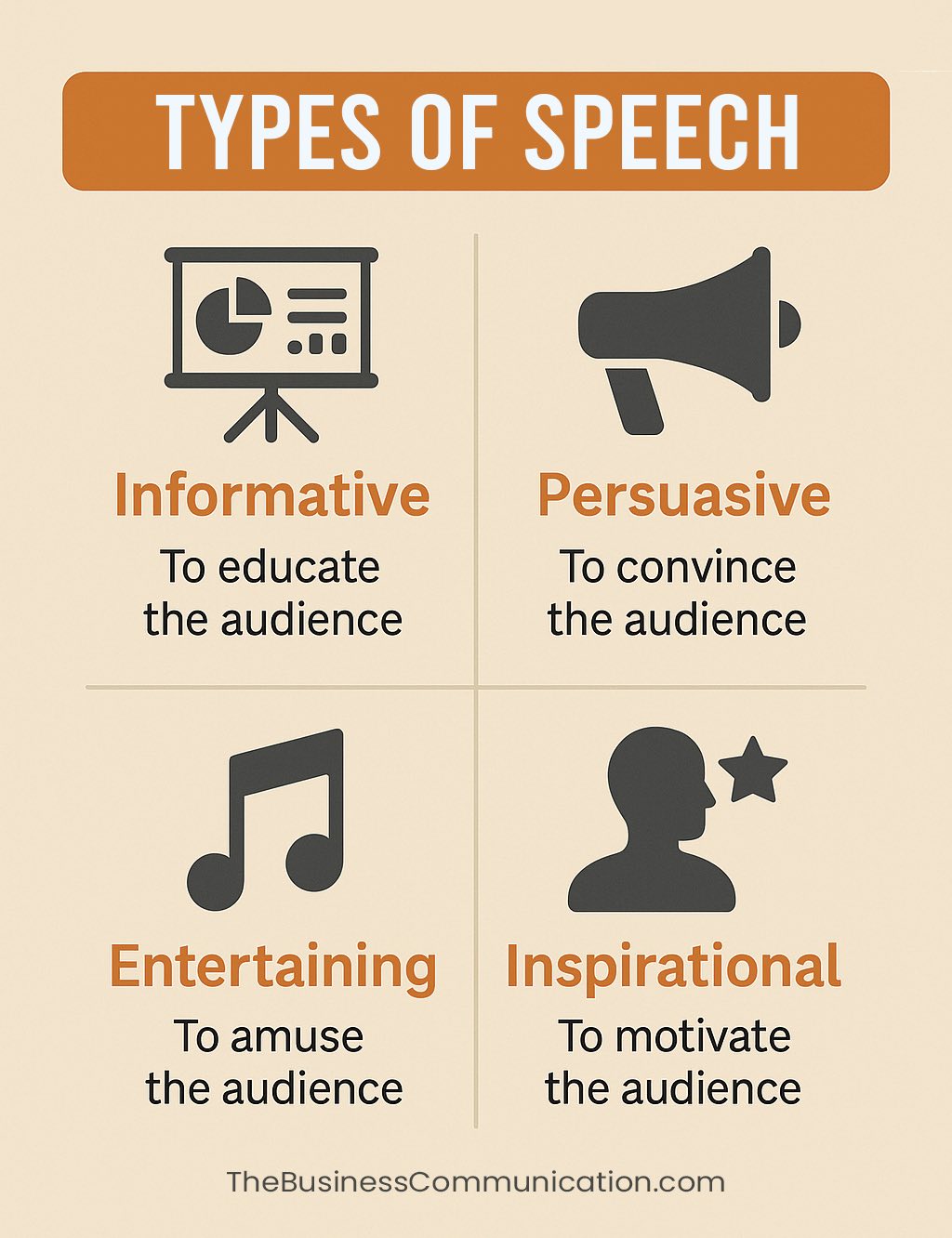
Types of Speech
Speeches come in many forms, each serving a unique purpose. Let’s look at the major types:
Informative Speech
Designed to share knowledge and explain facts. Teachers, trainers, and professionals use this type of speech often. For example, explaining the principles of communication to students falls under this category.
Persuasive Speech
Used to influence opinions and motivate action. Think of sales pitches, campaign speeches, or motivational talks.
Motivational Speech
Aimed to inspire and encourage. These speeches often include personal stories and emotional appeal.
Entertaining Speech
Light-hearted and meant to amuse, such as wedding toasts or award ceremony speeches.
Special Occasion Speech
Speeches for ceremonies, farewells, inaugurations, or birthdays. These have emotional and cultural significance.
Business or Professional Speech
Used in meetings, conferences, or workplace settings. Learning the ways of oral communication can help you deliver effective business presentations.
Functions and Importance of Speech
Why is speech important? Because it shapes perception, builds relationships, and drives action. Here are some key functions:
- Influence and Persuasion: Great speeches can change how people think and act.
- Leadership Tool: Every successful leader is a powerful speaker.
- Relationship Building: Speech strengthens human connections in both personal and professional life.
- Education and Awareness: Through speech, knowledge spreads across generations.
- Social Harmony: Communication reduces conflict and promotes understanding.
If you want to understand how speech plays a role in organizations, explore The Nature of Communication for deeper insights.
Barriers to Effective Speech
Even the best speakers face challenges. Here are some common barriers:
- Physical Barriers: Noisy surroundings or poor sound systems.
- Linguistic Barriers: Using jargon or complex words that confuse the audience.
- Psychological Barriers: Fear, nervousness, or lack of confidence.
- Cultural Barriers: Misunderstanding due to cultural differences.
- Poor Organization: Disorganized ideas can make a speech unclear.
You can overcome many of these by studying Causes of Failure of Oral Communication and applying those lessons.
How to Plan a Speech (Step-by-Step Guide)
Planning is the secret ingredient of every successful speech. Follow these simple steps:
Step 1: Know Your Purpose and Audience
Ask yourself, “Why am I speaking, and who am I speaking to?” Your audience determines your tone, language, and examples.
Step 2: Select the Right Topic
Pick a topic that matches your purpose and resonates with your audience. It could be informative, persuasive, or inspirational.
Step 3: Research and Gather Information
Support your ideas with facts, statistics, stories, and examples. This makes your speech credible and engaging.
Step 4: Organize Your Structure
Divide your speech into three clear parts:
- Introduction – Grab attention with a story, quote, or question.
- Body – Present your main points logically.
- Conclusion – Summarize and end with a memorable message.
Step 5: Write and Refine
Don’t write for yourself, write for your listener. Keep sentences short and conversational. Avoid jargon.
Step 6: Add Visual or Audio Aids
Slides, charts, or videos can make your speech more engaging. To learn more, see Forms of Visual Communication.
Step 7: Practice and Perfect
Rehearse several times. Time your delivery. Record yourself and analyze your voice, tone, and expression.
If you’d like detailed tips, your post on Preparing an Effective Speech expands beautifully on this process.
Structure of a Well-Planned Speech
A clear structure keeps your audience engaged. Here’s a simple model:
- Opening: Use humor, a story, or a surprising fact.
- Body: Present 3 to 5 main points, each supported by examples.
- Conclusion: Reinforce the core idea and give a call to action.
Remember, a good beginning attracts attention, but a strong ending creates impact.
Qualities of an Effective Speech
What makes a speech memorable?
Here are some essential qualities:
- Clarity: Use simple language and short sentences.
- Organization: Follow a logical flow.
- Confidence: Maintain eye contact and steady tone.
- Relevance: Tailor your message to your audience’s interest.
- Engagement: Encourage interaction or reflection.
- Non-Verbal Support: Facial expressions, gestures, and pauses help a lot.
You can read more about the importance of body language in your post on Non-Verbal Communication.
Role of Technology in Modern Speech Delivery
The digital era has transformed speech delivery. Today, speeches can reach millions through live streams and video platforms. Visual aids, presentation slides, and interactive polls can make your delivery more dynamic.
Understanding Digital Media in Mass Communication can help you adapt your speech for modern audiences.
Practical Examples of Speeches
Let’s look at a few real-world cases:
- Informative Speech: A teacher explaining report writing techniques.
- Persuasive Speech: A manager motivating the team to embrace new technology.
- Motivational Speech: A leader encouraging students to pursue lifelong learning.
You can also connect your speech to writing tasks by reviewing What is Report?, which links oral delivery to written communication skills.
Final Tips for Effective Speech Planning
Here are some practical takeaways before you step onto the stage:
- Practice daily, even in front of a mirror.
- Ask for feedback from a friend or mentor.
- Adapt your speech to audience reactions.
- Stay authentic and use your natural voice.
- Keep it short and meaningful.
- Smile — your audience will feel your confidence.
Remember, even famous speakers like Martin Luther King Jr. and Steve Jobs practiced their speeches for hours before delivering them.
Conclusion
Speech is more than words; it’s the art of connection. Whether you speak to inform, persuade, or entertain, planning your speech helps you deliver your message effectively. The key lies in preparation, structure, and genuine communication.
If you master the planning process, you’ll not only speak confidently but also leave a lasting impression on your audience. So, start planning your next speech today and make your voice count.
Frequently asked questions
How do I choose between an informative or persuasive speech?
Start with your goal. If you want the audience to understand facts or learn something new, go informative. If you want them to change their mind or take action, choose persuasive. Your purpose determines everything else—tone, evidence, and structure. Know this before you start planning.
What if my audience has mixed knowledge levels about my topic?
Assume the least knowledgeable person in the room. Define key terms early, avoid jargon, and build from basics to complexity. Use relatable examples everyone can follow. This keeps beginners engaged while advanced listeners appreciate the clarity and depth of your supporting details.
Should I memorize my speech or use notes?
Memorizing risks sounding robotic and leaves no room for recovery if you forget. Use note cards with key points instead. This keeps you on track while sounding natural and conversational. Practice enough that you know your material, not word-for-word recitation.
How long should my speech actually be?
A good rule: one minute per slide or main point. Most effective speeches run 5–20 minutes depending on context. Shorter is usually better—audiences lose focus after 15 minutes. Always time your practice runs to stay within limits and respect your audience’s attention span.
What’s the biggest mistake speakers make during the opening?
Starting with “Hello, my name is” or diving straight into content. Grab attention first with a story, surprising fact, or relevant question. Your opening sets the tone and decides whether people listen or tune out. Spend extra time perfecting it.
Can I use humor if my speech is serious or professional?
Yes, but use it strategically. Light humor breaks tension and keeps audiences engaged, even in serious topics. Avoid jokes that might offend or distract. Self-deprecating humor works well in professional settings. The humor should feel natural, not forced.