


Workplace culture is often described as the “personality” of an organization. It is the invisible glue that holds teams together. Policies, mission statements, and official rules play their part, but culture is not built only in boardrooms. It takes shape every day in coffee breaks, casual jokes, quick chats near the water cooler, and now in online group chats. In other words, it is deeply influenced by informal communication.
Informal communication is the unofficial, casual way people interact at work. While formal communication defines the structure, informal talk fills the emotional gaps. If you are not familiar with the basics, you might first check our post on informal communication definition and examples . For now, let us see how these everyday conversations help shape workplace culture.
Understanding Workplace Culture
So, what exactly is workplace culture? Simply put, it is the collection of values, beliefs, and behaviors that guide how people work together. It includes everything from how meetings are run to whether people feel comfortable sharing ideas. Culture shows in big events like company retreats, but it also shows in small details such as how colleagues greet each other in the morning.
Communication is the backbone of culture. Without constant sharing of information, ideas, and feelings, culture cannot grow. That is why both formal and informal communication matter. Formal messages provide structure, while informal ones create warmth and belonging.
Informal Communication as a Cultural Force
Unlike memos or reports, informal communication flows naturally. It is not planned, yet it often shapes how employees feel about their workplace. When workers joke during lunch or share a quick message on Slack, they are not just chatting. They are reinforcing norms, values, and trust.
Take this simple example. If employees regularly share stories about how managers support them, a culture of trust builds. On the other hand, if gossip spreads about unfair promotions, the culture may lean toward negativity.
This is why informal communication is considered a cultural force. It creates the stories, emotions, and experiences that define the work environment. For a refresher on how informal talk compares to official messages, check our piece on formal vs informal communication differences .
Positive Roles of Informal Communication in Workplace Culture
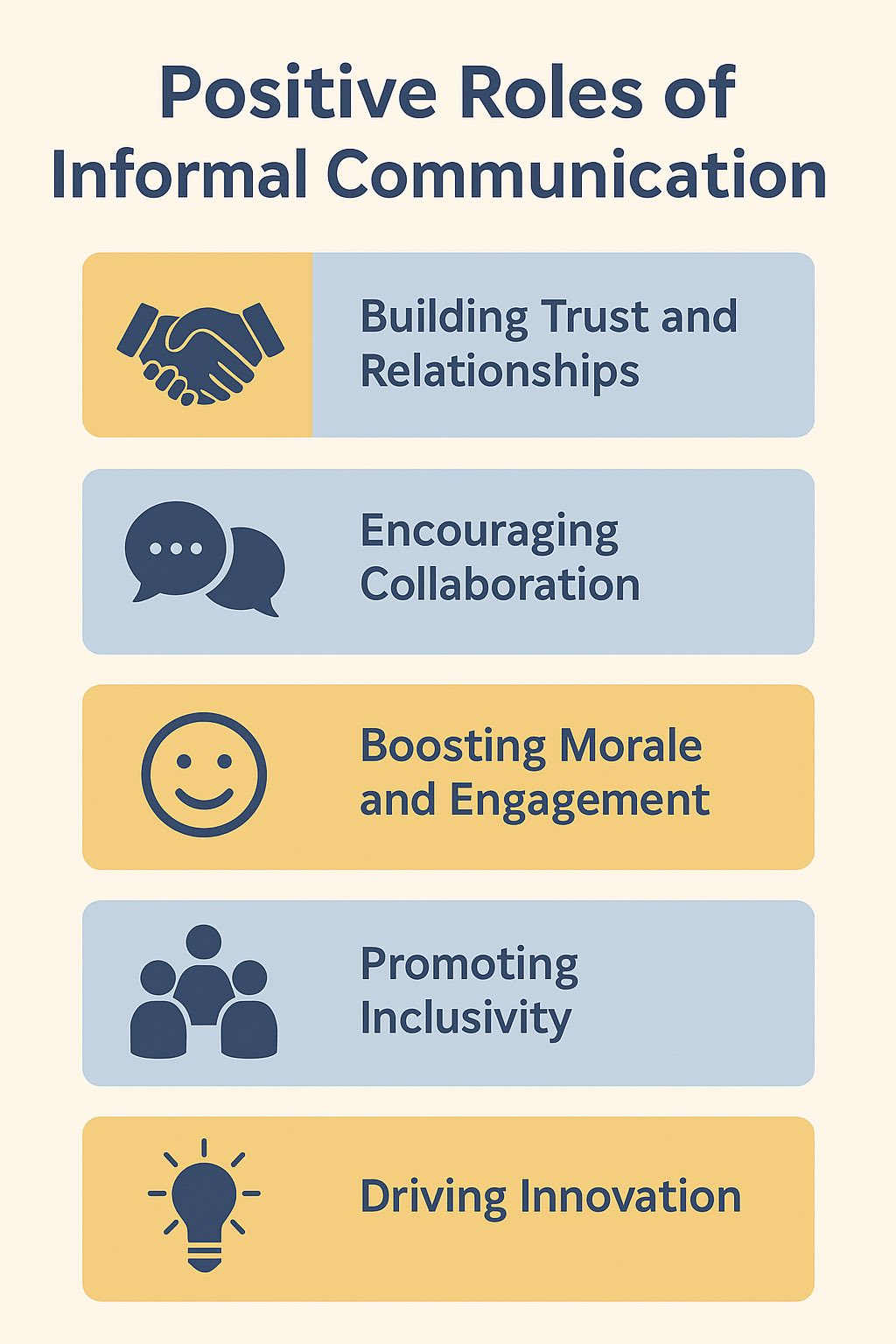
1. Building Trust and Relationships
Informal conversations break down barriers between employees. A chat about weekend plans may seem unimportant, but it creates connections. Over time, these casual talks build trust, and trust is the foundation of any strong workplace culture.
2. Encouraging Collaboration
Teams that talk informally often collaborate better. Suppose two employees casually discuss a problem over coffee. That chat might spark an idea that leads to a formal project. Such collaboration enhances teamwork and creates a culture where people work together naturally.
3. Boosting Morale and Engagement
Workplaces can be stressful. Informal communication adds humor, encouragement, and small doses of happiness. A lighthearted chat can reduce tension and make people feel valued. This boost in morale directly improves engagement and productivity.
4. Promoting Inclusivity
New employees often feel nervous. Formal orientation programs help, but nothing beats a warm welcome from colleagues during lunch or a casual chat on the first day. Informal interactions make newcomers feel included, which strengthens the culture of belonging.
5. Driving Innovation
Many great ideas are born outside formal meetings. Brainstorms during casual conversations often turn into innovative solutions. When employees feel free to share without judgment, creativity flourishes, and culture becomes more dynamic.
Risks of Informal Communication in Workplace Culture
Of course, informal communication also has its risks. Just as it can strengthen culture, it can also harm it.
- Gossip and Rumors: These can quickly damage trust if left unchecked. As explained in our article on how informal communication spreads rumor , information often changes as it spreads.
- Cliques and Exclusion: Small groups may dominate the grapevine, making others feel left out.
- Negative Subcultures: If complaints and cynicism dominate informal talk, a toxic culture may develop.
- Conflicts: Misunderstandings in casual exchanges may escalate into disputes.
The key lesson is that informal communication is powerful. If not guided properly, it can shape workplace culture in the wrong direction.
Informal Communication in Modern Workplaces
The workplace of today looks very different from the one 20 years ago. Remote and hybrid work environments mean that informal chats have moved online. Tools like Slack, WhatsApp, and Teams have become the new “digital water coolers.”
- Gossip Chains in group chats spread news instantly.
- Cluster chains now form in private chat groups where trusted colleagues share updates.
- Virtual coffee breaks replicate face-to-face bonding.
While technology makes sharing faster, it also increases risks. A joke typed in chat may sound harsh without tone of voice. Still, digital platforms are essential for informal communication in modern workplace culture.
Case Scenarios: Culture in Action
Scenario 1: Informal Communication Improving Culture
In one company, managers noticed new employees felt isolated. To solve this, they encouraged informal lunch groups. Within weeks, the culture became more inclusive, and employee satisfaction rose.
Scenario 2: Informal Communication Damaging Culture
In another organization, a rumor spread informally about upcoming layoffs. Although untrue, the gossip lowered morale, and many employees started job hunting. Management had to work hard to rebuild trust.
These cases show that informal communication can either strengthen or weaken culture depending on how it is managed.
How Managers Can Leverage Informal Communication to Shape Culture
Smart leaders do not ignore grapevine communication. Instead, they listen to it, understand it, and guide it.
- Listening to Signals: Managers can detect concerns early by paying attention to informal talk.
- Encouraging Healthy Interactions: Social events, team outings, or even online fun sessions can promote positive informal communication.
- Balancing Formal and Informal: Important updates should always be given formally, but managers can use informal chats to reinforce and clarify.
For more techniques, see our guide on using grapevine communication effectively .
Best Practices for a Positive Informal Communication Culture
- Promote Transparency: Open communication reduces gossip.
- Create Social Spaces: Design both physical and digital areas where employees can interact casually.
- Recognize Informal Leaders: Some employees naturally influence others. Managers should engage them positively.
- Set Boundaries: Make it clear that gossip and harmful rumors are unacceptable.
- Celebrate Informal Wins: A casual thank-you or public appreciation goes a long way.
FAQs on Informal Communication and Workplace Culture
Q1: How does informal communication affect employee engagement?
It improves engagement by making employees feel connected and valued.
Q2: Can workplace culture exist without informal communication?
Not really. Informal talk is essential for building trust and relationships.
Q3: How can organizations stop negative gossip from shaping culture?
By promoting transparency and addressing rumors quickly through formal updates.
Q4: Is informal communication more important than formal communication for culture?
Both are important. Formal creates structure, while informal adds humanity and warmth.
Conclusion
Workplace culture is not shaped only by official policies or mission statements. It is shaped by people talking to each other, sharing experiences, and building trust. Informal communication plays a vital role in this process. It builds morale, inclusivity, collaboration, and innovation. At the same time, it can spread gossip, create cliques, and harm trust if unmanaged.
The challenge for organizations is balance. When guided positively, informal communication becomes the hidden architect of workplace culture. It enriches formal systems and creates a healthy environment where people feel connected, motivated, and engaged.
To dive deeper into the broader communication landscape, check our article on advantages and disadvantages of informal communication . Together, these resources will give you a complete picture of how communication shapes organizations from inside out.
Frequently asked questions
How can managers stop gossip without killing informal communication?
Set clear expectations about what’s appropriate to share informally. Address rumors quickly with facts. Create safe channels for concerns—like open forums or anonymous feedback—so people don’t rely on the grapevine for important information. The goal is to guide informal talk, not eliminate it. Trust and transparency reduce harmful gossip naturally.
Should remote teams have scheduled virtual coffee breaks or let them happen naturally?
Both work, but serve different purposes. Scheduled breaks ensure inclusion and reach quieter employees who might not join spontaneous chats. Natural conversations build stronger bonds. Best practice: offer optional structured time while also protecting space for unplanned Slack conversations. This gives flexibility while preventing isolation.
What if informal cliques are forming and excluding other team members?
Rotate team groupings for projects and social events. Encourage cross-team informal interactions by mixing lunch groups or chat channels. Managers should participate in informal moments with different employees, not just their favorites. Model inclusive behavior. Address exclusion early—cliques damage culture quickly if left unchecked.
Can a single negative comment in a group chat really harm workplace culture?
One comment rarely causes lasting damage alone. But repeated negativity, complaints, or cynicism in informal channels can shift the entire tone. Digital messages also lack tone, so negativity reads louder than intended. Monitor patterns, not single incidents. Address trends before they become the dominant informal narrative.
How do I know if informal communication is actually shaping our culture positively?
Watch for signs: Do new employees feel welcomed quickly? Do people collaborate across teams? Is there laughter and genuine connection? Check employee engagement scores and turnover rates. Ask employees directly what they hear in casual conversations. If informal talk reinforces your stated values, culture is being shaped positively.