


Effective internal communication creates measurable business outcomes: lower turnover, faster decision-making, and stronger alignment on organizational goals. Below, you’ll find eight specific advantages that explain why internal communication deserves a permanent seat at your strategic planning table, and how to recognize each benefit in your own workplace.
What is internal communication
Internal communication is the multi-directional exchange of information, ideas, and feedback among members of the same organization. Unlike external communication, which targets customers, investors, or the public, internal communication focuses on employees, managers, and teams working toward shared objectives. It flows upward from employees to leadership, downward from executives to frontline staff, and horizontally across departments. For a deeper look at the defining features and scope of this practice, see our guide to internal communication characteristics.
Improved coordination and operational efficiency
When a marketing team launches a campaign without consulting the customer service team, you get mismatched messaging and frustrated customers.
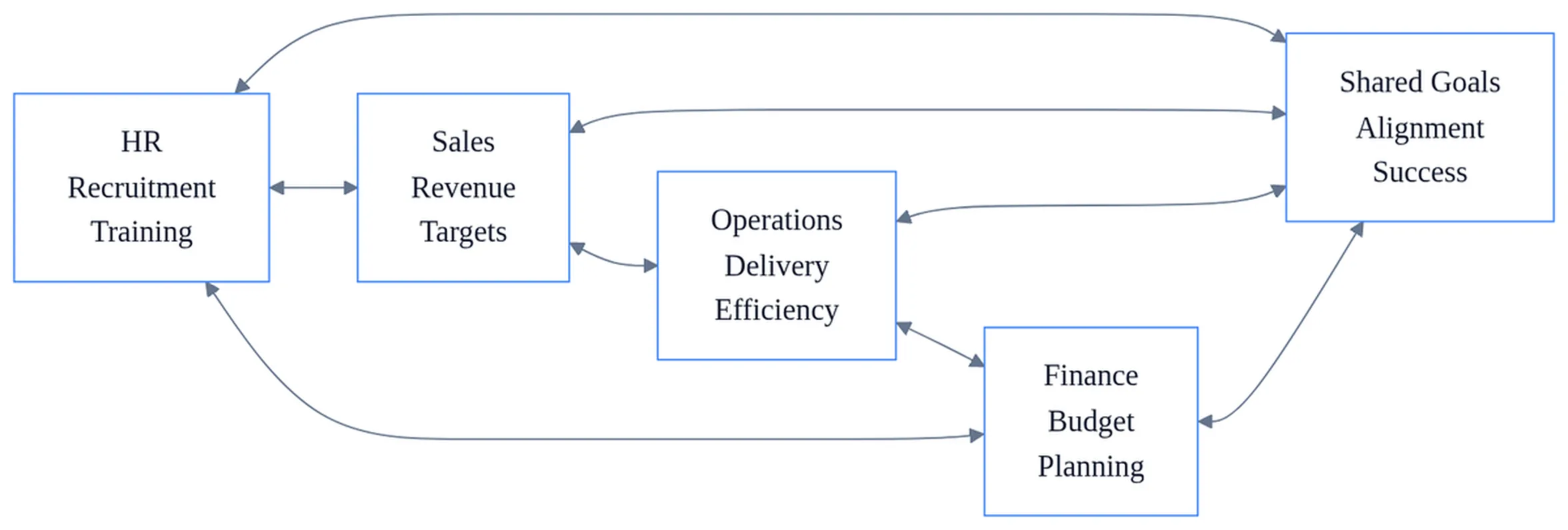
Clear communication protocols reduce silos. A weekly cross-functional standup meeting ensures that product development knows what sales has promised to clients, and finance understands the resource requirements for upcoming initiatives. This coordination prevents duplicated effort and conflicting priorities. Operational efficiency improves when everyone understands their role. A manufacturing plant that uses shift handover logs and digital dashboards can maintain production continuity even as teams rotate. Workers know exactly what the previous shift accomplished and what issues need attention.
The difference between a coordinated organization and a fragmented one often comes down to communication cadence. Monthly all-hands meetings, daily team huddles, and shared project management tools all contribute to smoother day-to-day operations. When communication breaks down, you see missed deadlines, budget overruns, and teams working at cross purposes.
Enhanced employee engagement and motivation
Most people misunderstand motivation in the workplace. They assume it comes from perks, bonuses, or inspirational posters. Real motivation grows when employees feel heard and valued, and that requires two-way communication, not one-way broadcasts.
Consider a software company that holds quarterly town halls where employees can ask executives tough questions about strategy, compensation, or product direction. That open dialogue builds psychological safety. Employees see their concerns acknowledged, even if the answers aren’t always what they hoped for. Contrast that with an organization that only sends top-down memos and never invites feedback. Disengagement follows predictably.
Recognition and feedback loops increase job satisfaction. When a manager takes time to explain how an individual’s work contributed to a successful client pitch, that employee connects their daily tasks to the organization’s mission. A simple “thank you” email copied to the team can do more for motivation than a generic company-wide announcement.
Employees who understand how their work matters and who receive regular feedback report higher engagement scores. Internal communication is the delivery mechanism for that understanding.
Stronger retention and reduced turnover costs
Replacing an employee typically costs 50 to 200 percent of their annual salary, according to SHRM. For a mid-level position earning $60,000, that means $30,000 to $120,000 in recruiting, onboarding, and lost productivity. Internal communication is an overlooked but cost-effective retention lever.
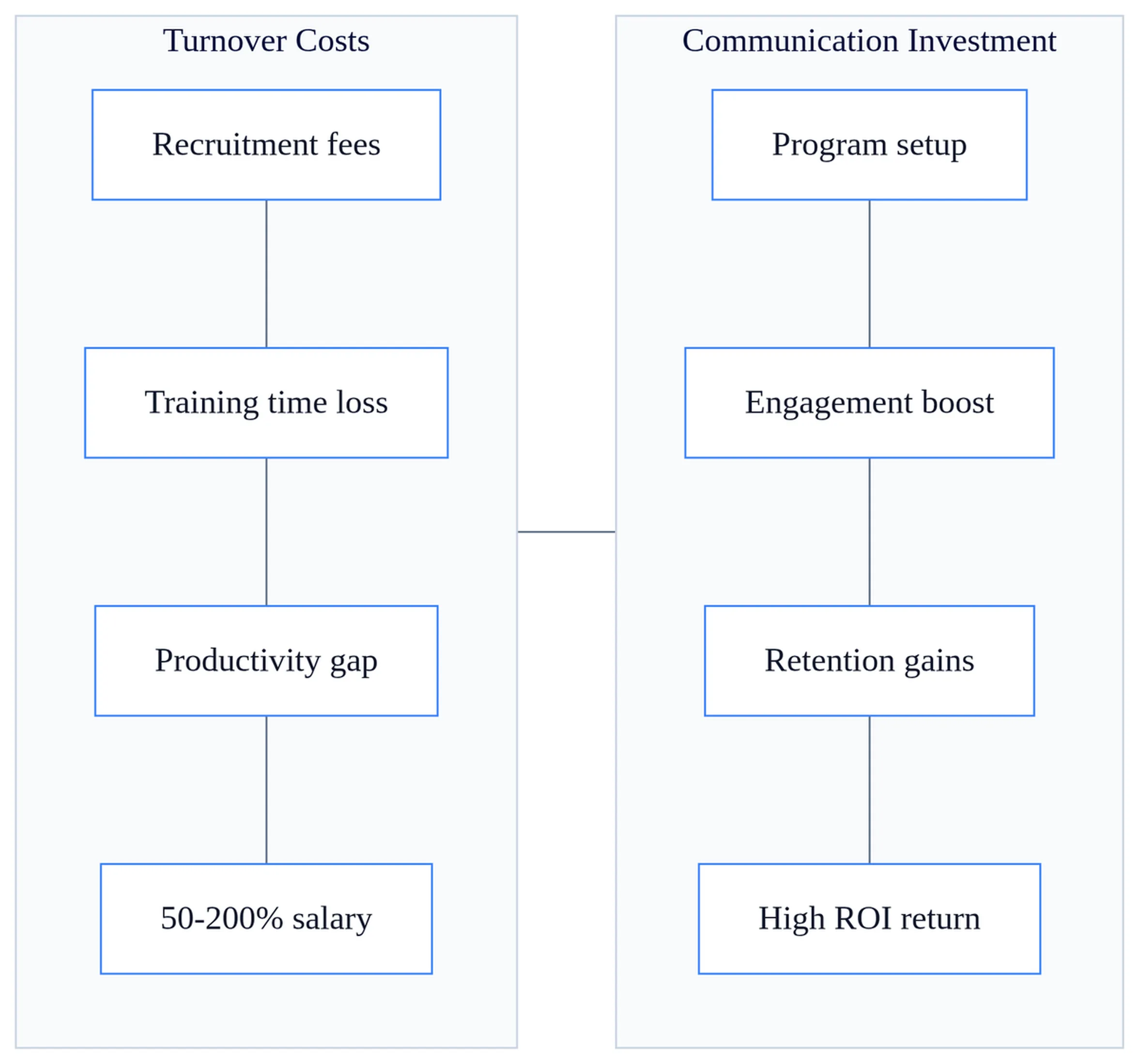
Employees with access to clear, consistent communication from leadership stay longer. They understand the company’s direction, they see opportunities for growth, and they trust that management will address problems transparently. When communication falters, when layoffs happen without warning, when promotions seem arbitrary, when feedback never flows upward, talented people start updating their résumés. A regional bank that holds monthly “ask me anything” sessions with branch managers builds trust that a bank relying solely on quarterly earnings calls cannot match. Employees who trust their leaders are less likely to jump ship for a marginal pay increase elsewhere.
The cost-avoidance framing matters here. You can spend money on retention bonuses and counter-offers, or you can invest in communication infrastructure, regular check-ins, transparent performance reviews, accessible leadership, that prevents the turnover in the first place. The latter approach costs less and builds a healthier culture.
Better decision-making and organizational agility
Participation in decision-making improves both the quality of decisions and the willingness of employees to implement them. When a logistics company invites warehouse workers to suggest improvements to the packing process, those workers spot inefficiencies that executives sitting in a conference room would never notice. The resulting changes get adopted faster because the people doing the work helped design them.
Information flow enables informed decision-making at all levels. A sales manager who receives weekly updates on inventory levels can promise realistic delivery dates to clients. A product team that hears customer complaints from the support team can prioritize the right features in the next release. Without internal communication, decisions get made in a vacuum, often with incomplete or outdated information.
Organizations with strong internal communication respond faster to market changes. When a competitor launches a disruptive product, a company with open communication channels can convene cross-functional teams within hours to assess the threat and plan a response. A company where information moves slowly through rigid hierarchies takes weeks to react, and loses market share in the process. Collective intelligence matters. A pharmaceutical company that encourages scientists, marketers, and regulatory specialists to share insights will identify drug development opportunities that siloed departments would miss. Internal communication platforms, whether Slack channels, shared wikis, or monthly innovation forums, create spaces for that idea exchange to happen.
Alignment on strategy and organizational goals
A common problem: executives believe employees understand the company’s strategic priorities, but employees report confusion about what matters most. This leader-employee perception gap undermines performance. Internal communication bridges that gap by translating high-level strategy into concrete actions.
Employees who understand the company’s direction can align their daily work accordingly. A retail chain rolling out a customer experience initiative needs frontline staff to understand not just the new policies but the “why” behind them. When store managers explain that the goal is to increase repeat visits by 15 percent and here’s how greeting customers within 30 seconds contributes to that goal, employees see the connection between their behavior and the business outcome.
Misalignment between leadership intent and employee action wastes resources. If the executive team prioritizes innovation but employees believe the priority is cost-cutting, you’ll see risk-averse behavior and missed opportunities. Regular all-hands meetings, departmental briefings, and written strategy updates help keep everyone pointed in the same direction. Goal achievement improves when communication is clear. A software startup that shares monthly progress updates on revenue targets, customer acquisition, and product milestones gives employees the context they need to prioritize their own work. Transparency about what’s working and what’s not builds a culture of accountability.
Crisis communication and organizational resilience
Transparent, timely communication during a crisis builds trust and reduces panic. When a manufacturing plant experiences a safety incident, employees need to hear from leadership quickly, what happened, who’s affected, what steps are being taken, and what employees should do next. Silence breeds rumors.
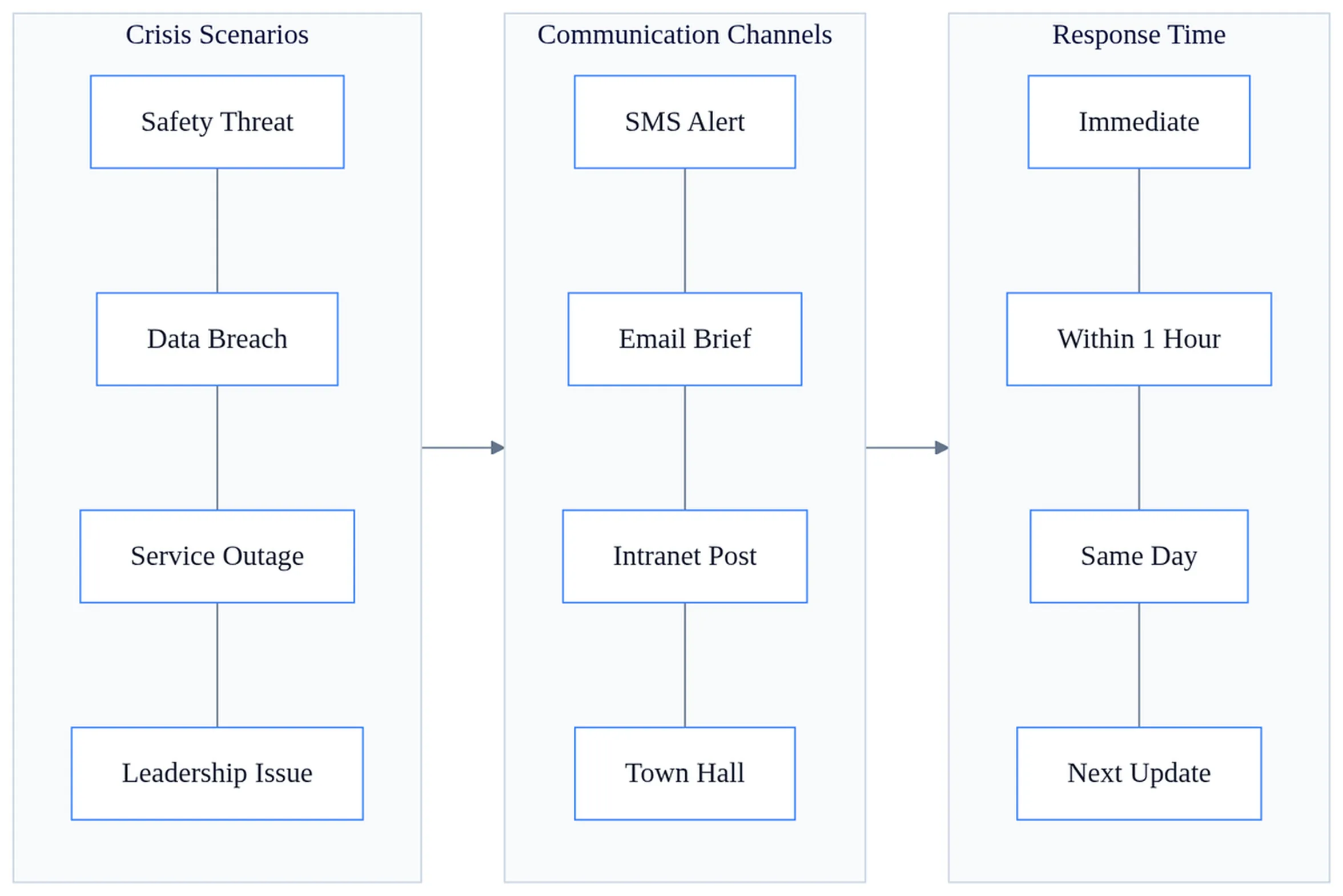
Multi-channel crisis protocols ensure your message reaches everyone. Not all employees check email constantly. A comprehensive crisis communication plan uses email, intranet announcements, SMS alerts, and manager briefings to guarantee coverage. A hospital dealing with a cybersecurity breach, for example, might send an initial SMS alert, follow up with a detailed email, and hold department-level meetings to answer questions. Regulatory compliance and whistleblowing channels depend on internal communication infrastructure. Organizations subject to financial regulations, workplace safety laws, or data privacy requirements need clear channels for employees to report concerns without fear of retaliation. An anonymous hotline, a dedicated compliance email, or a third-party reporting platform all serve this function.
A prepared workforce responds faster to disruptions. A logistics company that runs quarterly crisis simulations, testing communication protocols for scenarios like natural disasters, cyberattacks, or supply chain failures, will handle real crises more effectively than a company that waits until disaster strikes to figure out who should communicate what to whom.
| Crisis Scenario | Primary Channel | Backup Channel | Target Response Time |
|---|---|---|---|
| Workplace safety incident | SMS alert | Manager briefing | Within 1 hour |
| Data breach or cyberattack | Email + intranet | Phone tree | Within 2 hours |
| Leadership transition | All-hands meeting | Video message | Within 24 hours |
| Regulatory investigation | Legal team memo | Department meetings | Within 4 hours |
Managerial control and supervision effectiveness
Effective supervision requires information flowing in both directions. Downward communication delivers instructions, expectations, and feedback from managers to employees. Upward communication brings performance updates, challenges, and suggestions from employees to managers. Without both, supervision becomes guesswork.
Managers who understand employee challenges can provide timely support. A project manager who holds weekly one-on-ones learns that a team member is struggling with a new software tool and can arrange training before the problem derails the project. A manager who relies solely on monthly status reports might not discover the issue until it’s too late. Supervisors can provide course correction when they have visibility into day-to-day work. A sales director who reviews weekly pipeline reports can spot when a rep is focusing on low-value prospects and redirect their effort toward better opportunities. This kind of real-time feedback prevents small problems from becoming major performance issues.
The distinction between vertical communication (upward and downward) and horizontal communication (peer-to-peer) matters for supervision. Managers need both. Vertical channels give them control and oversight. Horizontal channels enable teams to solve problems without waiting for managerial approval. The methods of internal communication you choose should support both flows.
One often-overlooked point: supervision works best when it’s not purely formal. Informal communication, hallway conversations, coffee break check-ins, quick Slack messages, often surfaces issues that never make it into formal reports. Managers who cultivate these informal channels alongside structured meetings get a more complete picture of what’s happening on their teams.
Measuring the impact of internal communication
You can’t improve what you don’t measure. Organizations serious about internal communication track metrics like employee engagement scores, message open rates, participation in town halls, and time-to-information for critical updates. An HR team might survey employees quarterly to assess whether they feel informed about company strategy, whether they trust leadership, and whether they have opportunities to provide feedback.
Leading organizations also measure business outcomes tied to communication. A retail chain might correlate store-level communication quality (measured by manager survey responses) with customer satisfaction scores and sales performance. A tech company might track whether employees who attend monthly product roadmap briefings report higher job satisfaction and lower turnover than those who don’t. The goal isn’t to achieve perfect communication, that’s impossible. The goal is to identify and remove barriers to effective communication and to continuously improve the flow of information across your organization.
If you’re sitting on the fence about whether to invest in internal communication infrastructure, consider this: every industry faces unique challenges, from geographically dispersed teams to shift workers without regular email access, but the advantages of solving those challenges remain consistent. Internal communication isn’t a soft skill. It’s a business function with measurable ROI. Organizations that treat it as such, by investing in the right tools, training managers to communicate well, and creating feedback loops that surface problems early, outperform competitors who rely on ad hoc, reactive communication.
Frequently asked questions
What if my team resists two-way communication and prefers top-down directives?
Start small with low-stakes feedback opportunities—anonymous surveys or brief check-ins—to build psychological safety. Acknowledge and act on suggestions, even minor ones, to show that input matters. Leaders must model openness by admitting mistakes and asking for help. Resistance often stems from past experiences where feedback was ignored or punished. Consistency and patience shift the culture over time.
How often should we hold team meetings to improve coordination without wasting time?
Daily 10-minute huddles work for fast-moving teams; weekly standups suit most departments. Monthly all-hands meetings keep everyone aligned on strategy. The right cadence depends on your pace of change and decision-making cycles. Test a schedule for two weeks, then ask teams if it feels right. Too frequent is worse than too sparse—people tune out. Quality and clarity matter more than frequency.
Can internal communication reduce turnover if pay and benefits lag behind competitors?
Communication alone won’t retain people if compensation is significantly below market. However, transparent communication about salary constraints, clear growth paths, and genuine leadership access can offset modest gaps. Employees stay longer when they understand why decisions are made and feel valued. Communication is a retention lever, not a substitute for fair compensation.
Should we use email, chat apps, or in-person meetings for sensitive feedback?
Sensitive feedback requires in-person or video conversation—tone and body language matter. Email creates misunderstanding and defensiveness. Chat works for quick clarifications or positive recognition. For performance issues, layoffs, or difficult conversations, meet face-to-face. Document the conversation afterward in writing, but deliver the message directly first.
What’s the fastest way to measure if internal communication is actually improving engagement?
Run a pulse survey every quarter asking three questions: Do you understand how your work contributes to company goals? Does your manager give you regular feedback? Do you trust leadership? Track scores over time. Also monitor turnover rates and time-to-hire for open roles. Engagement surveys are the most direct measure; turnover is the most honest one.
If we’re a remote-first company, how do we maintain communication without constant video calls?
Combine asynchronous tools (shared documents, recorded updates) with synchronous touchpoints (weekly team calls, monthly all-hands). Use project management platforms as a communication hub so context is visible without meetings. Schedule one-on-ones monthly at minimum. Remote requires more intentional communication structure, not more meetings—clarity and documentation replace hallway conversations.
2 Comments
Its like you read my mind! You appear to know a lot about this, like you wrote the book in
it or something. I think that you could do with some pics to drive the message home
a bit, but other than that, this is excellent blog. A fantastic read.
I’ll certainly be back.
Thanks Dear. We will try more better well write in blog.