


Close Menu
The Business CommunicationThe Business Communication
    What's Hot

    Memo vs. Business Letter: Key Differences & When to Use Which

    December 3, 2025

    Mastering Negotiation Skills: The Role of Oral Communication

    December 2, 2025

    Non-Verbal Cues: How Body Language Impacts Oral Communication

    December 2, 2025
    Facebook X (Twitter)
    The Business CommunicationThe Business Communication
    Button
    • Basics
      1. Introduction
      2. Communication Skills
      3. Modern Communication
      4. View All

      Types of Communication: A Complete Guide to Classifications & Methods

      October 7, 2025

      Business Communication Roles: Key Functions And Examples

      September 9, 2025

      What is Communication Process? Steps And Examples Explained

      September 7, 2025

      What is External Communication? Objectives, Types And Importance

      September 4, 2025

      Meaning Of Cross-Cultural Communication

      October 19, 2025

      8 Ways To Improve Your Listening Skills

      August 11, 2025

      Various Styles Reading or Techniques of Reading

      July 6, 2025

      What Is Communication Style | Classification Of Communication Style

      March 16, 2025

      What Is The Video Conference? Advantages & Disadvantages of Video Conferencing

      April 30, 2025

      Advantages And Disadvantages Of Satellite Television In Business Communication

      November 16, 2024

      What Is Voicemail? Advantages and Disadvantages Of Voicemail

      October 13, 2024

      What Is Communication Satellite?

      August 12, 2024

      Memo vs. Business Letter: Key Differences & When to Use Which

      December 3, 2025

      Mastering Negotiation Skills: The Role of Oral Communication

      December 2, 2025

      Non-Verbal Cues: How Body Language Impacts Oral Communication

      December 2, 2025

      Glossophobia: How to Overcome the Fear of Public Speaking

      December 2, 2025
    • Forms of Communication
      • Oral Communication
      • Non-Verbal Communication
      • Report Writing
    • Written Communication
      1. Letter Writing
      2. Circular Letter
      3. inquiry letter
      4. Ultimatum Letter
      Featured
      Letter Writing

      Memo vs. Business Letter: Key Differences & When to Use Which

      By Masudur RashidDecember 3, 2025
      Recent

      Memo vs. Business Letter: Key Differences & When to Use Which

      December 3, 2025

      Advantages and Disadvantages of Business Letter: A Comprehensive Analysis

      October 20, 2025

      Inquiry Letter for Job Vacancy (Samples & Email Scripts)

      October 19, 2025
    • In Business
      1. Company Meeting
      2. Secretarial Functions
      3. View All

      Virtual Meetings for Companies: Tools, Etiquette & Challenges

      October 19, 2025

      Participants Responsibilities in Meeting

      October 7, 2025

      Meaning of Company Secretary | Appointment of Company Secretary

      May 29, 2025

      What is Annual Business Report – The Business Communication

      January 22, 2025

      What is Secretary? Types of secretary

      January 21, 2025

      What Is Organizational Communication – Types of Organizational Communication

      December 18, 2024

      Functions of a Private Secretary

      April 21, 2024

      Qualifications of a Private Secretary

      October 4, 2023

      Memo vs. Business Letter: Key Differences & When to Use Which

      December 3, 2025

      Mastering Negotiation Skills: The Role of Oral Communication

      December 2, 2025

      Non-Verbal Cues: How Body Language Impacts Oral Communication

      December 2, 2025

      Glossophobia: How to Overcome the Fear of Public Speaking

      December 2, 2025
    • Internal Communication
      1. Downward Communication
      2. Horizontal Communication
      3. Upward Communication
      4. View All

      Essential Elements of Downward Communication: A Complete Guide for Managers

      August 17, 2025

      Key Objectives of Downward Communication in an Organization

      June 26, 2025

      The Effectiveness of Downward Communication: Factors, Barriers, and Measurement

      April 13, 2025

      Advantage And Disadvantages of downward communication

      April 10, 2025

      Upward vs Downward vs Horizontal Communication: Key Differences

      December 19, 2024

      Differences Between Horizontal and Vertical Communication

      September 21, 2024

      What is Horizontal Communication: Definition, Examples & Importance

      March 15, 2024

      Importance of Horizontal Communication (With Real-Life Examples)

      December 28, 2023

      Psychological Safety & Upward Communication: Building Trust at Work

      October 25, 2025

      Common Barriers to Effective Upward Communication and Solutions

      October 15, 2025

      Future of Upward Communication in Remote/Hybrid Workplaces

      May 29, 2025

      Upward vs Downward vs Horizontal Communication: Key Differences

      December 19, 2024

      Memo vs. Business Letter: Key Differences & When to Use Which

      December 3, 2025

      Mastering Negotiation Skills: The Role of Oral Communication

      December 2, 2025

      Non-Verbal Cues: How Body Language Impacts Oral Communication

      December 2, 2025

      Glossophobia: How to Overcome the Fear of Public Speaking

      December 2, 2025
    The Business CommunicationThe Business Communication
    Home » Letter Writing » Letter of Claim Example and Specimen | How to Write a Claim Letter

    Letter of Claim Example and Specimen | How to Write a Claim Letter

    By Masudur Rashid1 Comment7 Mins Read Letter Writing
    Facebook Twitter Reddit WhatsApp Telegram Pinterest LinkedIn Email
    Share
    Facebook Twitter Pinterest WhatsApp Email

    Imagine ordering a set of branded office chairs for your company and receiving half of them broken. What would you do? You would probably write a claim letter to the supplier, right? That’s exactly what this topic is about.

    A letter of claim is a formal message written by a buyer to a seller, pointing out a problem with goods or services and requesting a solution. It is one of the most common forms of business correspondence, especially in trade and customer service.

    In this detailed guide, you’ll learn what a claim letter is, how to write it effectively, and how to maintain a polite tone even when you are disappointed. You’ll also find sample letters and tips from business communication experts.

    Meaning and Purpose of a Claim Letter

    A claim letter is a written request sent to a company to demand compensation, correction, or adjustment for an unsatisfactory product or service.

    It’s used when something goes wrong, like receiving damaged goods, delayed delivery, incorrect billing, or poor-quality service.

    The purpose of writing a claim letter is not to complain, but to resolve the issue professionally. A well-written letter helps the business correct its mistake without damaging the relationship with the customer.

    If you’re curious about how claim letters fit into the overall world of business communication, check out this post on the Purpose of Business Letter for a quick overview.

    Essential Features of a Good Claim Letter

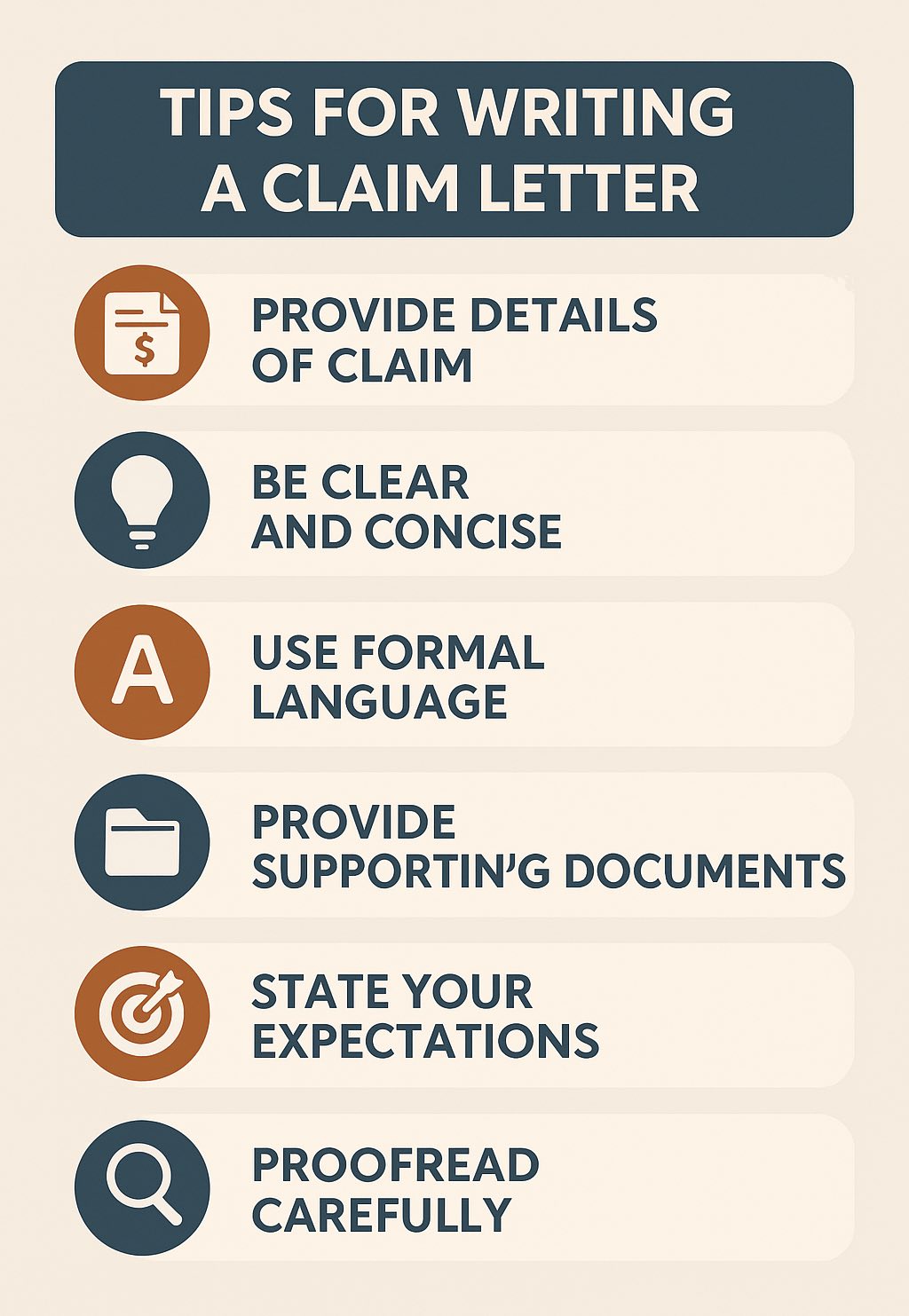
    A professional claim letter follows certain principles. It must be polite, clear, and factual. Let’s explore the key features below:

    1. Politeness and Courtesy: Keep your tone professional, even when you are frustrated. Remember, your goal is resolution, not argument.
    2. Clarity: State exactly what went wrong. Vague statements like “your service was poor” don’t help. Instead, describe what happened.
    3. Evidence and Details: Include supporting details such as order number, date, or invoice reference.
    4. Conciseness: Don’t write long emotional paragraphs. Keep it simple and factual.
    5. Positive Language: Focus on solving the problem rather than blaming.

    For a refresher on professional tone and structure, you might enjoy reading How to Write a Business Letter Step-by-Step which offers a strong foundation for all types of business letters.
    claim letter

    Structure and Format of a Claim Letter

    A claim letter should look like any other formal business letter. The structure is simple and easy to follow:

    1. Sender’s Address: The address of the person making the claim.
    2. Date: The day the letter is written.
    3. Receiver’s Address: The company or person receiving the claim.
    4. Subject Line: A short, clear description like Claim for Damaged Goods.
    5. Salutation: A polite greeting, e.g., Dear Sir/Madam.
    6. Body Paragraphs: The main part of your letter explaining the issue and your request.
    7. Closing: Polite sign-off such as Yours sincerely.
    8. Signature: Include your name and position if applicable.

    If you want to brush up on letter components, take a look at Parts of Business Letter where everything is clearly explained.

    Types of Claim Letters

    Depending on the purpose, claim letters can be of different types. Here are the most common ones:

    1. Product Claim Letter: Written when goods arrive damaged, defective, or incomplete.
    2. Service Claim Letter: Used when the promised service fails to meet expectations, like a delayed hotel booking or poor catering service.
    3. Transport Claim Letter: Sent when goods are lost or damaged in transit.
    4. Insurance Claim Letter: Requests compensation for losses due to accidents or natural causes.
    5. Adjustment Claim Letter: A follow-up letter seeking correction or replacement. You can explore more about this in Specimen of Adjustment Letter for clarity.

    Each type should maintain a professional and polite tone regardless of the problem.

    Steps to Write an Effective Claim Letter

    Writing an effective claim letter isn’t rocket science. You just need to be factual, polite, and organized. Here’s a simple step-by-step approach:

    1. Start with the Facts: Begin by stating what the problem is and how it occurred.
    2. Give Evidence: Mention invoice numbers, order details, or photographs.
    3. Explain the Impact: Briefly describe how the issue affected you or your business.
    4. Request a Solution: State exactly what you want—replacement, refund, or correction.
    5. Stay Polite: A respectful tone increases the chance of a positive response.
    6. Close Positively: End the letter by expressing hope for prompt action.

    For improving your clarity and tone, read the article on You Attitude in Business Letter which explains how to make your writing more reader-friendly and polite.

    Tone and Language of Claim Letters

    Your tone is everything. If your letter sounds angry or threatening, the receiver might respond defensively. Instead, write like a calm professional.

    Do this:

    “I believe there has been a mistake in the invoice dated May 4.”

    Not this:

    “You charged me wrongly again!”

    See the difference? One gets attention, the other gets ignored.

    If you want to learn more about tone and expression, you might also find Letter of Complaint helpful—it explains how to express dissatisfaction without sounding rude.

    Sample Claim Letter (Specimen Example)

    Here’s a real-world example you can use as a reference.

    Subject: Claim for Defective Air Conditioners Supplied

    Dear Mr. Ali,

    I am writing to bring to your attention that the five air conditioners supplied by your company under Invoice No. 7543, dated March 2, were found defective. Two units did not cool at all, while the others made loud noise during operation.

    We request that you replace the defective units or issue a full refund within seven working days. Enclosed are copies of the invoice and delivery receipt for your reference.

    We look forward to your prompt attention to this matter and value our business relationship.

    Yours sincerely,
    Rahim Hossain
    Purchase Manager
    CoolWave Trading Co.

    Common Mistakes to Avoid

    Even experienced business writers make mistakes when drafting claim letters. Here are a few you should steer clear of:

    • Being emotional or harsh.
    • Forgetting to mention important order details.
    • Writing too much background story.
    • Skipping attachments like receipts or invoices.
    • Using unprofessional or casual language.

    For more on what not to do, check your post on Mistakes in Writing Circular Letters—the same principles apply to all business writing.

    Difference Between Claim Letter and Complaint Letter

    AspectClaim LetterComplaint Letter
    PurposeRequests adjustment, replacement, or refundExpresses dissatisfaction about a product or service
    TonePolite, solution-focusedAssertive, problem-focused
    OutcomeLeads to resolution or compensationLeads to acknowledgment or apology
    ExampleClaim for damaged goodsComplaint about rude staff behavior

    So, while both are formal letters, the claim letter focuses on correction, while the complaint letter focuses on dissatisfaction.

    Effectiveness of a Claim Letter

    A claim letter is only effective when it leads to the desired outcome. That means it must be timely, clear, and backed by facts.

    The success of your claim letter depends on how you present your issue. A well-structured and polite letter gets attention faster than a long emotional one.

    If you want to understand the impact of writing style on communication, explore Effectiveness of Claim Letter which gives insights into what makes a business letter truly effective.

    Follow-Up After Sending a Claim Letter

    Sometimes companies delay responses. That’s when a follow-up letter comes in handy.

    You can send a polite reminder like this:

    “I would like to follow up on my previous claim letter dated May 5 regarding invoice number 7543. I would appreciate your update on the matter.”

    Simple, polite, and effective.

    To ensure your follow-ups are documented correctly, learn from Acknowledgement Letter Format and Samples—it shows how professional communication builds trust.

    Connection with Report Writing

    Claim letters are an essential part of business documentation and report writing. For instance, if your company submits a monthly performance report, details of claims and refunds should be included there.

    When preparing such reports, clarity and structure matter most. Your related guide on Arrangement of Contents in Letter, Report, and Memo explains how to present information in a professional and logical way.

    Conclusion

    Writing a letter of claim is not just about asking for a refund. It’s about communicating effectively, maintaining professionalism, and protecting your business interests.

    A polite and well-written claim letter can turn a bad situation into an opportunity for better understanding between buyer and seller.

    So, the next time your order doesn’t go as planned, don’t fume in silence. Pick up your pen or open your email editor and write a thoughtful, fact-based claim letter. It’s your professional voice in the world of business communication.

    Claim Letter Example Letter of Claim Example Sample of claim letter
    Share. Facebook Twitter Pinterest LinkedIn WhatsApp Reddit Email
    Previous ArticleWhat is Market Report? Characteristics of Market Report
    Next Article Interview Etiquette: Do’s and Don’ts for Candidates
    Masudur Rashid
    • Facebook
    • X (Twitter)
    • Instagram
    • LinkedIn

    👋 Hi, I am Masudur Rashid. I studied Management (Honors and Masters) but my real passion has always been Business Communication. Through this blog, I share simple tips, lessons, and resources to help students and professionals communicate with confidence.

    Related Posts

    Letter Writing 07 Mins Read

    Memo vs. Business Letter: Key Differences & When to Use Which

    Letter Writing 07 Mins Read
    Letter Writing 77 Mins Read

    Advantages and Disadvantages of Business Letter: A Comprehensive Analysis

    Letter Writing 77 Mins Read
    Letter Writing 07 Mins Read

    Inquiry Letter for Job Vacancy (Samples & Email Scripts)

    Letter Writing 07 Mins Read
    Written Communication 26 Mins Read

    What Is an Inquiry Letter? Definition, Purpose, and Examples

    Written Communication 26 Mins Read
    View 1 Comment

    1 Comment

    1. Corpely on June 29, 2024 1:30 pm

      But keep in mind that whether you have a service or product that’s considered “top of the line,” you will eventually, receive complaints. But think positively because client complaints and claim letters examples can be huge assets for the company.

      Reply
    Leave A Reply Cancel Reply

    This site uses Akismet to reduce spam. Learn how your comment data is processed.

    Subscribe to Updates

    Get the latest business communication news from TBC.

    By signing up, you agree to the our terms and our Privacy Policy agreement.

    Check your inbox or spam folder to confirm your subscription.

    Top Picks

    Types of Communication: A Complete Guide to Classifications & Methods

    Communication is the invisible glue that holds our world together. Whether you are ordering a…

    Business Communication Roles: Key Functions And Examples

    In every workplace, communication is the glue that holds everything together. It connects teams, builds…

    What is Communication Process? Steps And Examples Explained

    Have you ever played the “telephone game” as a child? Someone whispers a message, and…

    What is External Communication? Objectives, Types And Importance

    Have you ever seen how a company interacts with the public, handles media, or replies…

    Welcome to TheBusinessCommunication.com, your guide to clear and effective business communication. Here you will find simple lessons on report writing, letters, meetings, oral and written communication, and modern tools like email or virtual meetings. Our mission is to make learning communication easy, practical, and fun, so you can apply it in your studies, career, and everyday life.
    We're social. Connect with us:

    Facebook X (Twitter) YouTube LinkedIn RSS
    Top Insights

    Memo vs. Business Letter: Key Differences & When to Use Which

    Mastering Negotiation Skills: The Role of Oral Communication

    Non-Verbal Cues: How Body Language Impacts Oral Communication

    Subscribe to Updates

    Get the latest business communication news from TBC.

    By signing up, you agree to the our terms and our Privacy Policy agreement.

    Check your inbox or spam folder to confirm your subscription.

    Copyright © 2025 TheBusinessCommunication. All Rights Reserved.
    • Home
    • About Us
    • Contact US
    • Our Authors
    • Privacy Policy
    • Terms and Conditions

    Type above and press Enter to search. Press Esc to cancel.