


We often think of communication at work as something official. Emails, memos, or meetings usually come to mind. But let us be honest, most of the time, people learn more from a quick chat in the hallway or a casual message on WhatsApp. This type of exchange, known as informal communication, is natural and fast.
Now here comes the tricky part. Informal communication is powerful, but without ethics, it can be dangerous. A joke may cross the line, a rumor may damage trust, or private details may spread without consent. That is why understanding the ethics in informal communication is so important.
If you are not fully familiar with the basics, you can start with our complete guide on informal communication definition and examples . In this article, however, we will focus on the ethical side, exploring rumors, privacy, and respect in the workplace.
Why Ethics Matter in Informal Communication
When you think about ethics, you probably imagine rules of right and wrong. In communication, ethics means fairness, respect, and responsibility. Formal communication already has built-in accountability because it is recorded and traceable. Informal talk, however, does not. That is why ethics become critical.
A careless rumor may spread faster than an official announcement. A private joke may hurt someone’s dignity. On the other hand, ethical informal communication builds trust, improves morale, and strengthens culture. The difference lies in whether people communicate responsibly or not.
The Problem of Rumors and Distorted Information
Rumors are the biggest ethical issue in informal networks. They often start small, but like a snowball rolling downhill, they grow larger and more distorted. One person may casually say, “I heard the company is hiring new people.” By the time it spreads through the grapevine, it becomes “The company is replacing old staff.”
These distortions can damage morale, create fear, and lower productivity. In fact, our article on how informal communication spreads rumor explains how quickly information can become untrue. The ethical responsibility here is clear: do not share what you cannot verify.
Still, humans love stories. That is why rumors are so tempting. The challenge is balancing curiosity with responsibility. A simple question like, “Is this fact or just a guess?” can save organizations from unnecessary stress.
Respecting Privacy in Informal Exchanges
Another ethical concern is privacy. Informal communication often blurs the line between professional and personal. People may talk about salaries, promotions, or personal lives. While some sharing builds connection, too much can create resentment.
Imagine two colleagues casually discussing salary differences. What begins as curiosity can quickly lead to frustration and mistrust. Or think about private details of someone’s life becoming office gossip. Not only is this unethical, but it also damages workplace culture.
Respecting privacy means setting boundaries. Not everything needs to be shared. If information is sensitive, ethical communication means keeping it confidential.
Respect and Dignity in Informal Conversations
Respect is the heart of ethical communication. Casual jokes or comments might seem harmless, but they can deeply affect others. For instance, joking about someone’s background or appearance may sound funny to one person but insulting to another.
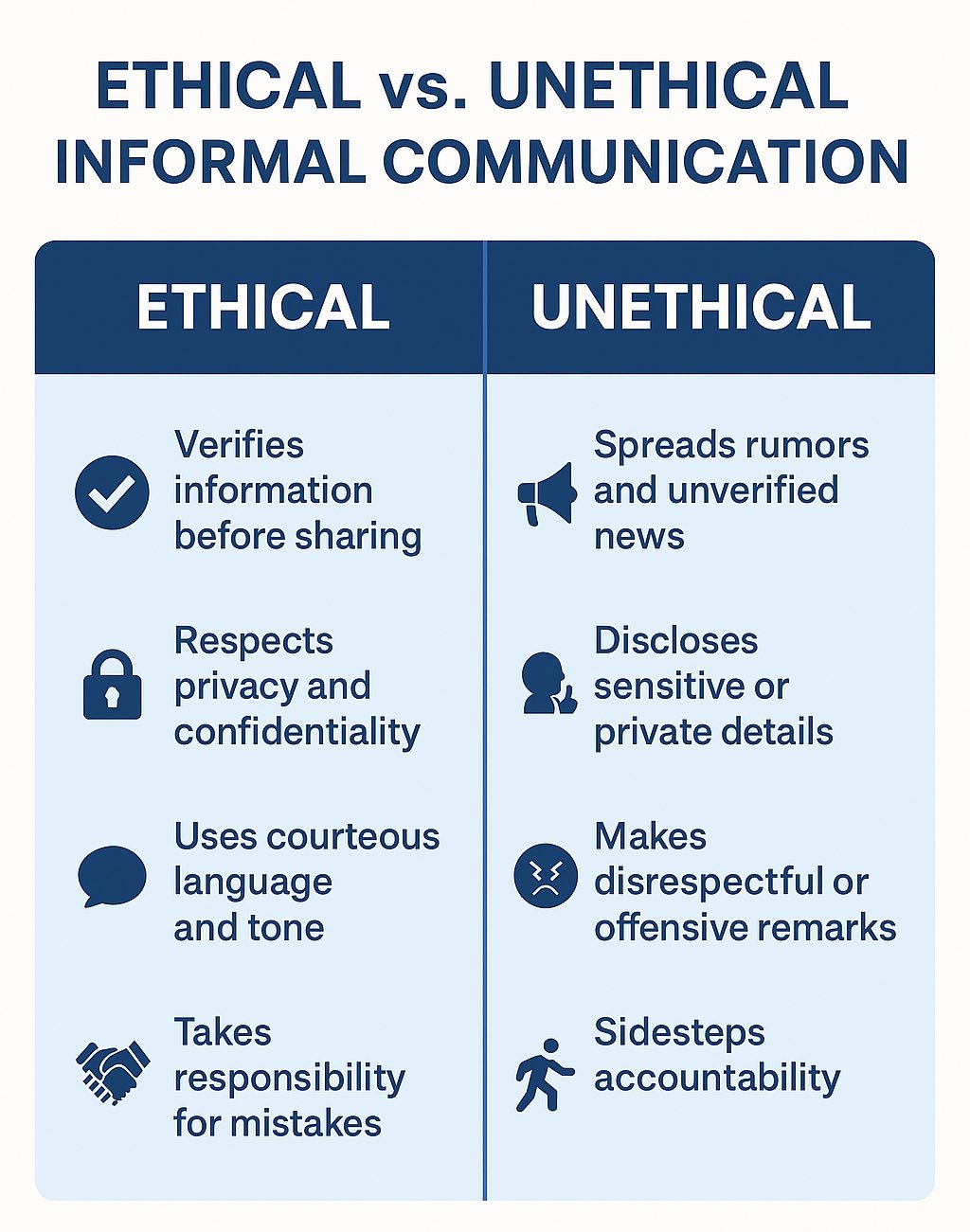
Workplace culture thrives when dignity is respected. Respectful informal communication creates an inclusive environment where everyone feels valued. If you want to understand the larger picture, our post on informal communication workplace culture shows how informal networks influence values and trust.
So next time you crack a joke at work, ask yourself, “Would I still say this if my boss or HR were standing here?” That little test often saves people from mistakes.
Ethical Guidelines for Informal Communication in Organizations
To make informal communication ethical, employees can follow a few simple but powerful rules:
- Verify before sharing: Do not spread unconfirmed information.
- Respect privacy: Avoid sharing personal or sensitive details.
- Promote inclusivity: Do not exclude people from casual networks.
- Use respectful language: Keep tone polite and avoid offensive humor.
- Take responsibility: If you make a mistake, correct it quickly.
Following these guidelines ensures informal networks help the organization instead of harming it.
Managerial Role in Encouraging Ethical Informal Communication
Managers play a huge role in shaping ethical communication. They cannot control every conversation, but they can set the tone.
- Lead by example: Managers who avoid gossip and respect privacy encourage employees to do the same.
- Create openness: When leaders are transparent, employees are less likely to depend on rumors.
- Clarify quickly: If misinformation spreads, managers should respond with facts.
- Encourage positive talk: Recognizing achievements informally can boost morale.
For more strategies, see our guide on how to use grapevine communication effectively . Leaders who embrace these practices turn informal networks into a source of strength.
Real-Life Ethical Dilemmas in Informal Communication
Example 1: A Joke Gone Wrong
An employee jokingly comments on a colleague’s accent. While some laugh, the colleague feels embarrassed. The informal talk damaged respect. The lesson here is simple: humor should never attack dignity.
Example 2: Half-True Promotion News
Someone hears that the company “might” promote two people. They casually share it. Soon, the entire team believes promotions are confirmed. When the truth comes out, disappointment sets in. The lesson: only share confirmed facts.
These small examples highlight why ethics are not optional. Informal communication without respect and responsibility is like driving without brakes.
Benefits of Ethical Informal Communication
When ethics are followed, informal communication becomes a blessing instead of a curse. Here are some benefits:
- Stronger trust: Employees believe in each other more.
- Less gossip damage: Verified talk prevents panic and confusion.
- Better innovation: People feel safe sharing creative ideas.
- Positive culture: Respectful chats improve engagement and morale.
To see both sides in detail, check our article on advantages and disadvantages of informal communication in organizations . You will notice that ethics tip the balance toward the positive side.
FAQs on Ethics in Informal Communication
Q1: Why is ethics important in grapevine communication?
Because it ensures information is shared responsibly without harming people or the organization.
Q2: Can gossip ever be ethical?
Gossip that praises achievements or spreads positivity may help morale, but negative or false gossip is unethical.
Q3: What role do managers play in maintaining privacy?
They set the tone by respecting confidentiality and discouraging gossip.
Q4: How do ethical practices improve organizational culture?
They create trust, reduce conflicts, and make employees feel respected and valued.
Conclusion
Informal communication is like fire. It can warm relationships, or it can burn trust if used irresponsibly. That is why ethics in informal communication are vital. Without respect, privacy, and responsibility, grapevine networks quickly turn toxic. With ethics, they become powerful tools for bonding, creativity, and morale.
The choice is in our hands. Each chat, joke, or rumor carries responsibility. When employees and managers act ethically, informal communication shapes a culture of respect and trust.
If you want to dive deeper into how these networks work, check out our article on grapevine communication factors . It will give you even more insight into why informal communication flows the way it does.
Frequently asked questions
What should I do if I accidentally spread false information?
Correct it immediately and openly. Tell the same people who heard the misinformation that you were wrong. A quick, honest correction limits damage and shows integrity. Delaying or hoping people forget makes the problem worse. Taking responsibility rebuilds trust faster than silence.
Is it ever okay to share salary or promotion details casually?
No. Even casual sharing of salary or promotion details can create resentment and mistrust among colleagues. These are sensitive topics that belong in formal, private conversations with HR or management only. Keep boundaries firm, even when colleagues ask directly.
How do I stop a rumor without sounding like I’m policing conversation?
Ask a simple question: “Is that confirmed, or are we guessing?” This gently challenges the claim without being accusatory. If you know the truth, share it calmly. You are not policing—you are clarifying. Most people appreciate accuracy over drama.
Can I joke about someone’s appearance or background at work?
No. What feels funny to you may hurt or offend the other person. Use the test: would you say it if your boss or HR were listening? If the answer is no, skip the joke. Respect and dignity matter more than a quick laugh.
What if my manager asks me to share private information informally?
Politely decline. A manager’s position does not override privacy ethics. Say something like, “I prefer to keep that confidential.” If the information is truly needed for work, it should be requested formally through proper channels, not casual conversation.
Should I include people in informal office chats even if they’re quiet?
Yes. Excluding people from casual networks creates isolation and resentment. Make an effort to include quieter colleagues in hallway conversations and group chats. Inclusive informal communication strengthens team culture and prevents cliques.