


If you have ever faced a tricky situation where someone was not meeting expectations, you may have wondered what kind of letter you should send. Should you send a warning letter? Maybe an ultimatum letter? Or do you need a formal demand letter?
These three terms often confuse people. They sound similar, but they serve very different purposes. Choosing the wrong one can either make you sound too harsh or too soft. In this article, we will clear up the confusion once and for all.
By the end of this guide, you will know exactly what each letter means, when to use it, and how to pick the right one for your situation.
Quick Refresher: What Each Letter Means
Let us quickly refresh our memory. We already discussed ultimatum letters in detail in the pillar post on ultimatum letters, so here we will keep it short.
- Ultimatum Letter: A formal letter where you state a problem, give a deadline, and explain what happens if the problem is not fixed. Think of it as the final warning before you take serious action.
- Warning Letter: A letter that formally warns someone about an issue, like poor performance or policy violation. It is usually the first step in discipline, not the last.
- Demand Letter: A stronger, often legal, letter that demands payment, service, or action. If ignored, it usually leads to legal proceedings or formal complaints.
Key Differences at a Glance
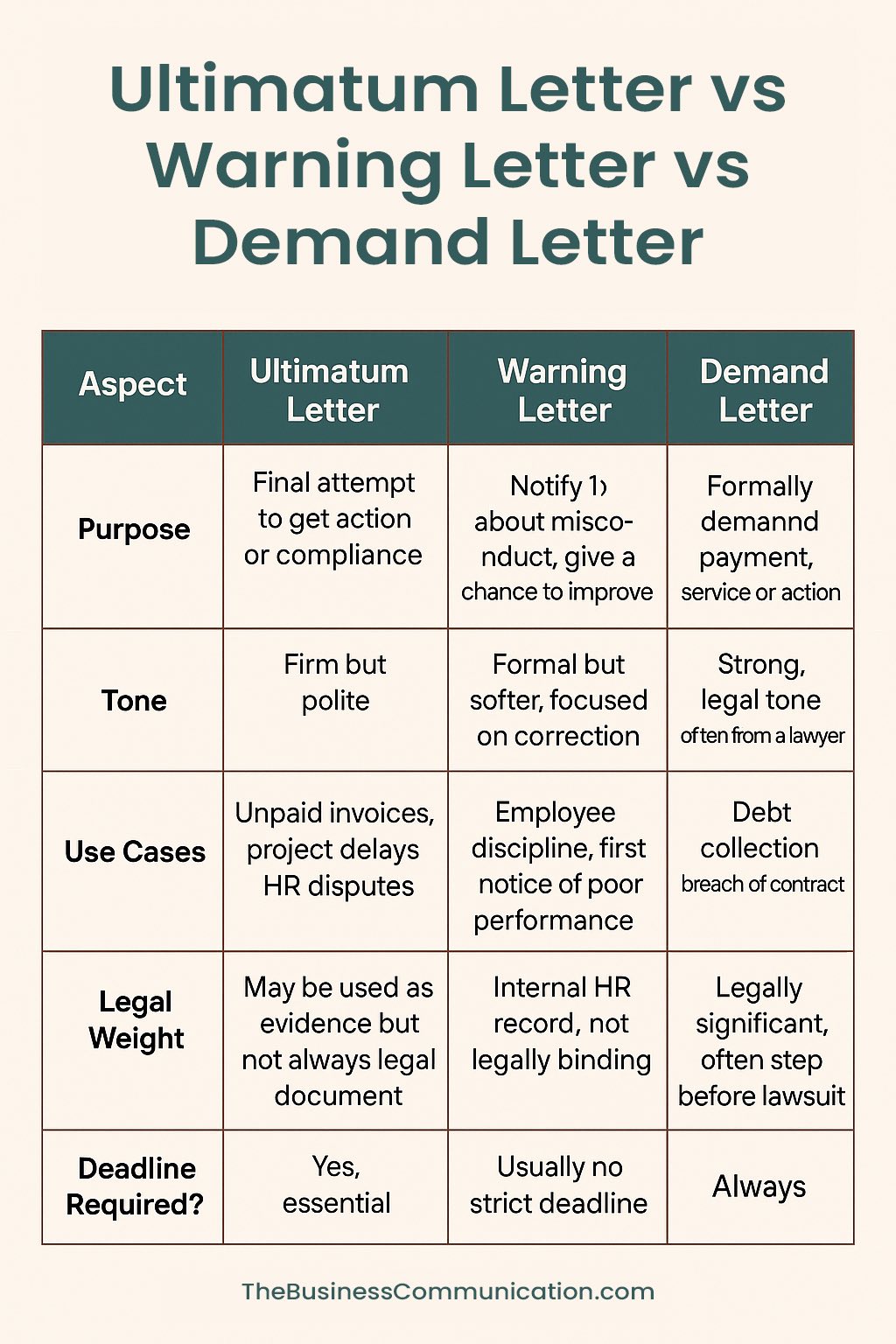
To make things super clear, let us look at a simple comparison table:
| Aspect | Ultimatum Letter | Warning Letter | Demand Letter |
|---|---|---|---|
| Purpose | Final attempt to get action or compliance | Notify about misconduct, give chance to improve | Formally demand payment, service, or action |
| Tone | Firm but polite | Formal but softer, focused on correction | Strong, legal tone, often from a lawyer |
| Use Cases | Unpaid invoices, project delays, HR disputes | Employee discipline, first notice of poor performance | Debt collection, breach of contract |
| Legal Weight | May be used as evidence but not always legal document | Internal HR record, not legally binding | Legally significant, often step before lawsuit |
| Deadline Required? | Yes, specific date is essential | Usually no strict deadline | Always includes a deadline |
Tables like this make it easy to compare at a glance, right? Now let us dive a bit deeper into each difference.
Ultimatum Letter vs Warning Letter
At first glance, an ultimatum letter and a warning letter may look similar. Both mention a problem and expect the other person to take action. However, the intention behind them is different.
A warning letter is often the first step. Imagine an employee who is always late. You might send a warning letter that says, “Please arrive on time. Continued lateness may lead to disciplinary action.” Notice how there is no fixed deadline, just a reminder to improve behavior.
An ultimatum letter, on the other hand, is the last step before you escalate. It usually includes a deadline, like “If punctuality does not improve within the next 30 days, we will proceed with disciplinary action.” This creates urgency and shows that you are ready to act.
Think of it this way: a warning letter whispers, “Fix this.” An ultimatum letter says, “Fix this now, or we must move forward with consequences.”
Ultimatum Letter vs Demand Letter
This is where many people get confused because an ultimatum letter and a demand letter both have deadlines and consequences. However, they are not identical.
A demand letter is more formal and is often written in legal language. It might even be drafted by a lawyer. For example, if a client refuses to pay despite multiple reminders and ultimatum letters, your last resort might be a demand letter that says, “If payment is not received within 10 days, we will file a lawsuit.”
An ultimatum letter can be used in a variety of situations, including workplace issues, personal disputes, or business matters. It does not always require a lawyer and may not hold as much legal weight.
In short, an ultimatum letter is your last internal step to solve things peacefully. A demand letter is often the first step in legal escalation.
When to Use Each Letter
Still not sure which one to pick? Here is a simple decision guide:
- Use a Warning Letter: When you are dealing with a first-time issue or minor misconduct. For example, an employee missing a deadline once.
- Use an Ultimatum Letter: When reminders and warnings have failed, and you need immediate compliance. For example, a vendor delaying delivery for months despite promises.
- Use a Demand Letter: When the issue is serious, usually involving money or contracts, and you are prepared to go to court if needed.
This sequence helps you maintain professionalism and avoid jumping to legal threats too soon.
Benefits of Understanding the Difference
Why should you care about these distinctions? Knowing which letter to use saves time, reduces conflict, and keeps relationships professional.
For instance, sending a demand letter too early might scare a client away and damage your reputation. On the other hand, sending endless warning letters without action might make you look weak.
Choosing the right letter shows that you are fair but firm. It also creates a proper paper trail that can protect you if the matter goes legal later.
Practical Tips for Choosing the Right Letter
Here are some quick tips to help you decide:
- Consider Severity: A small issue calls for a warning letter, not a demand letter.
- Think About Your Relationship: If it is a long-term partner, start with a softer approach before sending something strong.
- Be Consistent: Follow your company policy or legal requirements for escalation steps.
- Know Your End Goal: Do you want compliance, improvement, or payment? Pick the letter that best matches that goal.
Example Scenarios for Clarity
Let us make this even more practical with some real-life style examples:
- Scenario 1: Employee Misconduct
- First step: Warning letter for misconduct.
- If behavior continues: Ultimatum letter with deadline.
- Final step: Termination if no improvement.
- Scenario 2: Unpaid Client Invoice
- First step: Friendly reminder email.
- Second step: Ultimatum letter with a payment deadline.
- Final step: Demand letter before legal action.
- Scenario 3: Contractor Not Delivering
- First step: Verbal reminder or email.
- Second step: Ultimatum letter giving final date for delivery.
- If ignored: Demand letter for damages or cancellation of contract.
These examples make it clear that each letter has its place in the communication ladder.
Conclusion
Understanding the difference between an ultimatum letter, a warning letter, and a demand letter is crucial for anyone in business, HR, or even personal disputes. Each has its own purpose, tone, and timing.
Use a warning letter when you want to correct behavior. Use an ultimatum letter when you want action with a deadline. Use a demand letter when you are ready to take legal steps.
Getting this right saves time, reduces tension, and makes you look professional. And if you decide that an ultimatum letter is the right choice, check out our step-by-step guide on how to write an ultimatum letter to craft the perfect one.
Frequently asked questions
Can I skip the warning letter and go straight to an ultimatum letter?
It depends on the situation and your relationship with the recipient. For first-time or minor issues, skipping to an ultimatum may damage the relationship unnecessarily. However, if someone has already been warned informally or the issue is serious, an ultimatum is appropriate. Always consider your company policy and whether you want to preserve the relationship.
What if the recipient ignores my ultimatum letter—should I send a demand letter next?
Not automatically. If the issue is financial or contractual and you’re prepared to pursue legal action, yes, a demand letter is the next step. For other matters like workplace disputes, you may need to follow your company’s disciplinary procedures instead. Consult your HR department or a lawyer before escalating to a demand letter.
Is a demand letter legally binding, or can someone ignore it without consequences?
A demand letter itself isn’t legally binding, but it creates an official record that you attempted to resolve the issue before legal action. If ignored, it strengthens your case if you proceed to court. However, the letter alone won’t force compliance—you must follow through with legal proceedings if necessary.
Should I have a lawyer write my demand letter?
For serious matters involving significant money or contracts, yes. A lawyer ensures the letter meets legal standards and increases its credibility. For smaller disputes, you can draft it yourself using formal, clear language. If you’re unsure about the amount or stakes, consulting a lawyer is worth the cost.
Can I use the same letter template for warning, ultimatum, and demand letters?
No. Each letter has a different tone and purpose. A warning letter is softer and focuses on improvement. An ultimatum is firmer with a specific deadline. A demand letter uses legal language and threatens legal action. Using the wrong template undermines your message and may confuse the recipient about your intentions.