

Close Menu
The Business CommunicationThe Business Communication
    What's Hot

    Problems of Electronic Communication In Business

    October 23, 2025

    Objectives of Business Communication: Strategic Goals for Modern Organizations

    October 18, 2025

    Leadership Styles That Encourage Employees to Speak Up

    October 11, 2025
    Facebook X (Twitter)
    The Business CommunicationThe Business Communication
    Button
    • Basics
      1. Introduction
      2. Communication Skills
      3. Modern Communication
      4. View All

      Objectives of Business Communication: Strategic Goals for Modern Organizations

      October 18, 2025

      Factors influencing the meaning of business communication

      May 20, 2025

      Scope of communication

      April 6, 2025

      The Strategic Role of Communication in Management: Driving Organizational Success

      March 27, 2025

      8 Ways To Improve Your Listening Skills

      September 17, 2025

      Various Styles Reading or Techniques of Reading

      March 30, 2025

      What Is Communication Style | Classification Of Communication Style

      May 27, 2023

      Meaning Of Cross-Cultural Communication

      November 25, 2022

      Problems of Electronic Communication In Business

      October 23, 2025

      Advantages and Disadvantages of Email in Modern Business Communication

      June 28, 2025

      What Is Communication Satellite?

      December 24, 2024

      What Is Multimedia In Communication || Importance Of Multimedia

      October 4, 2024

      Problems of Electronic Communication In Business

      October 23, 2025

      Objectives of Business Communication: Strategic Goals for Modern Organizations

      October 18, 2025

      Leadership Styles That Encourage Employees to Speak Up

      October 11, 2025

      Upward Communication Case Study: Examples from Tech, Healthcare & Education

      October 10, 2025
    • Forms of Communication
      • Oral Communication
      • Non-Verbal Communication
      • Report Writing
    • Written Communication
      1. Letter Writing
      2. Circular Letter
      3. inquiry letter
      4. Ultimatum Letter
      Featured
      Letter Writing

      How to Write an Effective Circular Letter: Step by Step Guide

      By Masudur RashidSeptember 27, 2025
      Recent

      How to Write an Effective Circular Letter: Step by Step Guide

      September 27, 2025

      Difference Between Official Letter and Business Letter: Key Distinctions Explained

      August 18, 2025

      College Admission Inquiry Email – Samples

      August 16, 2025
    • In Business
      1. Company Meeting
      2. Secretarial Functions
      3. View All

      Meaning of Company Secretary | Appointment of Company Secretary

      May 6, 2025

      Participants Responsibilities in Meeting

      January 28, 2025

      How to Facilitate Productive Project Meetings

      January 22, 2025

      The Ultimate Company Meeting Guide: Definition, Types, Process, Advantages & Disadvantages

      October 22, 2024

      Functions of a Private Secretary

      August 12, 2025

      What Is Organizational Communication – Types of Organizational Communication

      December 7, 2024

      Qualifications of a Private Secretary

      May 5, 2024

      What is Secretary? Types of secretary

      March 6, 2024

      Problems of Electronic Communication In Business

      October 23, 2025

      Objectives of Business Communication: Strategic Goals for Modern Organizations

      October 18, 2025

      Leadership Styles That Encourage Employees to Speak Up

      October 11, 2025

      Upward Communication Case Study: Examples from Tech, Healthcare & Education

      October 10, 2025
    • Internal Communication
      1. Downward Communication
      2. Horizontal Communication
      3. Upward Communication
      4. View All

      Essential Elements of Downward Communication: A Complete Guide for Managers

      September 13, 2025

      Types of Vertical Communication: Upward and Downward Communication Explained

      May 18, 2025

      What is downward communication? [Objectives and Methods]

      January 1, 2024

      Advantage And Disadvantages of downward communication

      December 23, 2023

      What is Horizontal Communication: Definition, Examples & Importance

      January 21, 2025

      Importance of Horizontal Communication (With Real-Life Examples)

      November 26, 2023

      Upward vs Downward vs Horizontal Communication: Key Differences

      December 24, 2022

      Advantages and Disadvantages of Horizontal Communication (With Real Examples)

      October 15, 2022

      Leadership Styles That Encourage Employees to Speak Up

      October 11, 2025

      Upward Communication Case Study: Examples from Tech, Healthcare & Education

      October 10, 2025

      Types of Vertical Communication: Upward and Downward Communication Explained

      May 18, 2025

      Psychological Safety & Upward Communication: Building Trust at Work

      October 8, 2024

      Problems of Electronic Communication In Business

      October 23, 2025

      Objectives of Business Communication: Strategic Goals for Modern Organizations

      October 18, 2025

      Leadership Styles That Encourage Employees to Speak Up

      October 11, 2025

      Upward Communication Case Study: Examples from Tech, Healthcare & Education

      October 10, 2025
    The Business CommunicationThe Business Communication
    Home » Memo » 10 Common Mistakes to Avoid When Writing Business Memos

    10 Common Mistakes to Avoid When Writing Business Memos

    By Saiful Islam5 Comments11 Mins Read Memo
    Facebook Twitter Reddit WhatsApp Telegram Pinterest LinkedIn Email
    Share
    Facebook Twitter Pinterest WhatsApp Email

    Imagine this scenario. It is a Tuesday morning, and you are sipping your coffee. You see a notification pop up in your inbox. The subject line simply says “Update.” You figure it is probably not urgent, so you archive it and go back to work.

    Three days later, your boss walks into your office looking furious. He asks why you missed the mandatory compliance meeting. You look confused. He tells you that he sent a memo about it on Tuesday.

    You check your archive. There it is. The email titled “Update” contained a crucial memo attached as a PDF. Because the subject line was vague, you missed it.

    This happens in offices every single day. A poorly written memo creates confusion rather than clarity. It wastes time, causes missed deadlines, and can even damage your professional reputation.

    Writing a memo seems simple enough. You just type out what you need to say and hit send, right? Not quite. There is an art to it. Even experienced managers make slip-ups that undermine their authority.

    To ensure your internal communication remains sharp, effective, and professional, you need to watch out for pitfalls. In this guide, we are going to walk through the 10 most common memo writing mistakes. If you can avoid these, you will elevate yourself from a mere writer to a master communicator.

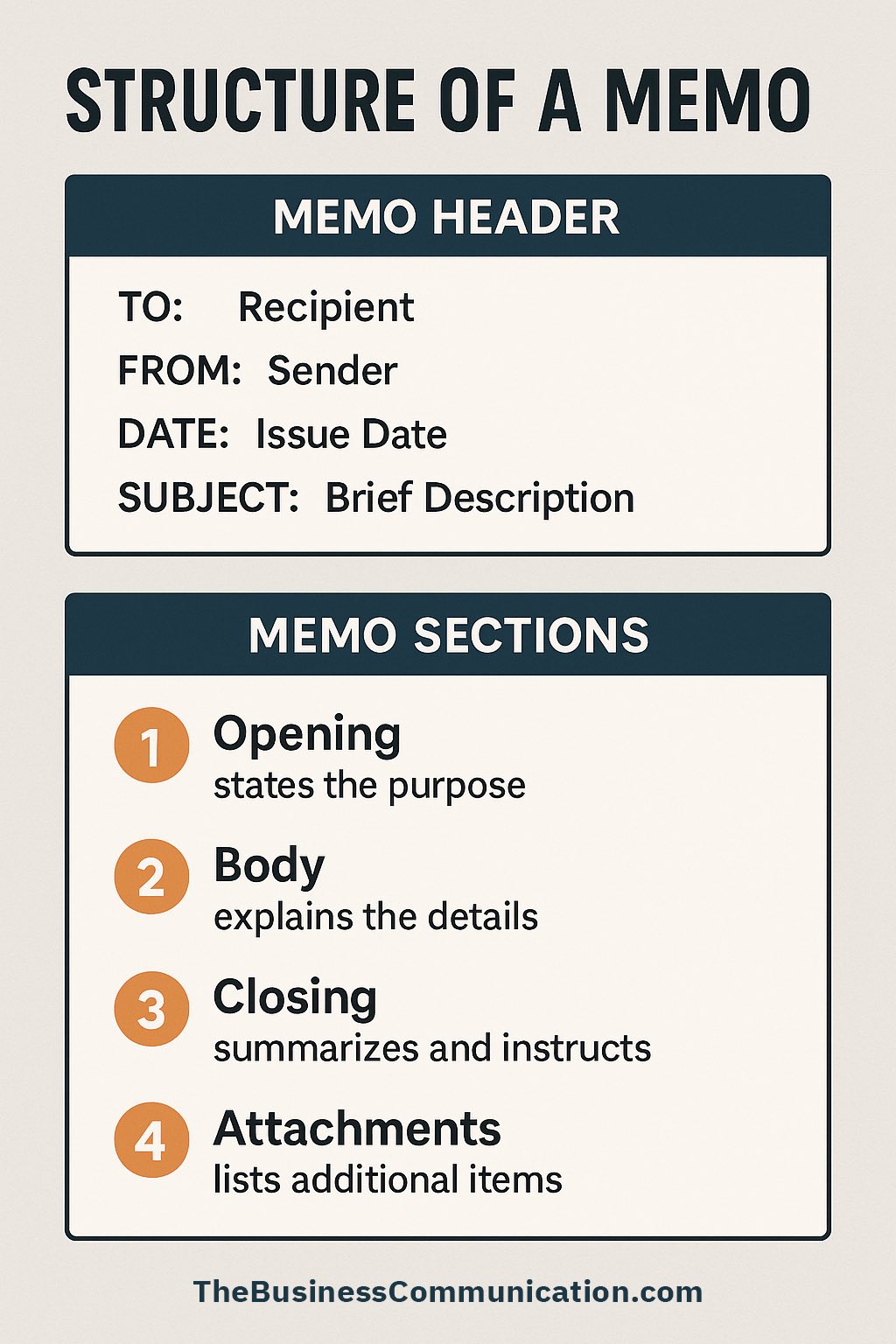
    Before we dive into the errors, if you are new to the basics or need a refresher on the structure, you might want to verify you are following the correct standard memo format.

    Commandments of Memo Writing Mistakes

    1. Writing Vague or “Mystery” Subject Lines

    The single biggest mistake people make happens before the reader even opens the document. It is the subject line.

    In the digital age, attention is a scarce currency. Your colleagues are bombarded with hundreds of emails and messages daily. They do not read everything. Instead, they scan. They look for keywords that tell them, “This is important” or “This requires action.”

    Using generic subject lines like “Hello,” “Important,” “Meeting,” or “Stuff” is a recipe for disaster. These are what we call “mystery” subject lines. They force the reader to open the document just to figure out what it is about. Most people won’t bother.

    How to Fix It

    Be hyper-specific. Your subject line should be a mini-summary of the entire memo.

    Instead of writing “Meeting,” write “Mandatory Staff Meeting: Dec 5 regarding Q4 Sales.”

    Instead of writing “Policy,” write “Changes to Remote Work Policy – Effective Immediately.”

    See the difference? The specific versions tell the reader exactly what to expect. This increases the chances of your memo being read and acted upon. If you are struggling with how to frame these headers, our guide on steps to write a memo covers the importance of clarity in detail.

    2. Burying the Main Point (Failing to use BLUF)

    Have you ever started reading a document that begins with a long history lesson? It talks about the background of the project, the weather last week, and the philosophy of the company. You have to read through three paragraphs just to find out that the writer wants you to sign a form.

    This is called “burying the lead.” In business communication, this is a cardinal sin. Managers and executives are busy people. They do not have the patience to dig for gold. If they don’t see the point in the first thirty seconds, they might stop reading.

    How to Fix It

    You should use the BLUF method. This stands for “Bottom Line Up Front.”

    State your purpose immediately. The very first sentence of your memo should answer the question: “Why are you writing this?”

    For example, start with: “The purpose of this memo is to request authorization for the purchase of new design software.”

    Once you have stated the main point, you can then provide the background and details. This respects the reader’s time. It allows them to understand the context immediately.

    3. Including a Salutation or Complimentary Close

    This is a very common habit, especially for those who are used to writing formal letters. You might feel the urge to start your memo with “Dear Team” or “Dear Mr. Smith.” You might also want to end it with “Sincerely” or “Best Regards.”

    However, this is a mistake in memo writing.

    A memo is not a letter. It is a streamlined tool for internal communication. It is designed to be direct, functional, and efficient. Adding pleasantries essentially clutters the document. It disrupts the flow and makes you look like you don’t understand the format.

    How to Fix It

    Dive straight into the header. Your document should start with the standard TO, FROM, DATE, and SUBJECT block. Immediately after the subject line, jump right into the first sentence of your message.

    At the end, simply stop. You can add a closing thought or a call to action, but you do not need a formal sign-off. If you are confused about where a salutation is appropriate, you should check the differences in our comparison of circulars, notices, and memos.

    4. Using an Overly Emotional or Casual Tone

    Tone is tricky. On one hand, you don’t want to sound like a robot. On the other hand, a business memo is an official record. It is not a text message to your friend, nor is it a place to vent your frustrations.

    A common mistake is using slang, emojis, or excessive exclamation marks. Writing “Hey guys! We need to fix this ASAP!!” looks unprofessional.

    Conversely, writing an angry memo is even worse. Using phrases like “I am sick and tired of people being late” makes you sound out of control. Emotional language diminishes your authority.

    How to Fix It

    Keep the tone neutral, factual, and professional. Even if you are delivering bad news or a disciplinary warning, stick to the facts.

    Instead of saying, “It is ridiculous that people are stealing lunch,” say, “We have received reports of missing food items from the breakroom refrigerator.”

    Different situations require different tones, of course. A memo announcing a holiday party will be warmer than a memo about budget cuts. You can review the different categories of memos to see which tone fits your specific goal.

    5. The “Wall of Text” (Poor Formatting)

    Nothing scares a reader more than opening a document and seeing a solid block of black text.

    When you write long paragraphs without breaks, it looks intimidating. It is physically hard for the eye to track. In the age of screens, people have become skimmers. If your memo looks like a page from a dense novel, the key information will get lost.

    This mistake leads to missed details. An employee might read the first two lines, get overwhelmed, and skip the rest. If the deadline was buried in the middle of that paragraph, they will miss it.

    How to Fix It

    You must design your memo for readability. Use white space generously.

    Break your text into short paragraphs. No paragraph should be longer than four or five lines.

    Use bold headings to separate different sections. This allows the reader to jump to the part that concerns them.

    Above all, use bullet points for lists. If you are listing three new rules, do not put them in a sentence with commas. Put them in a bulleted list. It pops off the page and demands attention.

    6. Leaving Out a Clear Call to Action (CTA)

    You have written a great subject line. You have formatted it perfectly. You have explained the situation clearly. But then, you just end the memo.

    The reader finishes reading and thinks, “Okay, that’s interesting. Now what?”

    If you don’t tell people exactly what you want them to do, they often do nothing. They might assume someone else is handling it. They might assume the memo was just for their information.

    How to Fix It

    Always end with a clear Call to Action (CTA). Be explicit about who needs to do what and by when.

    Examples of strong CTAs:

    • “Please reply to this email with your vote by Friday at 5 PM.”
    • “Sign the attached form and return it to HR by Monday.”
    • “Update your software before leaving the office today.”

    Don’t make your readers guess. Direct them.

    7. Sending a Memo When You Should Have Sent an Email

    Just because you know how to write a memo doesn’t mean you should use one for everything.

    A memo is a formal document. It usually implies a policy change, a formal announcement, or a permanent record.

    If you write a formal memo just to ask, “Is the meeting room available at 2 PM?”, you look bureaucratic and out of touch. It wastes time to draft a formal document for a quick, informal question. It is like wearing a tuxedo to a grocery store. It is just too much.

    How to Fix It

    Understand the medium. Use memos for mass updates, official records, reports, and policy changes. Use email or instant messaging for quick questions, casual check-ins, or one-on-one coordination.

    Still unsure about which channel to pick? You can read our detailed breakdown of memo vs email usage to help you decide.

    8. Sending to the Wrong Distribution List

    This mistake can be embarrassing, or it can be a security risk.

    We have all seen it happen. Someone intends to send a sensitive memo to the management team, but they accidentally hit “All Staff.” Suddenly, the entire company knows about the upcoming layoffs or the confidential merger.

    Alternatively, hitting “Reply All” to a company-wide memo with a personal comment is a classic workplace blunder.

    Sending a memo to the wrong people causes information overload for those who don’t need it. Worse, it can lead to privacy leaks.

    How to Fix It

    Double-check the “To” field before you hit send. Slow down.

    If the information is sensitive, ensure you are using a blind copy (BCC) if appropriate, or verify exactly who is on the distribution list. Privacy risks are one of the main disadvantages of written communication, so careful distribution is key to mitigating this downside.

    9. Providing Too Much Detail (Fluff)

    There is a tendency in business writing to over-explain. You might feel like you need to justify your decision with three pages of background history. You might include data that isn’t really relevant but looks smart.

    This is called “fluff.”

    Providing too much detail dilutes your main message. If you write a three-page memo, the reader has to work hard to find the one paragraph that matters. Memos are meant to be concise.

    How to Fix It

    Edit ruthlessly. After you write your first draft, go back and cut.

    Ask yourself: “Does the reader need to know this to take the action I want?” If the answer is no, delete it.

    If you have a lot of supporting data, don’t put it in the main body of the memo. Attach it as a separate file or an appendix. Keep the memo itself short and punchy.

    10. Neglecting to Proofread

    You are a professional. You know your stuff. But if your memo is full of typos, you look careless.

    Imagine receiving a memo about “Quiality Control.” The irony is painful. Or imagine a memo regarding a “Sallery Increase.”

    Typos distract the reader. They make them question your attention to detail. If you can’t be bothered to spellcheck your own writing, why should they trust your management decisions?

    In some cases, typos can be dangerous. Typing “Nov 1” instead of “Nov 11” for a deadline can cause a project to fail. Typing “$10,000” instead of “$1,000” in a budget request can cause financial chaos.

    How to Fix It

    Never send a memo immediately after writing it. Step away for five minutes. Then come back and read it.

    Better yet, read it out loud. When you read silently, your brain auto-corrects errors. When you read out loud, you catch awkward phrasing and missing words.

    Bad Memo vs. Good Memo

    Conclusion

    Writing a business memo is not just about putting words on a page. It is about leadership. It is about clarity.

    When you avoid these 10 common mistakes, you show your team that you value their time. You show that you are organized and professional.

    A good memo is invisible. People focus on the message, not the errors. They understand what to do, and they do it. That is the ultimate goal of business communication.

    So, the next time you sit down to draft a memo, keep this list in mind. Check your subject line. Check your tone. And please, for the love of business, check your spelling.

    Now, take a look at the last memo you sent. Did you make any of these errors? If so, don’t worry. Now you have the tools to make the next one perfect.

    Memo Common Mistakes
    Share. Facebook Twitter Pinterest LinkedIn WhatsApp Reddit Email
    Previous ArticleHow to Write an Ultimatum Letter: A Step-by-Step Guide + Template
    Next Article Qualifications of a Private Secretary
    Saiful Islam
    • Website

    👋 Hi, I am Saiful Islam. I completed my Honors and Masters in Management, and I enjoy writing about Business Communication. Here, I share practical insights and ideas to help readers improve their professional and academic communication skills.

    Related Posts

    Memo 115 Mins Read

    20+ Editable Business Memo Templates (Google Doc)

    Memo 115 Mins Read
    Memo 010 Mins Read

    How to Write a Catchy Memo Subject Line (with 20 Examples)

    Memo 010 Mins Read
    Memo 112 Mins Read

    The 4 Main Types of Memos Every Manager Should Know

    Memo 112 Mins Read
    Memo 312 Mins Read

    Advantages and Disadvantages of Memos in the Workplace

    Memo 312 Mins Read
    View 5 Comments

    5 Comments

    1. Mercyline on December 1, 2022 3:14 am

      Thanks,precise

      Reply
    2. abdul hamid on May 19, 2025 1:42 am

      good work

      Reply
      • Adenike Olabode on February 24, 2023 7:55 am

        Good

        Reply
      • Adenike Olabode on May 2, 2023 9:34 pm

        Good work

        Reply
    3. NKWOH on May 27, 2025 10:02 pm

      Well written piece on the importance of memo. Thanks

      Reply
    Leave A Reply Cancel Reply

    This site uses Akismet to reduce spam. Learn how your comment data is processed.

    Subscribe to Updates

    Get the latest business communication news from TBC.

    By signing up, you agree to the our terms and our Privacy Policy agreement.

    Check your inbox or spam folder to confirm your subscription.

    Top Picks

    Objectives of Business Communication: Strategic Goals for Modern Organizations

    Have you ever watched a rowing team in action? Every member rows in perfect sync.…

    Factors influencing the meaning of business communication

    Communication would be the change connected with information, ideas, would like in addition to behavior…

    Scope of communication

    Scope of communication means the normal functioning area of this subject. Since communication is essential…

    The Strategic Role of Communication in Management: Driving Organizational Success

    Management is not just about making decisions. It is about communicating them effectively. You might…

    Welcome to TheBusinessCommunication.com, your guide to clear and effective business communication. Here you will find simple lessons on report writing, letters, meetings, oral and written communication, and modern tools like email or virtual meetings. Our mission is to make learning communication easy, practical, and fun, so you can apply it in your studies, career, and everyday life.
    We're social. Connect with us:

    Facebook X (Twitter) YouTube LinkedIn RSS
    Top Insights

    Problems of Electronic Communication In Business

    Objectives of Business Communication: Strategic Goals for Modern Organizations

    Leadership Styles That Encourage Employees to Speak Up

    Subscribe to Updates

    Get the latest business communication news from TBC.

    By signing up, you agree to the our terms and our Privacy Policy agreement.

    Check your inbox or spam folder to confirm your subscription.

    Copyright © 2025 TheBusinessCommunication. All Rights Reserved.
    • Home
    • About Us
    • Contact US
    • Our Authors
    • Privacy Policy
    • Terms and Conditions

    Type above and press Enter to search. Press Esc to cancel.