


Have you ever seen how a company interacts with the public, handles media, or replies to customer questions? That process is called external communication. It is the way organizations connect with the world outside their walls.
In simple terms, external communication means sharing information between a business and people who are not part of it — like customers, suppliers, investors, or the government. It helps the company build trust, share its values, and promote its goals.
Let’s explore what external communication is, why it is important, and what objectives guide it.
Understanding External Communication
Every organization exists within a network of people and institutions. To survive and grow, it needs to communicate with them regularly. That is where external communication comes in.
It includes everything a company says or sends outside, from official letters and press releases to social media posts. While internal communication keeps employees informed, external communication connects the company with the outside world.
For example, a business might send a press release to the media about a new product, or it might email suppliers to confirm delivery details. Each of these is part of external communication.
If you want to know how messages flow inside an organization, the article on internal communication explains it nicely.
Why External Communication Matters
External communication is the backbone of a company’s public image. Without it, no one would know what the company does, what it stands for, or why it matters.
Good communication builds relationships, attracts opportunities, and creates trust. It helps organizations:
- present themselves professionally,
- connect with customers and investors, and
- respond quickly during crises.
In today’s fast-moving digital world, communication also defines how people perceive your brand. A single well-written message can create a lasting positive impression.
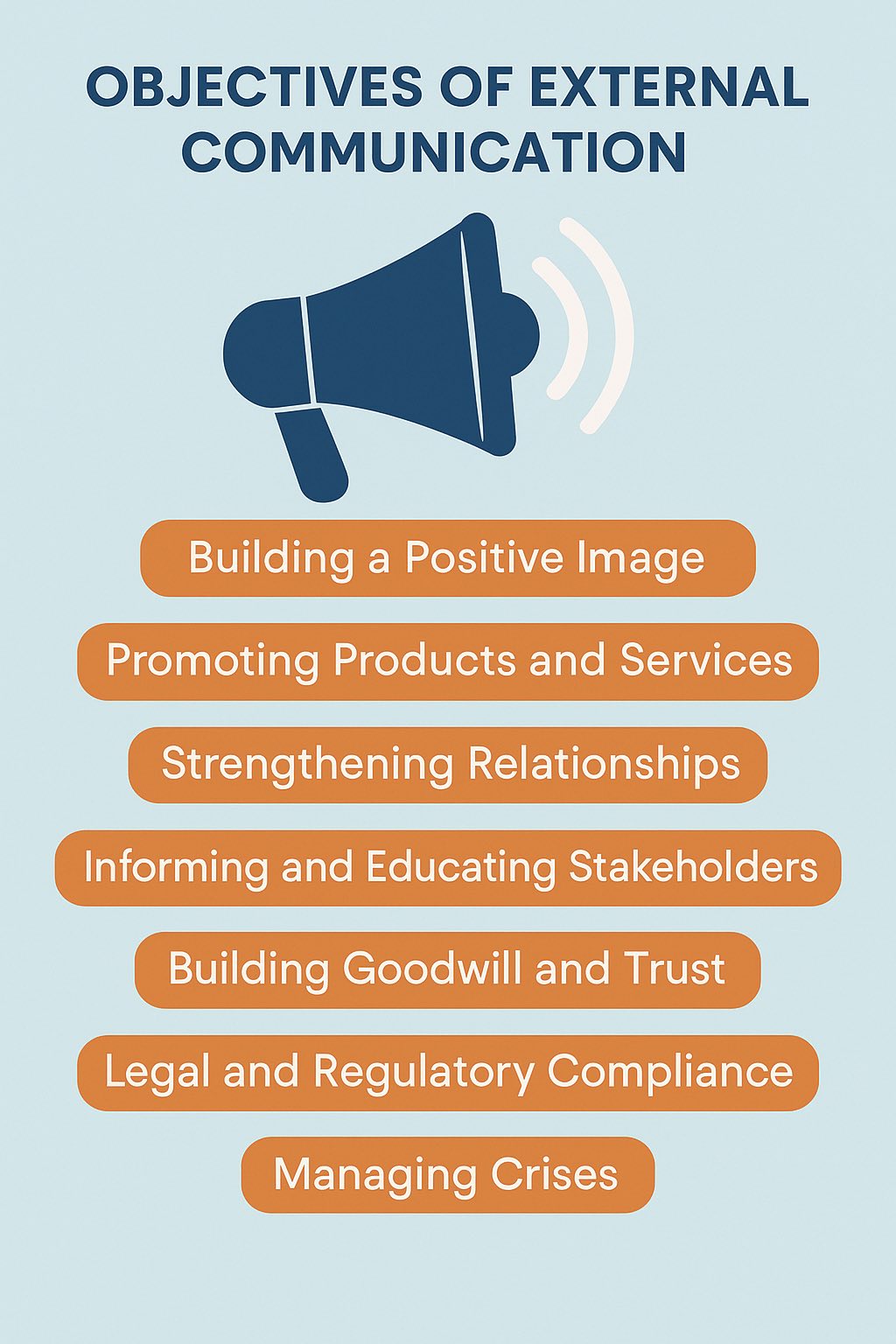
Objectives of External Communication
The objectives of external communication go beyond spreading information. They are about connecting, influencing, and maintaining relationships with everyone outside the organization.
Let’s explore these key objectives in detail.
1. Building a Positive Image
The first goal of external communication is to build and maintain a good public image. Every letter, email, advertisement, or press release shapes how people view a company.
A positive image attracts customers and partners. For example, when a business shares news about social responsibility or charity projects, it improves its reputation as a caring organization.
2. Promoting Products and Services
External communication also works as a marketing tool. Through advertisements, product launches, and media campaigns, companies share what they offer.
A simple product announcement can increase awareness, build excitement, and attract new buyers.
3. Strengthening Relationships
Businesses rely on strong relationships with customers, suppliers, investors, and even the government. Regular communication keeps these relationships healthy.
A quick thank-you note to a client or a timely update to an investor helps build trust and loyalty.
If you’re interested in how courtesy strengthens professional relationships, you can explore business thank-you letters to clients.
4. Informing and Educating Stakeholders
Another important objective is to keep stakeholders informed. Whether it’s a policy update, financial report, or product safety announcement, transparency helps people stay confident about the organization.
5. Building Goodwill and Trust
Trust doesn’t happen overnight. It grows from honest and consistent communication. When a company responds to public concerns or admits a mistake sincerely, it earns goodwill.
6. Legal and Regulatory Compliance
Businesses must often communicate with government agencies and legal authorities. Reports, licenses, and compliance statements fall under this category. It ensures the organization remains legitimate and transparent.
7. Managing Crises
Every company faces problems at some point. During those times, clear and calm communication can protect the brand’s image. Quick press statements or public apologies can prevent confusion and restore confidence.
Types of External Communication
External communication takes many forms depending on the message and audience.
Formal External Communication
This includes official letters, reports, company statements, or advertisements. These are structured and usually written for business or legal purposes.
Formal communication helps maintain professionalism. For example, a company’s annual report sent to shareholders is a formal communication.
Informal External Communication
Informal communication happens more casually — such as conversations at events or interactions on social media. It may not follow strict rules, but it helps in building rapport and a friendly image.
A brand replying humorously to a customer’s tweet is a perfect example of informal communication.
Personal and Impersonal Communication
Personal communication involves one-to-one interaction like a phone call with a supplier. Impersonal communication targets a wider audience, such as through advertisements or public announcements.
Channels and Media of External Communication
Choosing the right communication channel is essential. The effectiveness of your message depends on where and how it is delivered.
Written Channels
Letters, brochures, proposals, and newsletters are examples of written communication. They are permanent, easy to archive, and suitable for formal exchanges.
Electronic Channels
Emails, websites, and social media dominate today’s external communication. They allow businesses to reach thousands of people instantly.
Electronic channels are especially effective for marketing campaigns, announcements, and customer support.
Verbal Channels
When a message needs a personal touch, verbal communication works best. Phone calls, meetings, and interviews help clarify doubts quickly.
Visual Channels
Images, infographics, and videos simplify complex ideas. Many companies use visuals to make their messages more engaging.
For instance, explainer videos are widely used to introduce products and services. To learn more about the power of visuals, see visual communication examples.
Examples of External Communication in Business
External communication happens in almost every business situation. Here are a few examples you’ll recognize:
- A company sending a press release to announce a new branch.
- A customer receiving a newsletter about upcoming offers.
- An investor getting an annual performance report.
- A business posting updates on its website or LinkedIn page.
- A CEO addressing the media during a conference.
Each of these actions strengthens the organization’s connection with its external audience.
Importance of External Communication
The importance of external communication cannot be overstated. It’s the link between an organization and its stakeholders. Without it, companies would lose relevance and credibility.
Here are some reasons why it is essential:
- It builds brand reputation by sharing achievements and values.
- It creates awareness about products and services.
- It improves customer satisfaction by offering timely information.
- It encourages partnerships with suppliers and investors.
- It prevents misunderstandings through clarity and consistency.
If you’d like to explore how communication drives success, the article on business communication and its importance explains it beautifully.
Barriers to Effective External Communication
Despite its benefits, external communication often faces obstacles. Recognizing these barriers is the first step to overcoming them.
- Language Barriers: Complex or technical language confuses readers.
- Cultural Differences: A message that sounds polite in one culture might sound rude in another.
- Poor Feedback Systems: Without responses, you can’t tell if the message worked.
- Information Overload: Too many messages can overwhelm your audience.
- Lack of Consistency: Contradictory statements reduce trust.
To understand how to overcome these issues, you can read overcoming communication barriers in business.
Difference Between Internal and External Communication
Both internal and external communications serve vital roles. The main difference lies in their audience and purpose.
| Internal Communication | External Communication |
|---|---|
| Happens within the organization | Happens with people outside the organization |
| Builds teamwork and coordination | Builds reputation and trust |
| Often confidential | Usually public |
| Examples: Memos, notices | Examples: Press releases, ads |
Internal communication ensures efficiency inside the organization, while external communication creates visibility and credibility outside it.
Principles for Effective External Communication
Following the right principles makes communication impactful. These principles help keep messages clear, respectful, and persuasive.
- Clarity: Use simple words and avoid jargon.
- Courtesy: Always stay polite and positive.
- Consistency: Keep your tone and facts uniform.
- Timeliness: Send your message at the right moment.
- Transparency: Be honest about facts and policies.
- Cultural Awareness: Adapt your message to your audience’s background.
- Ethics: Maintain integrity and avoid false claims.
These ideas connect strongly with the principles of communication, which form the foundation of all good communication practices.
Advantages of Effective External Communication
When external communication is done right, it brings countless advantages:
- Builds a strong corporate image.
- Encourages long-term customer loyalty.
- Helps in faster decision-making.
- Strengthens public and media relations.
- Promotes teamwork with external partners.
Every successful business, from small startups to global corporations, depends on effective communication to stay relevant.
How to Improve External Communication
Improvement is a continuous process. Here are a few practical ways to enhance communication quality:
- Train your employees on soft skills and customer interaction.
- Choose the right communication medium depending on your audience.
- Be consistent in your tone and branding.
- Encourage feedback and listen actively to public opinion.
- Use visuals to make your content easier to understand.
These small actions make a big difference in how people perceive your brand.
Conclusion
External communication is much more than exchanging information. It is about creating relationships, building trust, and representing an organization’s values to the world.
A company that communicates clearly, politely, and ethically will always stand out. Good communication opens doors to opportunities, partnerships, and respect.
So, the next time your organization sends a message, remember — it’s not just words, it’s your brand’s voice. Make it clear, make it human, and make it count.
1 Comment
U really perfect and useful aspects in my life