


Electronic communication delivers speed and reach, but it introduces a set of problems that paper-based systems never faced. You’ll learn which specific failures occur in which tools, how much they cost, and what you can do to reduce the damage.
Why electronic communication fails: the core problem
Electronic communication encompasses email, instant messaging, video conferencing, cloud storage, and web-based collaboration tools. Each channel trades one set of strengths for a new set of vulnerabilities. The advantages of electronic communication are well documented, instant delivery, global reach, permanent records, but those same features create security risks, legal ambiguities, and miscommunication traps that didn’t exist in the pre-digital era.
Understanding these problems matters because choosing the wrong channel or ignoring its limitations can halt operations, trigger regulatory fines, or erode team trust.
A video call without a backup plan becomes a wasted hour when the internet fails. An unsigned email carries no legal weight in a contract dispute. A Slack message misread as sarcastic can damage a working relationship for months. The problems cluster into eight categories: security threats, nonverbal cue loss, data loss, infrastructure dependency, legal validity gaps, information overload, high costs, and compliance burdens. Each problem has quantifiable business impact, and each requires specific mitigation strategies.
Data security threats and cybercrime costs
Electronic communication channels are prime targets for malicious actors. Viruses, worms, Trojan horses, and ransomware infiltrate networks through email attachments, compromised websites, and infected software updates. Once inside, they encrypt critical files and demand payment, often in cryptocurrency, to restore access. A mid-sized manufacturing firm in Ohio lost $200,000 in 2023 when ransomware locked its customer database and email archives for two weeks.
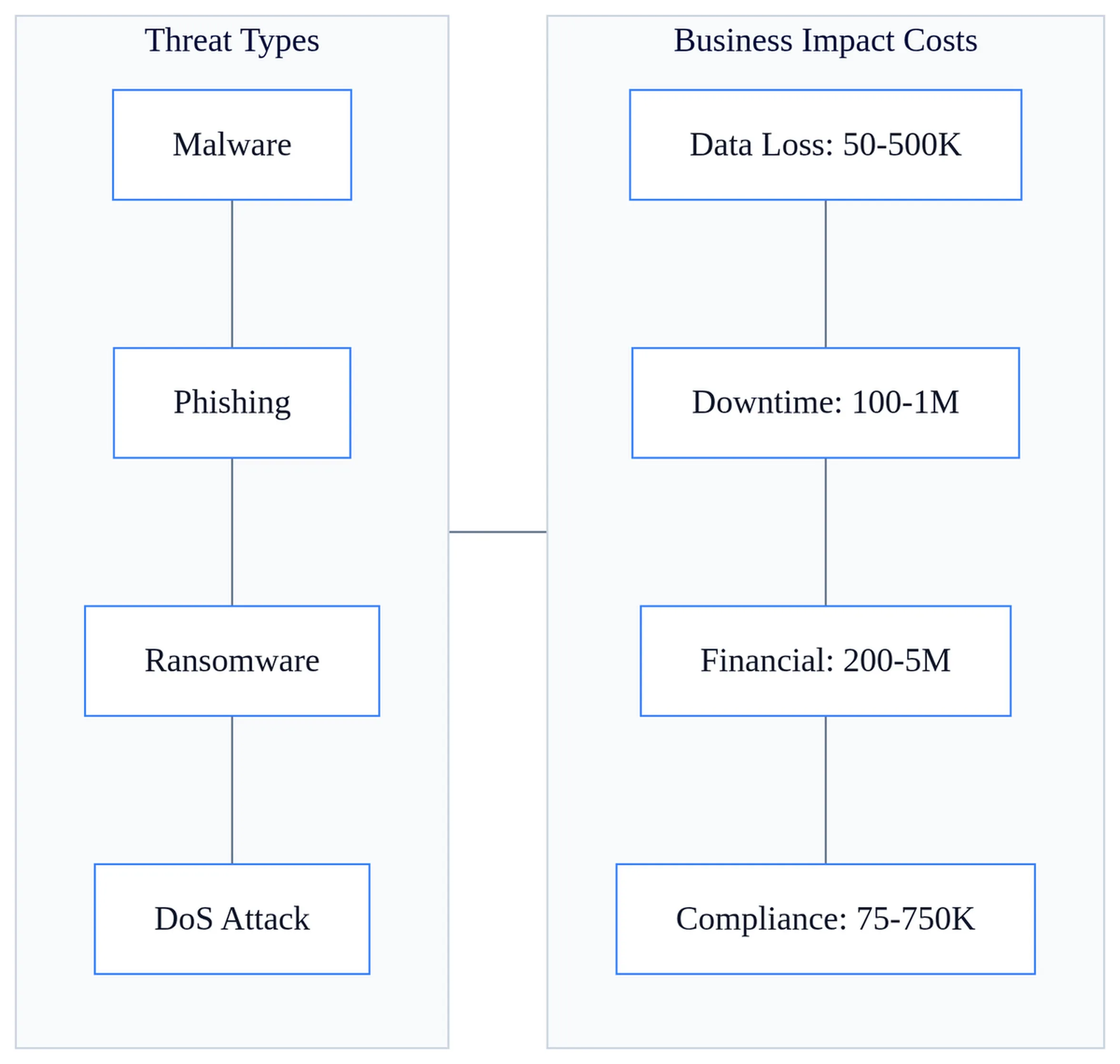
Phishing and spoofing attacks impersonate trusted contacts to steal credentials or authorize fraudulent wire transfers. An employee receives an email that appears to come from the CFO, requesting an urgent payment to a new vendor account. The email address differs by one character; the logo is identical. The employee complies, and $85,000 disappears before the fraud is detected. According to the Cybersecurity and Infrastructure Security Agency, business email compromise scams cost U.S. organizations more than $2.7 billion annually.
Denial-of-service attacks overwhelm servers with traffic, rendering email and web-based tools inaccessible. Attackers then demand ransom to stop the assault. Even if no data is stolen, the downtime cost is real: lost sales, missed deadlines, idle employees.
Large firms spend a median of $3.8 million per year on cybercrime prevention, detection, and recovery. Small businesses face lower absolute costs but higher relative impact, a single breach can consume 20% of annual IT budgets. Regulatory liability compounds the problem. GDPR violations trigger fines up to 4% of global revenue. HIPAA breaches in healthcare carry penalties ranging from $100 to $50,000 per record exposed. The NIST Cybersecurity Framework provides standards, but implementation requires dedicated staff, tools, and ongoing audits.
Loss of nonverbal cues and miscommunication
Text-based channels strip away tone, facial expression, body language, and vocal inflection. Research suggests that 45% of communication meaning comes from vocal cues and nonverbal signals. When you remove those elements, ambiguity multiplies. An email that reads “We need to talk about your report” can signal mild concern or serious dissatisfaction, depending on the sender’s intent, but the recipient has no way to know which.
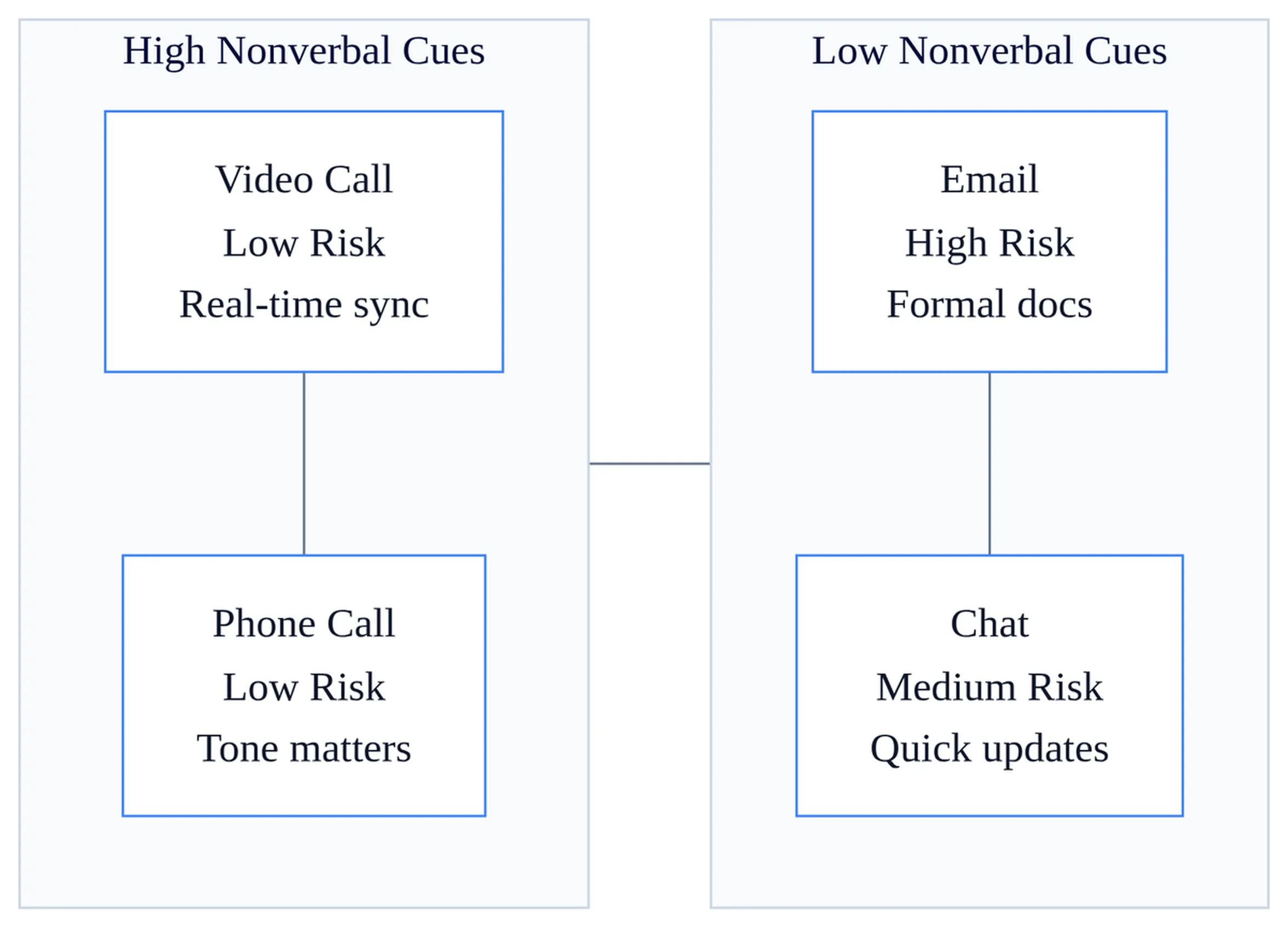
Remote teams relying solely on email and chat report lower trust than those who use video or meet in person. Emotional detachment creeps in. Colleagues become names on a screen rather than people with context. Humor and sarcasm, which rely on vocal inflection and facial cues, often misfire in written form. A joke lands as an insult; a lighthearted comment reads as passive-aggressive criticism.
Video conferencing restores some nonverbal information, you see faces and gestures, but it introduces new problems. Screen fatigue, awkward silences, and the inability to read the room when half the participants have cameras off all degrade communication quality. For a deeper look at what gets lost when nonverbal signals disappear, see advantages and disadvantages of non-verbal communication.
Miscommunication rates climb when teams mix asynchronous text with synchronous video without clear guidelines. A developer in Bangalore sends a question via email at 9 a.m. local time. The project manager in New York reads it eight hours later, interprets it as a complaint, and schedules a video call to “clear the air.” The developer is confused, the question was factual, not emotional. Time and trust both erode.
Information loss and technical failures
Electronic data is fragile. Accidental deletion is common: a user empties the trash folder, permanently losing three months of client correspondence. A software bug corrupts a database, rendering archived emails unreadable. A power surge during a thunderstorm fries a hard drive before the nightly backup runs.
System crashes wipe data without warning. Cloud storage providers experience outages, Amazon Web Services, Microsoft Azure, and Google Cloud have all suffered multi-hour disruptions in recent years. During those windows, businesses lose access to email, shared documents, and communication histories. Some data is recoverable; some is not. Data recovery services charge $500 to $5,000 per incident, and success is not guaranteed.
Incomplete backups create false confidence. An organization assumes all emails are archived, then discovers during a compliance audit that messages older than six months were never captured. The gap violates data retention regulations and exposes the firm to sanctions. Business continuity suffers when communication records vanish. A sales team loses the entire email thread with a major client, including pricing negotiations and contract terms. Reconstructing the agreement from memory invites disputes and legal risk. A customer service department loses chat logs, making it impossible to verify what was promised to customers or resolve billing disputes.
Dependency on technology and infrastructure
Electronic communication requires electricity, internet connectivity, functioning hardware, and compatible software. When any component fails, communication stops. Internet outages, caused by severed cables, router failures, or cyberattacks, leave teams unable to send email, join video calls, or access cloud-based tools. A small Dhaka-based marketing agency lost two full workdays in 2023 when the local ISP suffered a fiber-optic cable cut.
Power failures hit harder in regions with unstable grids. A remote worker in rural India cannot participate in a video conference when rolling blackouts shut down the local cell tower. Battery backups and mobile hotspots provide temporary workarounds, but they are expensive and unreliable for extended outages.
Software incompatibility creates unexpected breakdowns. A company upgrades its email client, only to discover that the new version cannot open attachments created in the old format. A video conferencing platform updates its security protocols, and half the team is locked out until IT manually reconfigures each device. For more on the specific challenges of video tools, see what is the video conference.
Productivity costs multiply across teams. If 50 employees lose internet access for four hours, the organization loses 200 work-hours. Critical communications queue up. Deadlines slip. Clients wait. Unlike a phone outage in the pre-digital era, when someone could drive to the office or send a courier, electronic communication offers no low-tech fallback when the infrastructure collapses.
Absence of legal validity and compliance burden
Older legal systems required wet signatures and physical documents. Electronic records lacked evidentiary weight because they were easy to alter and difficult to authenticate. That concern has largely been resolved: the U.S. ESIGN Act and the EU eIDAS regulation grant electronic signatures the same legal validity as handwritten ones, provided certain conditions are met.
The nuance matters. An unsigned email is not a contract. A digital signature, using cryptographic keys and third-party certification, carries legal weight. A casual email thread does not. Organizations that rely on email for contract negotiation must implement digital signature tools, audit trails, and tamper-proof archiving. Those systems are costly and require training.
Compliance burdens have grown heavier. GDPR mandates strict data retention, encryption, and breach notification timelines. HIPAA requires healthcare organizations to secure all electronic patient communications. SOX demands that public companies archive financial communications for seven years. Each regulation imposes technical requirements, access controls, encryption standards, audit logs, that small organizations struggle to afford.
Litigation risk increases when electronic records are poorly managed. Courts can sanction organizations that fail to preserve relevant emails or produce incomplete records during discovery. A deleted email thread can be interpreted as evidence of wrongdoing, even if the deletion was accidental. Conversely, retaining too much data, every Slack message, every draft email, creates discovery nightmares and exposes sensitive information during lawsuits.
Information overload and attention span erosion
The average office worker receives more than 120 emails per day. Critical messages drown in newsletters, automated alerts, and reply-all threads. Employees develop “email bankruptcy”, they stop trying to keep up and miss urgent requests buried in the noise.
Notification fatigue fragments focus. Slack pings, Teams alerts, email badges, and video call reminders interrupt deep work every few minutes. Research shows the average attention span has dropped to eight seconds. Long, detailed emails go unread. Important instructions are skimmed and misunderstood.
Asynchronous communication introduces delays that slow decision-making. You send an email at 10 a.m. and wait six hours for a reply. The back-and-forth stretches a five-minute conversation into a two-day exchange. Synchronous tools like video calls solve the delay problem but create new ones: they interrupt focused work, require scheduling across time zones, and exhaust participants with back-to-back meetings. For a detailed look at email-specific drawbacks, see advantages and disadvantages of e-mail.
Channel proliferation compounds the chaos. Teams use email for formal records, Slack for quick questions, Teams for project collaboration, Zoom for meetings, and WhatsApp for urgent coordination. No single source of truth exists. Information scatters across platforms. Someone asks, “Where did we document that decision?” and no one remembers which tool was used.
High implementation and maintenance costs
Electronic communication requires upfront capital investment. Hardware, servers, laptops, routers, backup drives, costs thousands to tens of thousands of dollars. Software licenses for email platforms, video conferencing tools, and collaboration suites run $10 to $50 per user per month. A 50-person organization spends $30,000 annually on licenses alone.
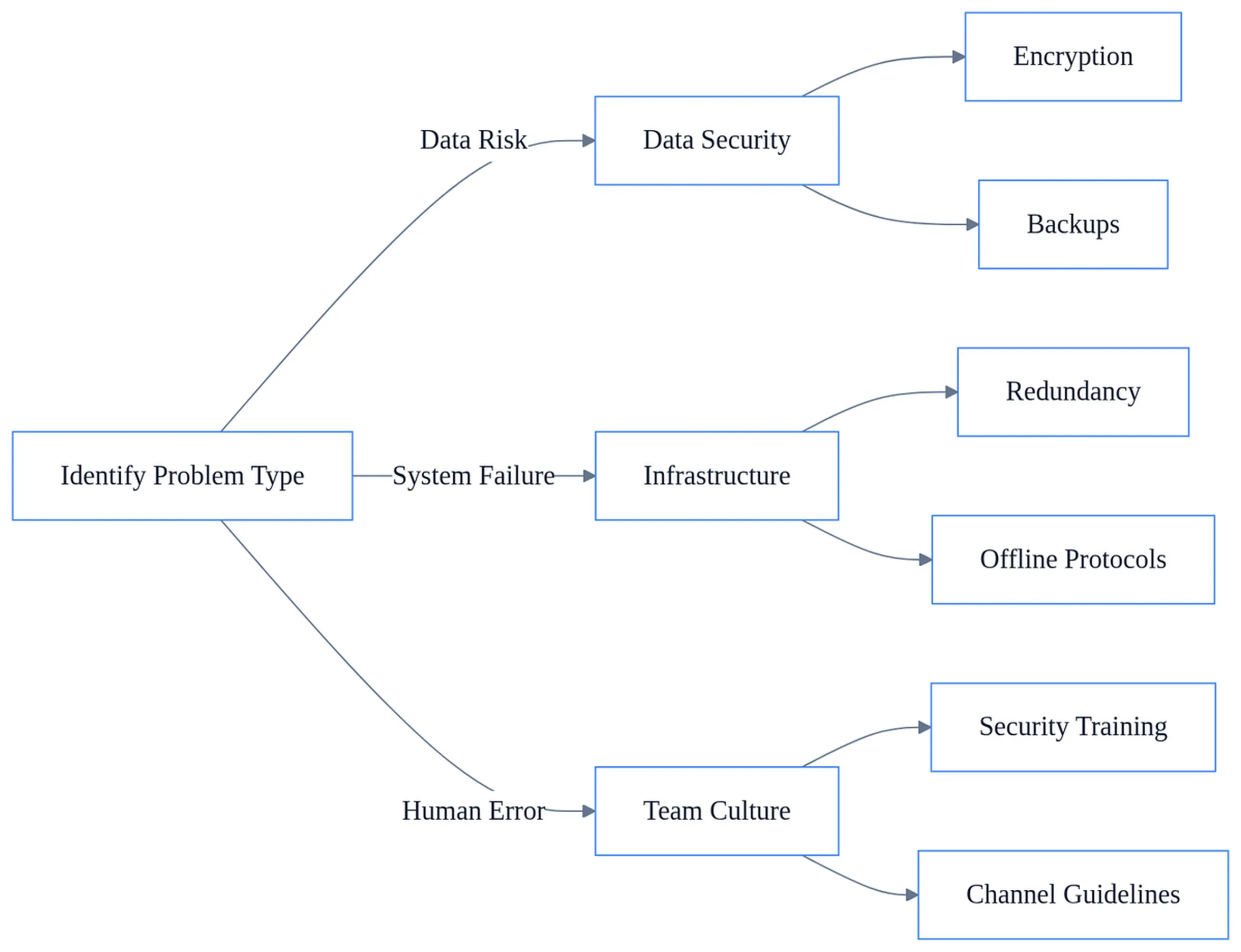
Ongoing expenses include IT support, security updates, cloud storage subscriptions, and training. Cybersecurity tools, firewalls, antivirus software, intrusion detection systems, add another $5,000 to $50,000 per year, depending on organization size. Training employees to use new tools, write clear emails, and follow security protocols consumes time and budget.
Technological obsolescence forces replacement cycles every three to five years. A laptop purchased in 2020 cannot run the latest video conferencing software efficiently by 2025. A server installed in 2018 lacks the processing power to handle modern encryption standards. Organizations must budget for continuous upgrades or accept degraded performance and security vulnerabilities.
Unequal access creates barriers. Small businesses and nonprofits cannot afford enterprise-grade tools. Budget constraints force them to use free or low-cost alternatives with weaker security, limited features, and poor support. A rural clinic in Bangladesh cannot justify the cost of a $50-per-user collaboration platform when half the staff earns less than $300 per month.
Hidden costs drain budgets: cybersecurity incidents, compliance audits, data recovery, and downtime all carry price tags that don’t appear in initial purchase decisions. A single ransomware attack can cost more than five years of software licenses.
| Problem Category | Typical Annual Cost (50-person firm) | Primary Mitigation Strategy |
|---|---|---|
| Cybersecurity threats | $15,000-$75,000 | Encryption, multi-factor authentication, employee training |
| Data loss and recovery | $2,000-$10,000 | Automated backups, redundant storage, disaster recovery plan |
| Infrastructure dependency | $5,000-$20,000 | Backup internet providers, offline protocols, uninterruptible power supplies |
| Compliance and legal | $10,000-$50,000 | Digital signature tools, audit trails, legal review of retention policies |
| Software and licenses | $30,000-$60,000 | Consolidate tools, negotiate volume discounts, use open-source alternatives |
Mitigating electronic communication problems
Channel selection is the first line of defense. Use email for formal records and asynchronous updates. Use video for complex negotiations and relationship-building. Use chat for quick coordination. Avoid using chat for decisions that need a permanent record or email for urgent requests that require immediate action.
Security controls reduce breach risk. Encrypt sensitive emails and files. Require multi-factor authentication for all accounts. Run automated backups daily and test recovery procedures quarterly. Train employees to recognize phishing attempts and report suspicious messages. According to SHRM research, organizations that conduct quarterly security training reduce successful phishing attacks by 60%.
Redundancy prevents single points of failure. Maintain backup internet providers, if the primary ISP fails, switch to a mobile hotspot or secondary connection. Keep offline communication protocols for critical operations: printed contact lists, landline phones, and paper-based order forms. Store copies of essential data in multiple locations, local servers, cloud storage, and external hard drives.
Training and culture shape how teams use tools. Teach employees to write clearly, verify tone before sending, and choose appropriate channels. Establish norms: no emails after 7 p.m., video cameras on for team meetings, urgent requests flagged with specific subject lines. Create a communication charter that documents which tool to use for which purpose. For a broader framework on overcoming communication breakdowns, see barriers to effective communication.
Most people assume electronic communication is inherently faster than older methods. That’s true for routine updates. But for complex negotiations, emotionally charged conversations, or legally binding agreements, electronic tools often create more problems than they solve. If you’re debating whether to send another email or pick up the phone, the answer is usually the phone.
Electronic communication is not going away. Its problems are not temporary glitches that better software will fix. Security threats will evolve. Nonverbal cues will remain absent from text. Infrastructure will fail. The organizations that thrive are those that acknowledge these limitations, budget for mitigation, and choose channels based on the task at hand rather than convenience alone.
Frequently asked questions
Should I use email or instant messaging for sensitive contract discussions?
Email creates a permanent, legally defensible record, making it better for contracts. Instant messaging lacks formality and may not be admissible in disputes. For sensitive matters, email is safer. Follow up any verbal agreement with a written email summary to establish clear terms and protect both parties.
What should I do if a ransomware attack locks our files?
Isolate infected systems immediately to prevent spread. Contact your IT team and law enforcement. Do not pay the ransom unless advised by cybersecurity experts. Activate your backup recovery plan. Most organizations recover 60-80% of data within 48 hours if backups are current. Prevention through employee training and software updates costs far less than recovery.
How can I prevent a casual Slack message from damaging a work relationship?
Reserve Slack for quick logistics and coordination. Move sensitive feedback, criticism, or complex discussions to video calls or in-person meetings where tone is clear. If you must write something sensitive, read it aloud first to catch unintended sarcasm. When in doubt, pick up the phone instead of typing.
Is a backup plan necessary for video calls with clients or executives?
Yes. Internet failures happen. Have a phone dial-in number ready, or schedule a follow-up call time before the meeting starts. For critical meetings, test your connection 10 minutes early. If video drops, switch to audio only rather than rescheduling. This prevents wasted time and shows professionalism.
What happens if our email backup fails during a compliance audit?
Missing emails can trigger regulatory fines and legal liability. GDPR violations cost up to 4% of revenue; HIPAA breaches carry $100-$50,000 per record. Implement redundant backups with different providers. Test recovery quarterly. Document your backup schedule and retention policy. If gaps exist, disclose them to compliance officers immediately rather than during an audit.
Can a phishing email that looks like it’s from our CFO actually be fake?
Yes, and it’s common. Attackers spoof email addresses by changing one character or using lookalike domains. Verify urgent payment requests by calling the CFO directly, not by replying to the email. Train staff to check sender addresses carefully and never click links in unexpected payment requests. Business email compromise scams cost U.S. organizations $2.7 billion annually.