


Electronic communication delivers measurable time savings and cost reductions that traditional methods cannot match. Below, you’ll learn the specific advantages that make electronic channels essential for modern business operations and when to choose each type of communication tool.
What is electronic communication in business?
Electronic communication refers to the transmission of information through digital channels: email, instant messaging, video calls, and phone systems. Unlike traditional methods such as postal mail or face-to-face meetings, electronic communication relies on digital infrastructure to move information between parties.
The scope includes both synchronous and asynchronous channels. Synchronous communication happens in real time: a video call, a phone conversation, or an instant message exchange where both parties are present. Asynchronous communication allows delays: an email you send at 9 AM that someone reads at 3 PM, or a voicemail retrieved hours later.
This distinction matters because each mode offers different advantages. Real-time channels enable immediate feedback and rapid decision-making. Delayed channels give recipients time to think, research, and craft thoughtful responses. Understanding these types of communication channels helps you select the right tool for each business situation.
Speed and real-time information delivery
Electronic communication transmits information in seconds, regardless of distance. An email sent from New York reaches a recipient in Singapore in under five seconds. Compare that to postal mail, which takes three to seven days for domestic delivery and up to three weeks internationally.
This speed advantage transforms how quickly businesses can operate. A procurement manager can send a purchase order, receive vendor confirmation, and begin production planning within an hour. The same process using traditional mail would consume a week or more.
Synchronous channels amplify this benefit further. Video conferencing and instant messaging enable immediate back-and-forth exchanges. When a software development team encounters a critical bug, developers can loop in the product manager, discuss solutions, and implement a fix within minutes rather than waiting for scheduled meetings.
Even asynchronous electronic channels maintain the speed advantage. You send an email at your convenience, and the recipient reads it at theirs, but the transmission itself happens instantly. This flexibility means a marketing team in Dhaka can send campaign drafts to their London office at 6 PM local time, and the UK team reviews them first thing in their morning, maintaining continuous workflow across time zones.
Cost reduction compared to traditional methods
Electronic communication eliminates recurring expenses that traditional methods require. Postal mail costs $0.66 per letter in the United States, plus printing, envelopes, and labor for assembly and mailing. A company sending 500 invoices monthly spends $330 on postage alone, plus staff time and materials. Email reduces that cost to nearly zero.
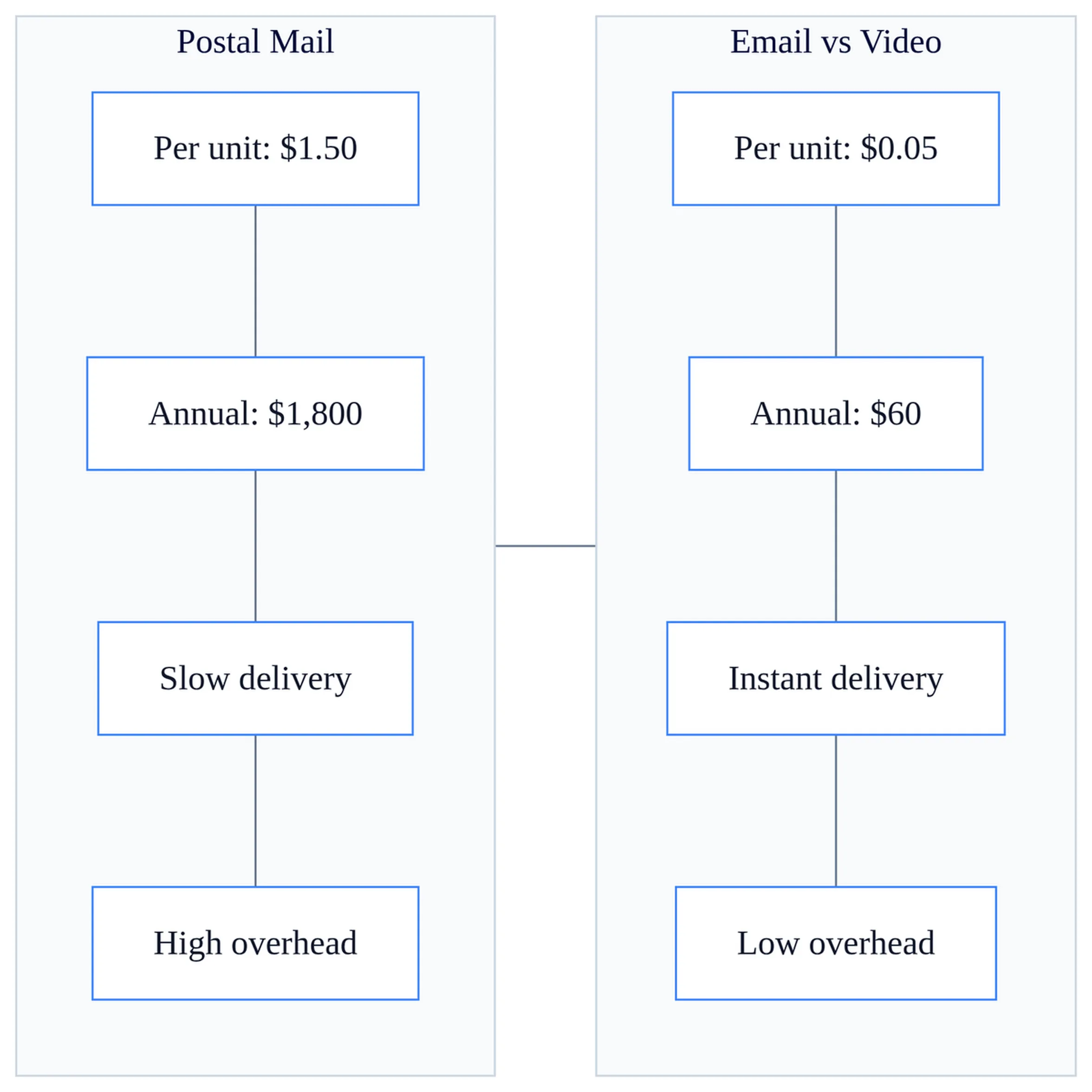
Travel expenses drop dramatically when teams use electronic communication. A regional sales meeting requiring five managers to fly to headquarters might cost $5,000 in airfare, lodging, and meals. A two-hour video conference costs nothing beyond the monthly subscription fee your company already pays. According to research from SHRM, organizations that shifted to remote work models reduced travel budgets by 30-60% while maintaining collaboration effectiveness.
Storage costs also decrease. Physical filing systems require office space, filing cabinets, and manual organization labor. A four-drawer filing cabinet occupies six square feet and costs $200-400. Digital storage costs roughly $0.02 per gigabyte monthly, enough to store tens of thousands of documents in the space a single filing cabinet would occupy.
| Method | Per-Use Cost | Annual Cost (500 uses) | Additional Expenses |
|---|---|---|---|
| Postal Mail | $0.66-$2.00 | $330-$1,000 | Printing, envelopes, labor |
| ~$0.00 | $0 | Included in existing infrastructure | |
| In-Person Meeting (5 people) | $1,000-$5,000 | $12,000-$60,000 | Travel, lodging, lost productivity |
| Video Conference | ~$0.00 | $150-$300 (subscription) | None |
Handling large volumes of information
Electronic communication moves substantial amounts of data without the physical limitations of traditional methods. Email systems routinely handle attachments up to 25 megabytes, equivalent to roughly 200 pages of formatted documents or dozens of high-resolution images. Cloud storage integration pushes this further, allowing you to share files measured in gigabytes through simple links.
Consider a construction firm bidding on a commercial project. The proposal package includes architectural drawings, material specifications, cost breakdowns, project timelines, and contractor certifications, easily 150 pages of documentation. Assembling, printing, and shipping this package via courier costs $40-60 and takes 1-2 days. Emailing the same package as a PDF takes thirty seconds and costs nothing.
This capability extends beyond simple file transfer. Collaboration platforms enable multiple team members to work simultaneously on shared documents, spreadsheets, and presentations. A financial analyst in Mumbai can update a quarterly report while her manager in Chicago reviews the previous section and a designer in Berlin formats the charts, all in real time, all within the same digital document. The labor savings compound over time. Manual copying, scanning, and distribution tasks that once consumed hours of administrative staff time now happen automatically. A human resources department that once spent two days printing, assembling, and mailing benefits packages to 200 employees can now distribute the same information in minutes.
Global reach and distributed team management
Electronic communication eliminates geography as a constraint on business operations.
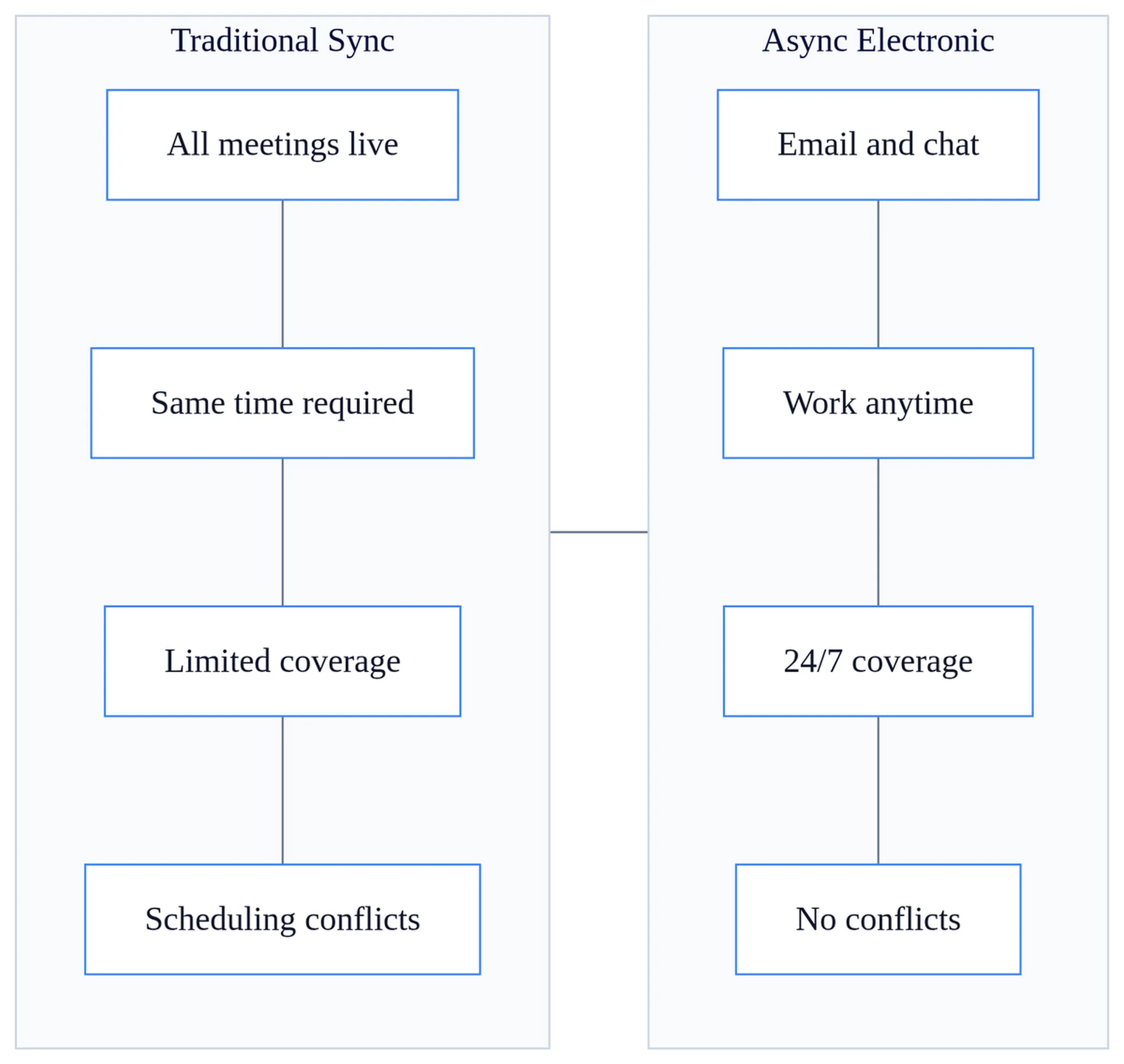
A single email reaches one recipient or one thousand with equal effort. A project manager can send status updates to team members across five continents simultaneously, ensuring everyone works from the same information regardless of location. This one-to-many capability enables organizational structures that were previously impractical. A software company can hire developers in Poland, designers in Argentina, and customer support staff in the Philippines, coordinating their work through email, messaging platforms, and shared project management tools. The role of technology in business communication has fundamentally reshaped how companies think about talent acquisition and team structure.
Asynchronous electronic communication proves particularly valuable across time zones. When a London-based marketing team finishes their workday at 5 PM, they can hand off projects to colleagues in San Francisco who are just starting their 9 AM. The San Francisco team works through the day and passes deliverables back to London, creating a continuous 24-hour work cycle without requiring anyone to work outside normal business hours.
What most people get wrong: they assume global teams require synchronous communication to stay coordinated. In practice, well-structured asynchronous communication (detailed email updates, shared documentation, clear task assignments) often works better than attempting to schedule meetings across incompatible time zones.
Information preservation and searchability
Digital communication creates automatic, searchable records of business interactions. Every email, message, and video call transcript becomes a permanent archive you can retrieve in seconds. When a dispute arises about what was agreed to in a contract negotiation six months ago, you can search your email for “contract terms” and find the relevant thread immediately.
This searchability saves substantial time compared to manual filing systems. A legal department reviewing five years of correspondence with a vendor can search for specific keywords, dates, or participants rather than physically sorting through hundreds of folders. Tasks that once required days of archive research now take minutes.
Compliance and audit requirements become manageable through electronic record-keeping. Financial services firms, healthcare providers, and government contractors must retain communications for regulatory review. Digital systems maintain these records automatically, with timestamps, edit histories, and metadata that manual systems cannot provide. The preservation extends beyond text. Video recordings of training sessions, product demonstrations, and client presentations create reference libraries that new employees can access on demand. A sales representative preparing for a pitch can review recordings of successful presentations from senior colleagues, learning techniques that would otherwise require shadowing or mentorship time.
Choosing the right electronic communication channel
Different electronic channels serve different purposes. Email works best for formal communication, detailed information, and situations where you need a permanent record. You’d use email for contract negotiations, project proposals, or official policy announcements. The email advantages and disadvantages make it ideal for asynchronous, document-heavy exchanges but poor for urgent matters requiring immediate response.
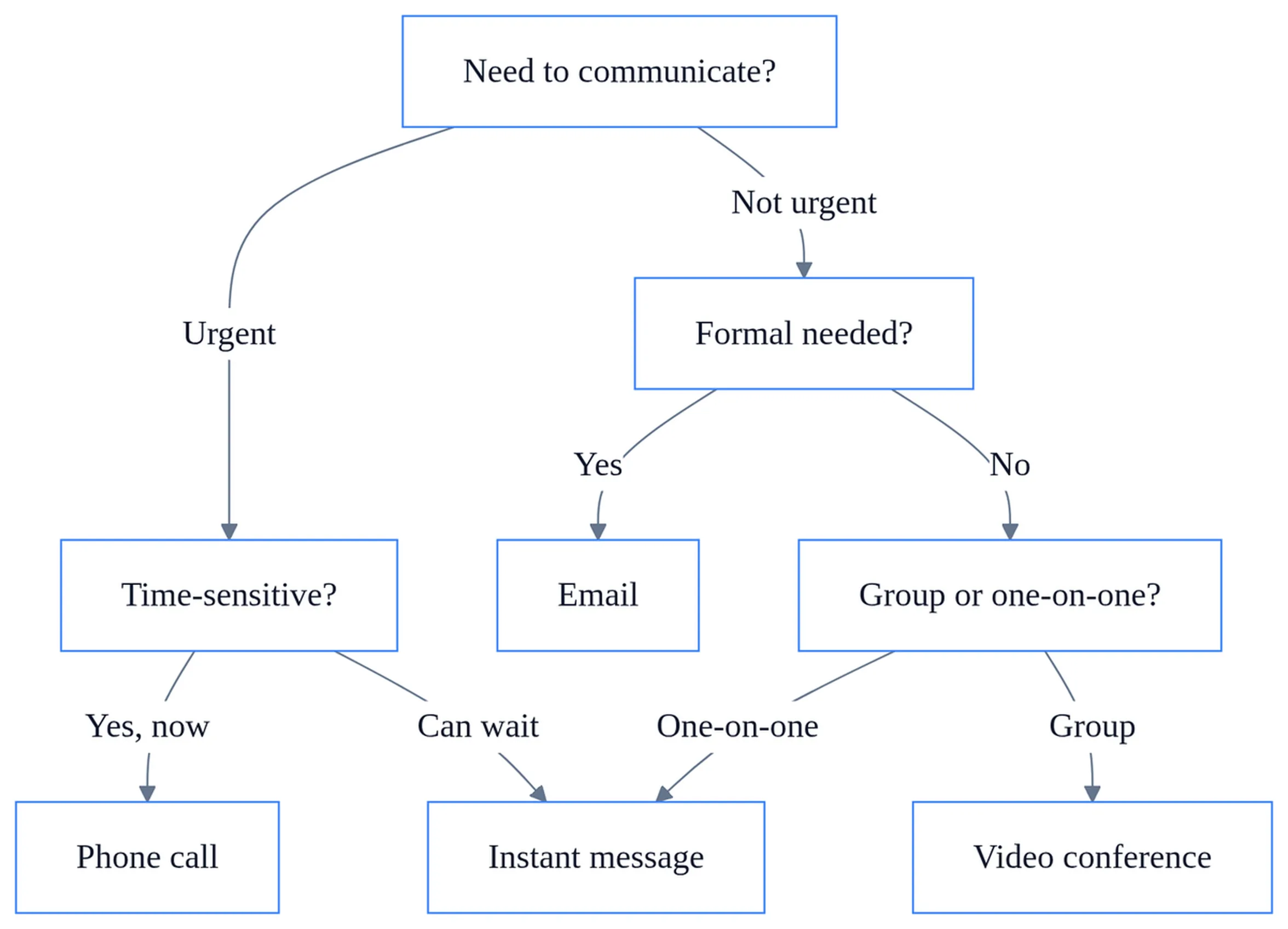
Instant messaging suits quick clarifications and informal team coordination. A developer asking a colleague “Which API endpoint handles user authentication?” gets an answer in seconds via messaging but would wait hours for an email response.
Video calls handle complex discussions, relationship-building, and situations where tone and body language matter. Performance reviews, client relationship management, and brainstorming sessions benefit from the visual and social cues that video provides. However, be aware of the problems of electronic communication such as video fatigue and technical difficulties that can limit effectiveness.
Phone calls remain valuable for urgent matters, sensitive topics, and situations where screen time becomes burdensome. A manager delivering critical feedback might choose a phone call over video to reduce the intensity of visual scrutiny while maintaining voice tone.
The selection framework comes down to four factors: urgency (how quickly you need a response), formality (how official the communication needs to be), audience size (one person or many), and information complexity (simple question or detailed explanation).
Enabling remote and hybrid work models
Electronic communication removes location as a requirement for knowledge work. An accountant can review financial statements, a graphic designer can create marketing materials, and a consultant can analyze business processes from anywhere with internet access. This flexibility has transformed how organizations think about workplace requirements.
Companies reduce real estate costs by adopting hybrid models where employees split time between home and office. A firm that once needed 100 desks for 100 employees can operate with 60 desks when 40% of staff work remotely on any given day. The savings on rent, utilities, and facilities management often exceed the cost of electronic communication infrastructure by substantial margins.
Talent acquisition expands beyond local labor markets. A specialized engineering firm in Singapore can hire a rare expert based in Toronto without requiring relocation. The Toronto engineer collaborates with Singapore colleagues through video calls, shared documents, and messaging, maintaining full productivity despite the 12-hour time difference. Research from Harvard Business Review indicates that organizations embracing distributed work models report 25% larger candidate pools for specialized positions.
Employee retention improves when workers gain flexibility to manage personal responsibilities alongside professional obligations. A parent can attend a child’s school event at 2 PM and catch up on work in the evening. A caregiver can monitor an elderly relative while remaining available for team communication. This flexibility reduces turnover costs while maintaining business continuity. The model works because electronic communication maintains team cohesion despite physical distance. Daily standup meetings via video, project updates through email, and casual conversation in messaging channels replicate the connectivity of shared office space without requiring everyone to commute to the same building.
Frequently asked questions
Should I use email or instant messaging for urgent client requests?
Use instant messaging for truly urgent matters requiring immediate response, such as critical system failures or time-sensitive decisions. Email works for important but non-emergency requests, since clients may not monitor chat constantly. If the issue affects revenue or operations within the next hour, choose messaging. Otherwise, email provides a documented record and gives recipients time to respond thoughtfully.
What if my team spans multiple time zones and needs real-time decisions?
Combine asynchronous and synchronous tools strategically. Use email or shared documents for non-urgent updates, allowing each time zone to review at their convenience. Schedule video calls only when immediate discussion is essential, rotating meeting times fairly across zones. Instant messaging works for quick clarifications without requiring full team presence. This approach maintains productivity without forcing early mornings or late nights on everyone.
Can I rely solely on electronic communication, or do I still need occasional face-to-face meetings?
Electronic communication handles 90% of routine business effectively. Reserve in-person meetings for relationship-building with new clients, complex negotiations, or team alignment sessions where body language and informal conversation matter. Annual or quarterly in-person gatherings strengthen remote teams. The cost savings from eliminating routine travel justify occasional strategic meetings.
How do I prevent important emails from getting lost in crowded inboxes?
Use subject lines that clearly indicate urgency and topic, such as “Action Required by Friday: Budget Approval Needed.” For critical messages, follow up with a brief instant message or phone call confirming receipt. Consider using email flags or priority markers your system supports. For truly mission-critical information, request read receipts and follow up if you don’t receive confirmation within a reasonable timeframe.
Is electronic communication appropriate for delivering difficult feedback or terminations?
No. Electronic channels lack the tone, empathy, and immediate dialogue necessary for sensitive conversations. Deliver difficult feedback, performance issues, and terminations in person or via video call where you can read reactions and respond appropriately. Electronic communication works for documenting decisions afterward, but the initial conversation requires human presence and real-time interaction.
What’s the best way to handle confidential information through electronic channels?
Use encrypted email services or secure file-sharing platforms with password protection for sensitive data. Avoid sending passwords, social security numbers, or financial details through standard email. For highly confidential matters, combine electronic transmission with a separate verbal confirmation of access details. Check your industry’s compliance requirements—healthcare, finance, and legal fields have specific regulations governing electronic data transmission.
1 Comment
Great job and good work done